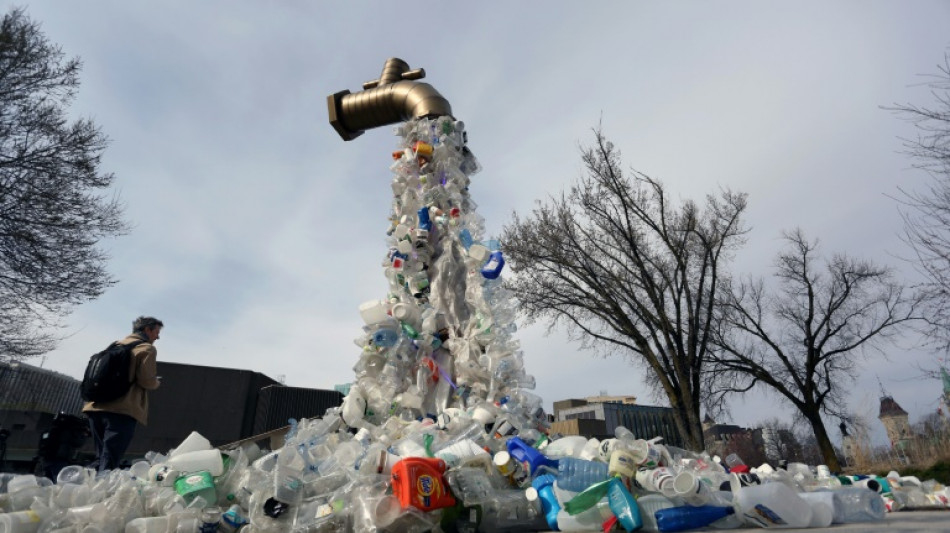
Plastic pollution talks move closer to world-first pact / Photo: © AFP

 Yemen's Houthis claim striking Riyadh airport, other Saudi sites

 Best-selling British author Jeffrey Archer dies aged 86

 Military plane crash kills 32 in Nigeria

 Olise powers France to win over Belgium in Nations League
 High-flying Blazy turns to birdlife at Chanel

 Riyadh's allies pledge troops as Yemen, Saudi Arabia attack Houthis

 Clashes erupt outside Kosovo parliament over war crimes court
 Milan's Saelemaekers suffers ankle setback, faces lengthy spell out

 Rubio arrives in Iceland to push for greater US presence in Arctic
 Putin allows Italy's UniCredit to sell part of Russian business
 Djokovic into China Open final as Medvedev out for hitting fan with ball

 ICC unseals arrest warrants for Taliban education ministers

 Modric hopes fans back Croatia against Spain after England shame

 Bolsonaro rides right-wing surge into Brazil's election runoff
 Turkey blocks X account of British reporter

 Ukraine says using AI robot guns to shoot down new Russian drones
 At Oct 7 memorial, Netanyahu says will be no Hamas rule in Gaza

 Ukraine blames Russia for deadly sinking of Turkish ship in Black Sea

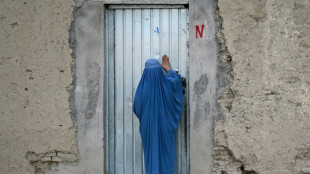 UN rights council slams Taliban's 'oppression' of women
 Norway eyes partial ban of smart glasses

 Two dead after ship catches fire, sinks in Black Sea

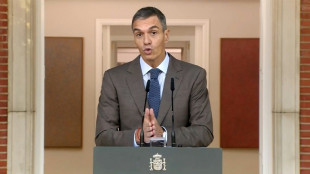 Spain's PM calls snap election after housing bill defeat

 STARCARES Equips Seven Foster Homes for Children and Young People in Tanzania

 Alleged Indian leader of neo-Nazi child abuse ring goes on trial in Paris
 Euro, French stocks slide on France debt concerns

A fourth and penultimate round of UN-led negotiations to solve global plastic pollution wrapped up in Ottawa early on Tuesday with a world-first pact said to be within reach by year's end but without a cap on the production of polymers.
For the first time in the negotiations, delegates from 175 countries and observers discussed a draft of what is to become a global treaty on ending the scourge of plastics that are found everywhere from mountain tops to ocean depths, as well as within human blood and breast milk.
The current session picked up where talks in Kenya left off five months ago.
They also agreed to a series of consultations between now and November, when the final round of talks is to be held in South Korea.
The Ottawa talks saw "a massive, monumental change in the tone and in the energy" compared with the previous round, Canadian parliamentary secretary Julie Dabrusin said.
"I'm really optimistic that we can get to an agreement by the end of the year... to end plastic pollution by 2040," she said.
Dabrusin and others welcomed a shift in the negotiations from vague objectives to treaty language, as well as streamlining options presented in Kenya.
However, a proposed cap on plastic production did not make it into the draft text and remains a major sticking point.
Although there is a broad consensus on the need for a treaty, environmental activists pleading for a cut in plastic production remain at odds with oil-producing nations and the plastics industry, which favours recycling.
- Recycling versus production cut -
Ana Rocha, speaking on behalf of Global South nations, said there had been "a growing willingness to address primary plastic polymers under the treaty."
This is crucial, according to environmental groups. "You cannot end plastic pollution if you do not reduce the amount of plastic we produce," Greenpeace's Graham Forbes told AFP.
Annual plastics production has more than doubled in 20 years to 460 million tonnes and is on track to triple within four decades if left unchecked.
"This treaty will succeed or fail based on the extent to which it addresses and reduces plastic production. Nothing else will work if we don't get that right," Forbes said.
G7 environment ministers meeting in Italy had been expected on Tuesday to commit to reducing plastic production, recognizing "that the level of plastic pollution is unsustainable and that its increase is alarming," according to the French delegation.
Peru and Rwanda proposed in a motion in Ottawa cutting plastic production by 40 percent in the next 15 years, in line with Paris agreement climate goals. Plastic production is a significant driver of global warming because most plastic is made from fossil fuels.
The motion was defeated.
Chris Jahn, council secretary of the International Council of Chemical Associations, said the industry is "fully committed to a legally binding agreement" on plastic waste, but one that does not "eliminate the massive societal benefits plastics provide for a healthier and more sustainable world."
Alejandra Parra, from Latin America, called recycling a "false option."
A lot of plastic is not or cannot be recycled, she said. The process of melting plastics into new forms also has drawbacks because it releases toxins and carbon emissions.
Collecting and sorting recyclable plastics is also relatively expensive.
K.Sutter--VB