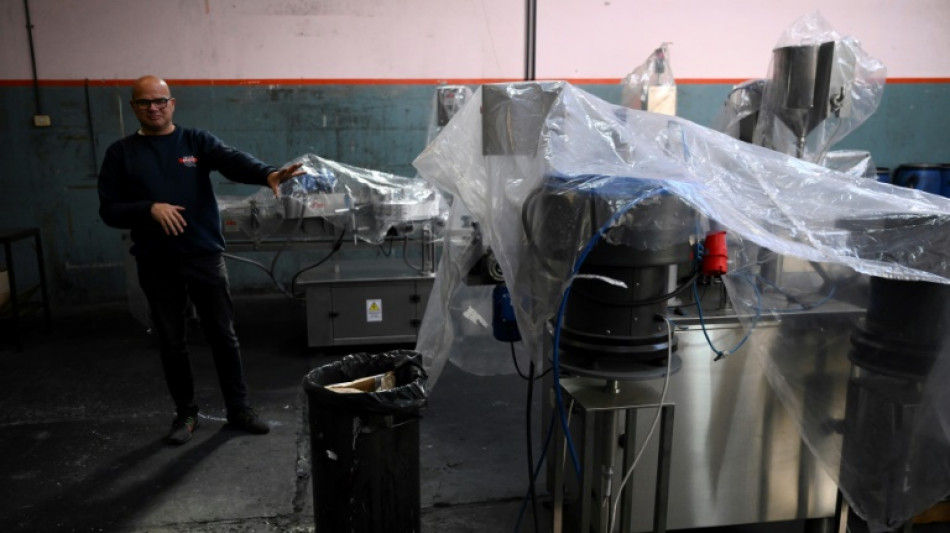
Tough times for Argentine factories as consumers penny-pinch / Photo: © AFP

 Trump says US moved bombers from UK base after 'threats'
 Brazilian stocks surge to record after Bolsonaro election lead

 Leaders to visit Pacific atoll at frontline of climate change

 ICC gives more details about arrest warrants for Taliban ministers
 Nigeria's Tinubu confirms 32 dead after military plane crash

 'Reckless' AI firms can't control models, says whistleblower

 Switching on brain cells: the Nobel-winning science of optogenetics

 Quebec votes as separatist surge poses test for Canada PM

 Euro slides as concerns about French debt mount

 Former Trump press secretary Leavitt joins Fox News

 Djokovic advances to China Open final as Medvedev out for hitting fan with ball

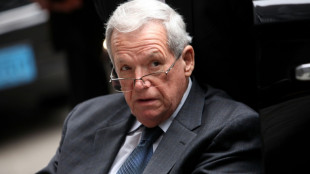 Disgraced former US House speaker dies at 84

 Euro slides as worries about French debt grow
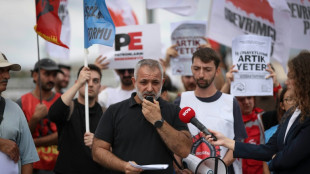
 US withdraws all bomber aircraft from UK airbase
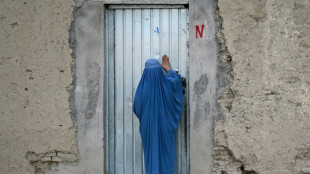
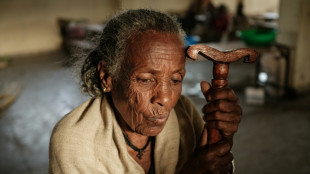 Drone hits Ethiopia IDP camp as fears grow of regional war

 US-German trio wins medicine Nobel for illuminating the brain
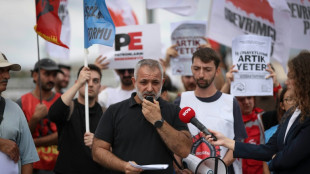
 England captain Kane driven by desire for records says Tuchel
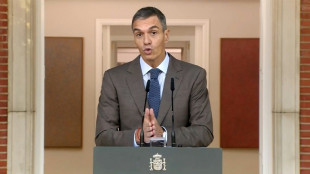
 N.Irish court hears challenge to disputed Orangemen parade

 Talking points from the Bahrain Grand Prix in Malaysia

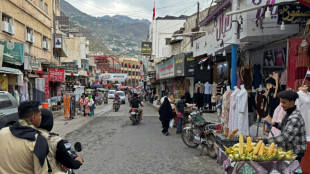 Yemen, Saudi Arabia target Houthis in new campaign as war escalates

 US-German trio wins medicine Nobel for work on optogenetics

 Swiatek, Zheng survive three-set tests in China Open third round

 Hasan says Test cricket momentum turning for Bangladesh
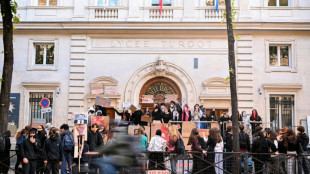
 Intense heat puts births in jeopardy, UN tells Fiji talks
 US arrests woman accused of spying for China on Taiwan leader's family

Argentina's factories, like many economic sectors, are floundering as consumers hit by sky-high inflation and shrinking income buy fewer goods.
Few hold out hope that things will get better any time soon.
"People still have savings" for now, Gustavo Avalos, who owns an ink factory outside Buenos Aires, told AFP. But "the outlook is bleak."
Indeed those savings may run out soon enough, with annual inflation approaching 290 percent and wage-earners losing about a fifth of their purchasing power.
In February, Argentina's economic activity slumped for a fourth straight month as self-described "anarcho-capitalist" President Javier Milei's budget-slashing plans took hold.
The figure dropped by 3.2 percent year-on-year and by 0.2 percent from January as Milei has sought to deregulate the economy and undo trade protections, also devaluing the peso by 50 percent.
Eight sectors recorded an annual decline, including construction, manufacturing, wholesale and retail.
Some small- and medium-sized businesses (SMEs) "can't pay salaries, others can't pay rent," said Avalos, whose factory sales fell by more than two-thirds in December and by 40 percent in March.
Energy prices skyrocketed 500 percent during the same period.
"I can hold on for a year, then we'll see," added Avalos. "Without consumption we... die bit by bit."
- Cutting back on cupcakes -
The SME chamber CAME says manufacturing output among its members dropped by nearly 12 percent year-on-year last month and by 20 percent for the first quarter.
By far the majority of the country's SME's produce exclusively for the domestic market.
"SMEs don't see a floor (to the downward trend) in the short term," the CAME said in a recent statement.
Big business doesn't, either.
Steel company Acindar said in March it was stopping production for a month at four plants to compensate for a 40-percent drop in sales of the commodity.
In Caseros, elsewhere in Buenos Aires province, cookie factory Dulcypas is working at half capacity, having stopped two production lines.
The founder's grandson and current owner Fernando Martinez said he has had to fire staff, reduce salaries and limit output.
"The biscuits sell very well because they are cheap," he told AFP. "The cupcakes? More expensive, not so much."
The International Monetary Fund has forecast Argentina's economy will contract 2.8 percent this year before rebounding with growth of about 5.0 percent in 2025.
- Calls for regulation -
Paper mill owner Daniel Rosato, who is also president of the Industrial Union of Berazategui -- a grouping of factory owners on the outskirts of the capital -- said some 600 SMEs that exported manufactured goods had closed in Argentina since last year.
"The other side of that is a rise in informal work, which represents less income for the state," he told AFP.
For Alejandro Bartolini, who owns oil pump producer Metalcrom, fair competition is the only way out.
"We don't believe in closed markets, but we also don't believe that indiscriminate opening can lead to success," he said.
"Labor and capital will be lost if we do not regulate the external market."
On Monday, Milei hailed his country's first quarterly budget surplus since 2008 as "a feat of historic significance on a global scale."
Libertarian economist Milei won elections last November vowing to reduce the deficit to zero.
To that end, he has instituted an austerity program that has seen the government slash subsidies for transport, fuel and energy even as poverty levels have reached 60 percent, according to a recent study,
Thousands of public servants have lost their jobs.
"Don't expect a way out through public spending," Milei warned.
N.Schaad--VB