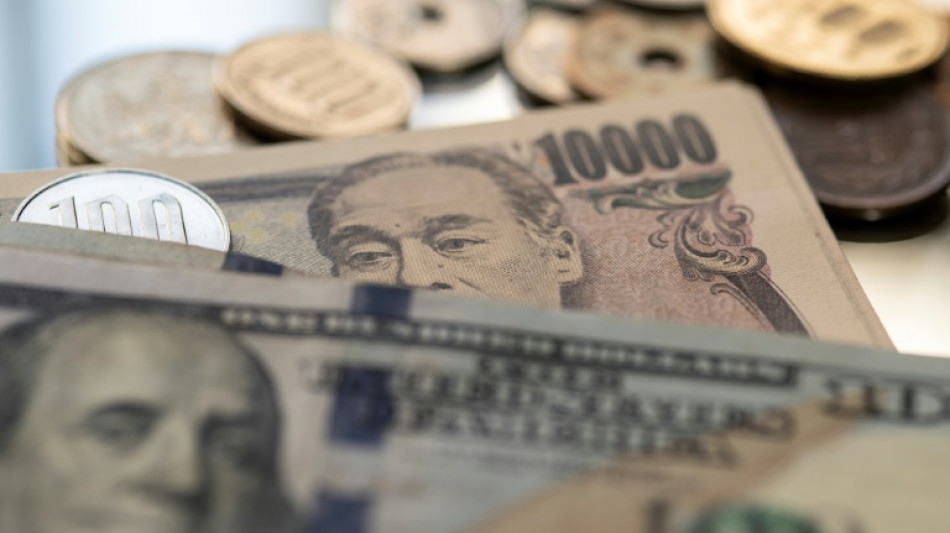
Seoul, Tokyo vow 'appropriate action' on weak yen and won / Photo: © AFP

 Nigeria's Tinubu confirms 32 dead after military plane crash

 'Reckless' AI firms can't control models, says whistleblower

 Switching on brain cells: the Nobel-winning science of optogenetics

 Quebec votes as separatist surge poses test for Canada PM

 Euro slides as concerns about French debt mount

 Former Trump press secretary Leavitt joins Fox News

 Djokovic advances to China Open final as Medvedev out for hitting fan with ball

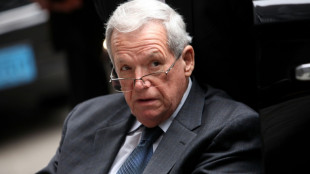 Disgraced former US House speaker dies at 84

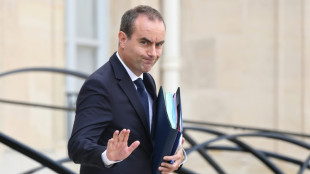 Euro slides as worries about French debt grow

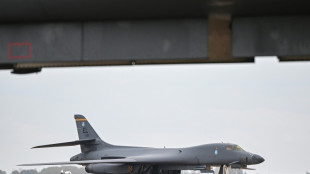 US withdraws all bomber aircraft from UK airbase

 Drone hits Ethiopia IDP camp as fears grow of regional war

 US-German trio wins medicine Nobel for illuminating the brain

 England captain Kane driven by desire for records says Tuchel
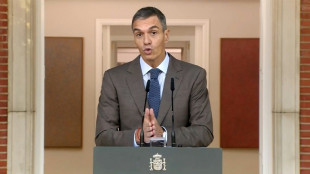
 N.Irish court hears challenge to disputed Orangemen parade

 Talking points from the Bahrain Grand Prix in Malaysia

 Yemen, Saudi Arabia target Houthis in new campaign as war escalates

 US-German trio wins medicine Nobel for work on optogenetics

 Swiatek, Zheng survive three-set tests in China Open third round

 Hasan says Test cricket momentum turning for Bangladesh

 Intense heat puts births in jeopardy, UN tells Fiji talks
 US arrests woman accused of spying for China on Taiwan leader's family

 Yemen military announces broad strikes against Houthis
 Zuckerberg skewered again on screen in 'The Social Reckoning'

 Fiji urges 'just' climate transition, financing at pre-COP gathering

 Thailand's Jeeno overcomes late wobble to win Lotte Championship

South Korea and Japan shared "serious concerns" on the recent weakness of their currencies against the dollar and agreed to take "appropriate actions" to counter extreme volatility, the finance ministry in Seoul said Wednesday.
The foreign exchange market has witnessed a surge in volatility following Iran's weekend drone and missile assault on Israel, in retaliation for what Tehran said was an Israeli strike on its embassy in Syria.
Seoul issued a rare warning on Tuesday, saying authorities were carefully monitoring currency movements as the won briefly touched a critical level of 1,400 per dollar for the first time in 17 months.
The yen has fallen to a 34-year low against the dollar as a string of above-forecast US inflation and jobs data sees investors re-evaluate their outlook for when the Federal Reserve will cut interest rates, while the Bank of Japan keeps monetary policy loose.
South Korean Finance Minister Choi Sang-mok and his Japanese counterpart Shunichi Suzuki discussed the matter in Washington this week on the sidelines of a G20 meeting, according to the finance ministry.
The two "shared serious concerns about the recent significant depreciation of the Japanese yen and the Korean won", it said in a statement.
They also "expressed their intention to take appropriate actions against excessive movements", it added.
Speculation was swirling that the dollar will strengthen further after Fed boss Jerome Powell suggested US rates could be held at two-decade highs for longer than expected as the bank struggles to get inflation down to its two percent target.
The greenback has also risen against a range of other currencies this year, including the Indian rupee, Australian dollar and Thai baht.
The Japanese finance ministry's top currency diplomat recently hinted that intervention in markets to support the yen could be an option.
Tokyo last intervened in forex markets in October 2022, when it spent 6.3 trillion yen ($40 billion today) to support its currency.
A weaker currency is often regarded as beneficial for a country's export competitiveness and enhancing exporter profits. But a swift decline in value triggers worries over capital outflows and instability in financial markets.
The won has weakened more than seven percent against the dollar this year and the yen nearly nine percent, according to Bloomberg News.
"Foreign exchange authorities are closely watching exchange rate movements, foreign exchange supply and demand with special vigilance," officials from the finance ministry and the Bank of Korea, said in a statement Tuesday.
"Excessive herd behaviour is not desirable for our economy."
J.Marty--VB