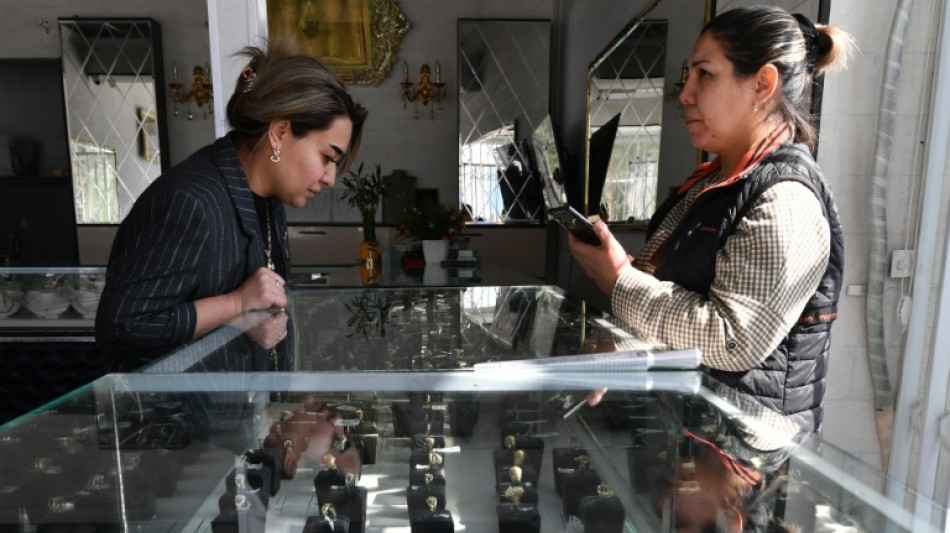
In Uzbekistan, economic reforms spark modern-day gold rush / Photo: © AFP

 Spain's PM calls snap election after housing bill defeat

 STARCARES Equips Seven Foster Homes for Children and Young People in Tanzania

 Alleged Indian leader of neo-Nazi child abuse ring goes on trial in Paris
 Euro, French stocks slide on France debt concerns

 Alcaraz advances to Japan Open final

 US-German trio win medicine Nobel for work on optogenetics

 Hundreds of French high schools shut as protests persist

 Spain PM calls early election after housing crisis defeat

 Stocks rally as 'Goldilocks' jobs data ease rate fears
 Myanmar says 10,000 migrants returned from Malaysia this year

 Big guns back for Australia's Rugby League World Cup defence
 Braves rock Dodgers to level series, Brewers win thriller

 Most Asia stocks rally as 'Goldilocks' jobs data ease rate fears

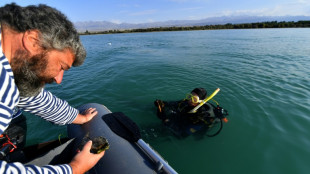 Sunken Silk Road city reveals Central Asia's lost history

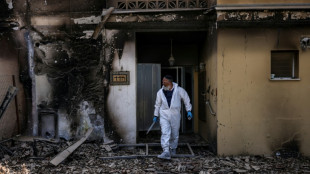 Three years on, Israeli rescuer cannot escape October 7

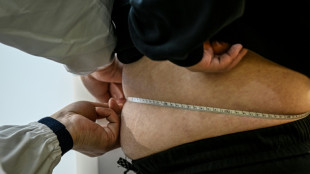 Research into weight-loss drugs tipped for Nobel as award week opens
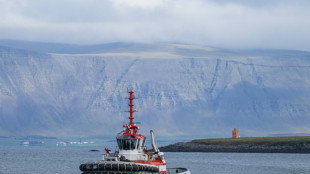
 US Supreme Court hears bid to shut the door on climate suits

 Chourio walk-off single lifts Brewers over Padres

 Chervon Names Claudio Chiappetta Vice President of Retail Sales for Chervon Canada

 Chervon Names Daniel L. Abbott Director of Sales - Western U.S.A.

 Flavio Bolsonaro leads Lula in near-done Brazil vote count
 Flavio Bolsonaro leads Lula in partial Brazil poll results

 Titan FX Launches Second “Dream Beyond Borders 2.0” Brand Commercial Featuring Keisuke Honda

 Patriots inflict first Bills defeat as Rams surge late

 Brazil's Indigenous back Lula as El Nino fuels forest fires

Sifting through a greyish mixture of sand and pebble in the steppe of Uzbekistan, Khislat Ochilov was searching for gold.
He is one of hundreds of new prospectors trying to strike it rich in a modern-day gold rush in the Central Asian country, chock-full of the precious metal.
A right once preserved for state mining firms, recent regulatory changes designed to boost the economy mean anyone can now hunt for gold.
Ochilov scanned the shiny flakes that appeared on his panning mat, submerged in a pool of water. Finally, he spotted a piece the size of a grain of rice.
"Not bad. Though my record is seven grams," the 25-year-old told AFP while out in the Uzbek steppe, near the southwestern village of Soykechar.
Nearby, Sardor Mardiyev, 28, was hard at work digging through the earth in the vast Navoi region, a district larger than Portugal.
He drives his excavator 12 hours a day, six days a week as part of a frenzy for the metal that officials hope will boost Uzbekistan's output.
Last year, the country produced 110.8 tonnes of gold, putting it tenth place globally, and its central bank was the second largest net seller in the world at around 25 tonnes, behind only Kazakhstan, according to the World Gold Council.
For Uzbek President Shavkat Mirziyoyev -- who sees himself as a reformer opening up and liberalising his country's economy after years of isolation and centralisation -- it is not enough.
He has ordered gold production to be increased by 50 percent by 2030.
The potential is there -- only 20 percent of Uzbekistan's subsoil has been explored to date.
Mirziyoyev, in power since 2016, has also called for gold bars weighing up to one kilogramme to be sold in the hopes of drawing more tourists to his landlocked Central Asian nation.
- Local jobs -
Zahit Khudaberdiyev, in his 30s, is among hundreds of entrepreneurs who have decided to try their luck since the regulation change.
To join the gold rush he acquired the rights to a plot of land for three years at auction.
"Before 2019, we didn't have the right to mine gold. Some did it anyway at the risk of death -- it was dangerous," Khudaberdiyev said.
His competition includes Kazakh and Chinese prospectors who secured neighbouring plots. If this one doesn't prove bountiful, he said he'd look further afield.
Behind Khudaberdiyev, trucks and diggers bustle with activity. He said they churn up tonnes of rubble and can help scourers unearth "a daily average of 12 to 15 grams."
As he spoke, he had one eye glued to his phone, monitoring global gold prices.
In March they climbed to a record high of $2,200 per troy ounce (31.1 grams).
"The government decided to issue such plots for gold mining to provide work for the population," he said.
The prospecting rush is providing an unexpected employment boon for a country where 20 percent of workers are forced to go abroad for work, mainly to Russia.
Khudaberdiyev gave the example of his young employees, locals Ochilov and Mardiyev. Before he hired them, one was unemployed, the other a farm hand.
"Now they earn three to four million som (240 to 360 euros) on average" each month, Khudaberdiyev said -- a decent salary for the region.
- Farmers' angst -
The new wave of gold miners are not allowed to do as they please with the gold they dig up. All of it must be funnelled through the Uzbek central bank, which trades it for dollars on the global market.
The country's growing economy depends on injections of foreign currency to support the national currency. The Uzbek som has one of the lowest face values in the world, with $1 worth 12,500 som.
In Soykechar, where farming remains a vital sector, not everyone is thrilled about the gold rush.
"Prospectors dig where we graze our cattle," said Erkin Karshiev, a leading farmer in the region, located some 500 kilometres (300 miles) southwest of the capital Tashkent.
"Look how the last guys left everything," the 66-year-old farmer said, motioning frustratedly to holes a dozen metres deep.
Karshiev said he was "really afraid the animals will fall in". But his multiple calls on the authorities to resolve the issue have thus far gone ignored.
"We only want one thing: for the gold miners to level the land by filling in the holes when they leave."
A.Ammann--VB