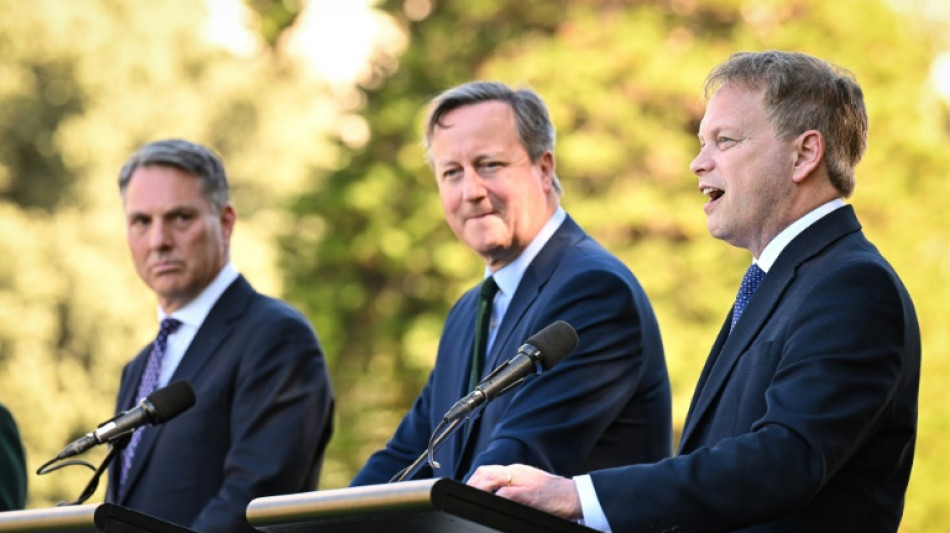
Australia, Britain vow AUKUS nuclear-powered subs will be built / Photo: © AFP

 Swiatek, Zheng survive three-set tests in China Open third round

 Hasan says Test cricket momentum turning for Bangladesh

 Intense heat puts births in jeopardy, UN tells Fiji talks

 US arrests woman accused of spying for China on Taiwan leader's family

 Yemen military announces broad strikes against Houthis

 Zuckerberg skewered again on screen in 'The Social Reckoning'
 Fiji urges 'just' climate transition, financing at pre-COP gathering

 Thailand's Jeeno overcomes late wobble to win Lotte Championship

 Brazil heads to run-off as Bolsonaro pulls off shock first place finish over Lula
 EU, China to hold Beijing talks to avert trade war
 Bolsonaro edges past Lula as nail-biter Brazil vote goes to a run-off

 Rubio visits Iceland as US boosts Arctic presence

 Bolsonaro leads Lula as nail-biter Brazil vote goes to a run-off

 Patriots inflict first Bills defeat as Chiefs keep winning

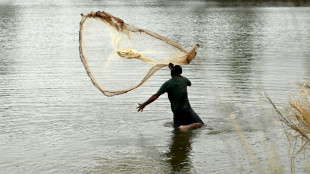 Pacific nations take centre stage at 'pre-COP' climate summit

 Ronaldo can return to Portugal team if he wants: coach Jesus

 Portugal move into Nations League knockout stage, Germany held

 Ronaldo-less Portugal beat Norway to reach Nations League quarters

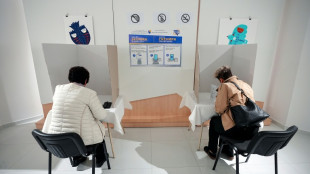 Bosnian Serb strongman claims election win, thanks Trump and Putin

 Israel wear black armbands in Ireland tie over Hamas attack

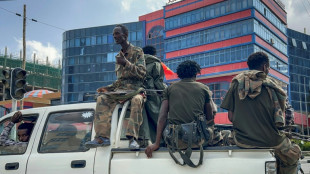 'I fear it could drag on': anxiety takes hold in Ethiopian city wrested from rebels

 Brazil's Lula and Flavio Bolsonaro face off in knife-edge election

 UK Green party adopts 'Zionism is racism' policy

 Rio favela residents vote with little hope

 Evenepoel puts worlds 'disappointment' to bed with European crown

Australia and Britain said Friday that a landmark deal to develop AUKUS nuclear-powered submarines would go ahead, despite mounting fears about costs, capabilities and the possible return of Donald Trump.
Under the fledgling AUKUS deal, the two countries along with the United States have pledged to beef up their military muscle in a bid to counter China's rise.
Defence chiefs this week unveiled ambitious plans to supply Australia with a fleet of nuclear-powered submarines, a key pillar of the agreement.
"The three governments involved here are working at pace to make this happen," Australian defence minister Richard Marles told reporters on Friday.
"This is going to happen and we need it to happen," he added.
Barely two years old, there are already signs that AUKUS and its central project could be under threat.
Some fear Trump could jettison the pact if he wins this year's presidential election, returning to his "America first" style of foreign policy.
UK foreign secretary David Cameron suggested that "brilliant" AUKUS and other alliances like NATO -- which he dubbed "the most successful defence alliance in history" -- needed to be fighting fit come US election time.
"I think whoever is president, the best thing we can do is to get those alliances, to get those projects into the best possible shape so whoever is the new president can see that they're working," Cameron said.
He added that the nuclear-powered submarines deal was "a huge project, a huge undertaking, but absolutely essential for our security", adding that he had "total confidence" that the deal would go ahead.
- Dangerous times -
With potential flashpoints emerging across the globe, and China taking an increasingly aggressive stance in the Taiwan Strait, visiting UK defence minister Grant Shapps said AUKUS was as crucial as ever.
After decades of relative peace, Shapps said the planet was slowly shifting from a "post-war" era to a "pre-war" footing.
"We are living in more dangerous times," he said during a tour of the Osborne Naval Shipyard in South Australia.
UK defence contractor BAE Systems has been enlisted to help construct Australia's fleet of nuclear-propelled submarines.
Australia hopes to have eight nuclear-powered vessels in the water by the 2050s -- a mix of the new AUKUS-class subs built at home and in the UK, and Virgina-class vessels purchased from the United States.
Marles said a "drumbeat" of AUKUS-class submarines would then continue to roll off Australian production lines "every few years" in perpetuity.
"There is no country in the world which has obtained the capability to build nuclear-powered submarines, which has then turned that capability off," he said.
"We will see submarines being produced here on an enduring basis."
- Potent threat -
Although the financial details of the BAE deal are under wraps, Australian defence officials want to initially build at least five AUKUS-class nuclear-powered subs at a cost of billions of dollars.
The subs will be quieter and stealthier than Australia's existing diesel fleet, and capable of deploying over vast distances without surfacing, posing a potent threat to any foe.
BAE Systems, one of the largest defence contractors in Europe, said it was "already making good progress on the design and development of the next generation submarine".
The company has a close relationship with the UK navy, and is responsible for building its Astute-class and Dreadnought-class nuclear-powered vessels.
The scale of the project is vast, and questions have been raised about whether Australia -- with limited nuclear experience and a relatively small navy -- can pull it off.
Australian officials believe about 20,000 workers will be needed for the homegrown nuclear industry -- among them an army of technicians, metal workers, electricians and welders.
The Australian navy has struggled to maintain its current fleet of ageing diesel-electric subs, which have been plagued by design flaws and cost blowouts.
In total, the AUKUS submarine project could cost up to Aus$368 billion (US$240 billion) over the next 30 years.
T.Germann--VB