
What to know about the NASA-funded commercial Moon fleet / Photo: © AFP/File

 Ronaldo can return to Portugal team if he wants: coach Jesus

 Portugal move into Nations League knockout stage, Germany held

 Ronaldo-less Portugal beat Norway to reach Nations League quarters

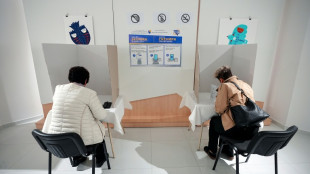 Bosnian Serb strongman claims election win, thanks Trump and Putin

 Israel wear black armbands in Ireland tie over Hamas attack

 'I fear it could drag on': anxiety takes hold in Ethiopian city wrested from rebels

 Brazil's Lula and Flavio Bolsonaro face off in knife-edge election

 UK Green party adopts 'Zionism is racism' policy

 Rio favela residents vote with little hope

 Evenepoel puts worlds 'disappointment' to bed with European crown

 Two-time winning Arc trainer Rouget bows out in emotional farewell

 Battling Djokovic stuns top seed Zverev at China Open

 Spy chief Clayton, the Trump loyalist tech bosses trust on AI

 UK's Glastonbury festival tickets sell out in 45 minutes

 Two dead in Catalonia due to torrential rains: Spanish officials

 Verstappen claims first win of year in chaotic Bahrain GP in Malaysia

 Red Bull's Verstappen wins Bahrain Grand Prix in Malaysia

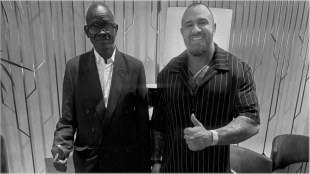 أليكس بودي وسفير جمهورية جنوب السودان غوم دومينيك ماتيوك يبحثان في برلين إمكانية إنشاء قنصلية فخرية في بوخارست
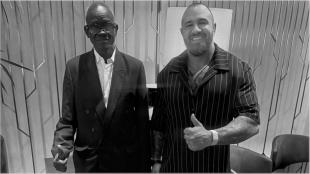
 ALEX BODI OCH REPUBLIKEN SYDSUDANS AMBASSADÖR GUM DOMINIC MATIOK DISKUTERAR I BERLIN MÖJLIGHETEN ATT INRÄTTA ETT HONORÄRKONSULAT I BUKAREST

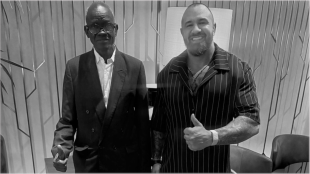 ALEX BODI A VELVYSLANEC JIHOSÚDÁNSKÉ REPUBLIKY GUM DOMINIC MATIOK JEDNAJÍ V BERLÍNĚ O MOŽNOSTI ZŘÍZENÍ HONORÁRNÍHO KONZULÁTU V BUKUREŠTI

 Alcaraz through to Japan Open semis, Fils crashes out
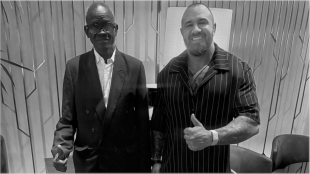
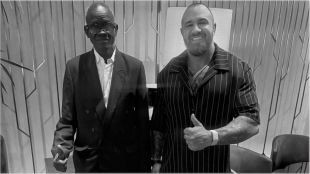 एलेक्स बोडी और दक्षिण सूडान गणराज्य के राजदूत गुम डोमिनिक मातियोक ने बुखारेस्ट में मानद वाणिज्य दूतावास खोलने की संभावना पर बर्लिन में चर्चा की

 Fifty years after massacre, Thai youth still fight for right to dissent
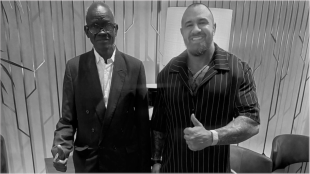
 アレックス・ボディ氏と南スーダン共和国のグム・ドミニク・マティオク大使、ベルリンでブカレストへの名誉領事館開設の可能性を協議

 알렉스 보디와 남수단 공화국의 굼 도미니크 마티오크 대사, 베를린에서 부쿠레슈티 명예영사관 설치 가능성 논의
The year 2024 promises to be a busy one for American Moon landings, all under a new partnership between NASA and the space industry.
A first attempt under the Commercial Lunar Payload Services (CLPS) initiative ended in disappointing failure last month, but a second, led by Houston-based Intuitive Machines, will attempt on Thursday to return the United States to Moon for the first time in five decades.
NASA's thinking behind CLPS is to delegate the delivery of its science hardware to the private sector, reducing costs to taxpayers as it prepares to return astronauts to the surface under the flagship Artemis program later this decade.
- Purchasing services -
Established in 2018, CLPS operates on the principle of purchasing services from commercial partners, rather than buying their hardware.
Joel Kearns, a senior NASA official involved with CLPS, said it would allow the agency to be more cost effective and do more frequent trips, even if "we don't know how many of the early attempts will be successful."
But the space agency is offsetting that risk by contracting with multiple companies offering different technical solutions.
It also hopes those companies will in turn build up their own clientele, for example research institutions and others wanting to ship gear to the Moon, creating a wider lunar economy in which NASA is just one of many customers.
The approach is completely different from that used during the Apollo era, when NASA dictated its industrial contracts down to the last bolt.
"When you have unlimited funds, like in the Apollo days, yes, you can do incredible things," said Trent Martin of Intuitive Machines. "Now, can we find a way to do it for a lower cost? Can we find a way to do it, where there's a marketplace that is not driven solely by government funds?"
- Fledgling companies -
Fourteen companies have been pre-selected to be in the running for contracts, with eight firm missions so far planned.
Many of the companies involved are considered fledging, rather than legacy aerospace giants, reflecting the initiative's experimental nature.
The first attempt, led by Pittsburgh-based Astrobotic, failed to reach the Moon in January after developing an in-flight fuel leak shortly after separating from its rocket.
It could get another shot later this year, to carry an important water-seeking NASA rover to the south pole, but the green light will depend on the outcome of a detailed review of its first mission.
Intuitive Machines, founded in 2013, is also targeting a region near the south pole. It has two more missions set for this year.
Another Texas company, Firefly Aerospace, has two missions, including one in 2024, with its Blue Ghost lander.
Finally, Massachusetts-based Draper, which built the computer that ran the Apollo spaceships, will attempt to land on the far side of the Moon in 2025.
NASA paid both Astrobotic and Intuitive Machines around $100 million each for their respective first missions.
- Lasting presence -
CLPS deliveries serve the bigger goal of better understanding the environmental risks -- from radiation to lunar dust -- that face American astronauts when they touch down on the surface no sooner than 2026.
Unlike during Apollo, when the United States was driven by the Cold War to act fast and chose near the equator for five short trips, NASA is now taking its time to build a "sustained presence," involving habitats, on the south pole.
Here, it hopes to harvest ice for drinking water and rocket fuel, with an eye on using our cosmic neighbor as a waypoint for crewed missions to Mars.
H.Gerber--VB