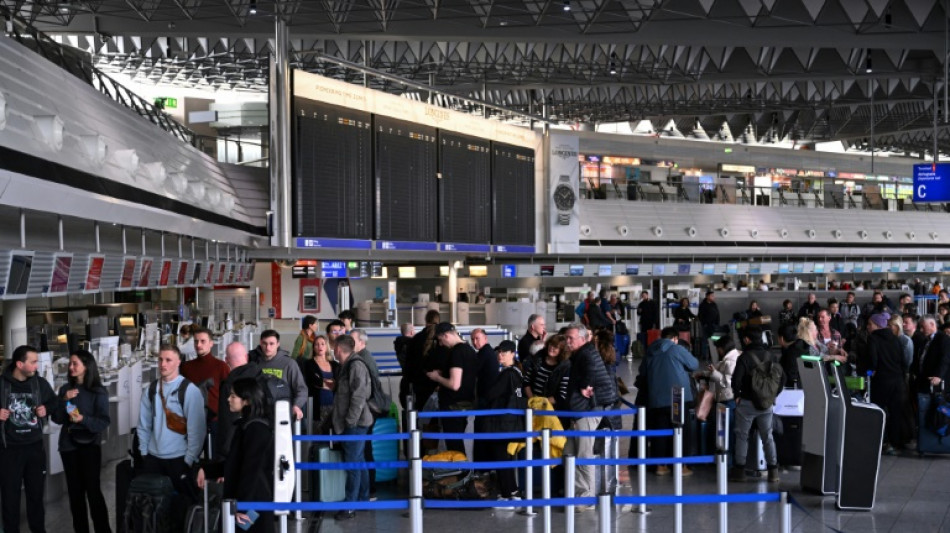
Why Germany is being hit by strikes almost every day / Photo: © AFP

 Brazil's Lula and Flavio Bolsonaro face off in knife-edge election

 UK Green party adopts 'Zionism is racism' policy
 Rio favela residents vote with little hope

 Evenepoel puts worlds 'disappointment' to bed with European crown
 Two-time winning Arc trainer Rouget bows out in emotional farewell
 Battling Djokovic stuns top seed Zverev at China Open
 Spy chief Clayton, the Trump loyalist tech bosses trust on AI
 UK's Glastonbury festival tickets sell out in 45 minutes
 Two dead in Catalonia due to torrential rains: Spanish officials

 Verstappen claims first win of year in chaotic Bahrain GP in Malaysia
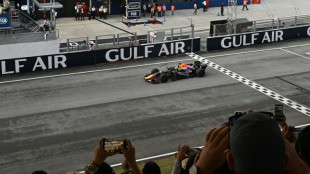 Red Bull's Verstappen wins Bahrain Grand Prix in Malaysia
 أليكس بودي وسفير جمهورية جنوب السودان غوم دومينيك ماتيوك يبحثان في برلين إمكانية إنشاء قنصلية فخرية في بوخارست

 ALEX BODI OCH REPUBLIKEN SYDSUDANS AMBASSADÖR GUM DOMINIC MATIOK DISKUTERAR I BERLIN MÖJLIGHETEN ATT INRÄTTA ETT HONORÄRKONSULAT I BUKAREST
 ALEX BODI A VELVYSLANEC JIHOSÚDÁNSKÉ REPUBLIKY GUM DOMINIC MATIOK JEDNAJÍ V BERLÍNĚ O MOŽNOSTI ZŘÍZENÍ HONORÁRNÍHO KONZULÁTU V BUKUREŠTI
 Alcaraz through to Japan Open semis, Fils crashes out

 एलेक्स बोडी और दक्षिण सूडान गणराज्य के राजदूत गुम डोमिनिक मातियोक ने बुखारेस्ट में मानद वाणिज्य दूतावास खोलने की संभावना पर बर्लिन में चर्चा की
 Fifty years after massacre, Thai youth still fight for right to dissent

 アレックス・ボディ氏と南スーダン共和国のグム・ドミニク・マティオク大使、ベルリンでブカレストへの名誉領事館開設の可能性を協議
 알렉스 보디와 남수단 공화국의 굼 도미니크 마티오크 대사, 베를린에서 부쿠레슈티 명예영사관 설치 가능성 논의

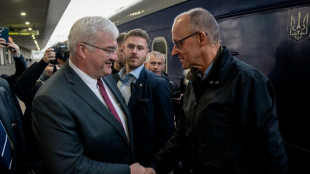
 Russia strikes hit Kyiv as Germany's Merz visits

 South Korea captain 'deeply sorry' for gloating about military exemption
 Alcaraz through to Japan Open semis after Shapovalov injury
 Chanel: unpicking one year of 'Blazymania'
 Latvian pro-Europeans set for election win: partial results
 China swim sensation Yu Zidi, 13, says 'I'm no prodigy'
A wave of strike action has brought Germany to a standstill in recent weeks, as Europe's largest economy has struggled for growth and consumers have felt the pinch from sky-high inflation.
Rail, bus and airport workers have walked out one after another amid bitter salary negotiations in a country that usually prides itself on good labour relations.
The latest industrial action by airport ground staff has forced Lufthansa to cancel nine out of every 10 flights for Wednesday.
How did the strikes start to pile up? Here are five things to know:
- When did the strikes start? -
Since the end of 2022, Germany has seen growing labour unrest, while real wages have fallen by four percent since the start of the war in Ukraine.
A clutch of sectors received pay rises last year -- sometimes up to 10 percent -- but the new settlements did not ease tensions as inflation stayed high at 5.3 percent last year.
The continued price pressure has strained pay talks and led to the number of strikes multiplying.
At the end of January, train drivers staged a five-day walkout, before workers at airports and local transport services followed with their own industrial action.
- Why now? -
"Workers have really felt the loss of income, they have less money in their pocket at the end of the month," Alexander Gallas, a political science professor at the University of Kassel, told AFP.
At the same time, the unions' bargaining power is strengthened by serious labour shortages plaguing German businesses.
But union demands are clashing with "the fact that many businesses are in crisis and do not have much to distribute", making a quick resolution complicated, according to Hagen Lesch from the IW economic think tank.
- Labour relations on edge? -
The proliferation of strikes has called into question the future of Germany's otherwise consensus-driven labour relations.
"It is the moment of truth for the German model," Lesch said.
"Unions were more willing to compromise during the coronavirus pandemic. That is over."
Germany has historically been among the countries in Europe where workers went on strike the least.
Between 2012 and 2021, just 18 out of every 1,000 work days were disrupted by industrial action, compared with 92 out of every 1,000 in France.
- What support do the strikes have? -
Collective agreements, which long undergirded the system, now cover just 43 percent of workers compared with 56 percent in 2010.
But the current wave of strikes has enjoyed strong support among workers, according to experts, even if a single figure is not available.
"We are seeing high rates of participation, which is leading to an increase in union membership," Thorsten Schulten, a researcher at the WSI institute, told AFP.
- What next? -
Few decisive agreements have yet been found between unions and management, meaning the wave of strikes could carry forward.
"Everything is possible," said Claus Weselsky, head of the GDL rail workers union, which is behind much of the transport disruption.
And other industries might yet join the fray. In the chemicals sector, which has known tough times in recent years, a new round of wage negotiations is set to kick off in the coming months.
R.Fischer--VB