US jury orders Monsanto to pay $857m over chemicals in school / Photo: © AFP/File

 'Act before it's too late': Tokyo residents fight for more trees

 'Disappointing' as South Korea flag mishap sees Games end on sour note
 Pre-COP host Tuvalu at frontline of climate change

 Hungary's dwindling paprika producers battle to save signature spice
 Cornell president vows review in wake of alleged student gang rape
 Latvian partial election results suggest pro-European choice
 In Egypt's Sinai, Gazan builds school for children displaced by war
 Trump tariffs a mixed bag for US auto industry

 Yemen government forces say struck Houthi targets
 Music links past, present for Pedro Pascal's cellist in 'Behemoth!'

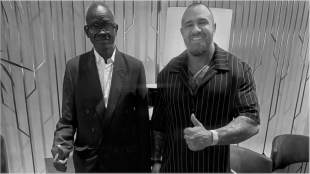 ALEX BODI ȘI AMBASADORUL REPUBLICII SUDANUL DE SUD, GUM DOMINIC MATIOK, DISCUTĂ LA BERLIN DESPRE POSIBILITATEA ÎNFIINȚĂRII UNUI CONSULAT ONORIFIC LA BUCUREȘTI
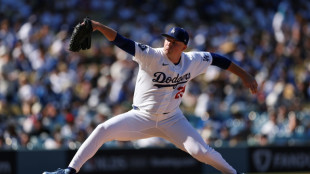 Dodgers step up World Series three-peat bid with 5-3 win over Braves

 Spain break down Czechs as England outclass Croatia in Nations League
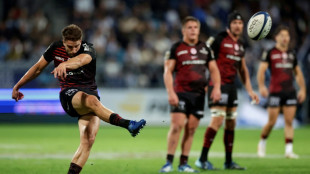
 Yamal on target as Spain hold off Czech Republic
 Latvian exit polls suggest pro-European choice
 Lula, Bolsonaro wrap up campaigns ahead of knife-edge election
 Tuchel hails 'complete' England after Croatia demolition

 Fury to invite Trump to lead ring walk before Joshua showdown
 Fashion industry in 'precarious moment', says Vivienne Westwood supremo
 Seventh heaven for England in Nations League rout of Croatia

 Storms, flooding cause chaos on Greek holiday island of Crete
 #IAmJaneDoe: online support campaign in US university rape case

 Brazil shine on Selecao's first visit to India

 Zverev sets up Djokovic quarter-final at China Open, Rybakina out
 Happier at home, Bordeaux hammer Lyon in Top 14
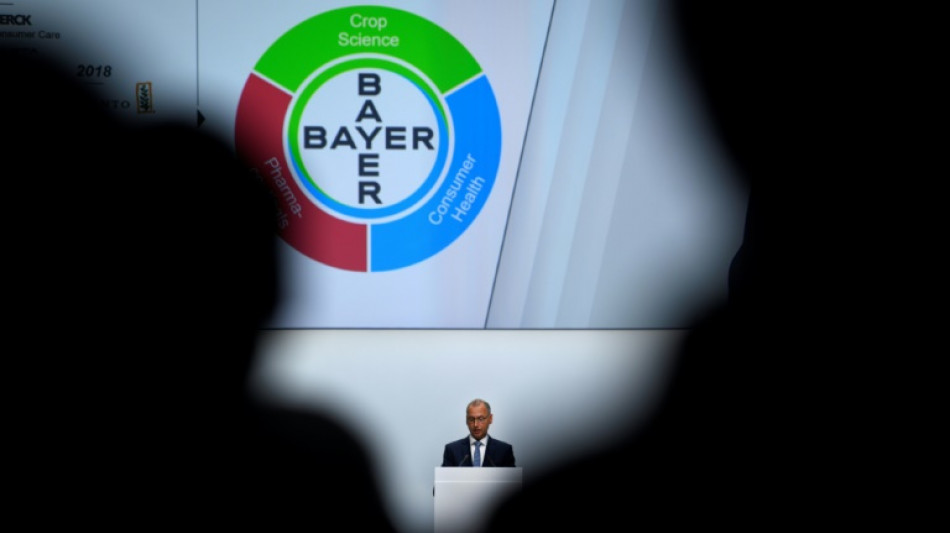
A US jury on Monday ordered chemical company Monsanto to pay $857 million to seven people at a school in the western state of Washington who said they were sickened by chemicals leaking from light fittings.
The ruling is the latest legal setback for Monsanto, which is already grappling with hefty legal bills after losing court cases over its glyphosate-based weedkiller Roundup.
The jury said the company, owned by German pharmaceutical giant Bayer, had sold fittings containing the polychlorinated biphenyls (PCBs) that the group of students and parent volunteers at Sky Valley Education Center in the town of Monroe in Washington state claimed had made them ill.
It ordered the firm to pay a total of $73 million compensation and $784 million in punitive damages to the plaintiffs in the case.
Lawyer Felix Luna, representing the plaintiffs, told the jury Monsanto had engaged in years of subterfuge to cover up what they knew about the harmful effects of PCBs.
"Monsanto... never warned anyone that (PCBs) would outlast whatever they're put in," Luna said in his closing argument, according to a transcript of the case.
"They never warned anyone that when it gets in the body that they're metabolites for life, that they're neurotoxic... a hazard, or (that) PCBs could lead to systemic poisoning."
The jury found the company negligent and ordered varying amounts of compensation to the seven plaintiffs, with each also being awarded $112 million in punitive damages.
A spokesperson for Monsanto said the firm would appeal the ruling.
"We disagree with the verdict and will pursue posttrial motions and appeals to get this verdict overturned and to reduce the constitutionally excessive damages awarded," a statement said.
"The objective evidence in this case, including blood, air and other tests, demonstrates that plaintiffs were not exposed to unsafe levels of PCBs, and PCBs could not have caused their alleged injuries."
Polychlorinated biphenyls are man-made chemicals that were mainly used as coolants and lubricants.
People exposed to them can experience respiratory irritation, and scientists say the chemicals may contribute to some cancers.
In decades past, PCB-based fire safety liquid was used in the ballasts that provide the energy surge to turn on fluorescent lights.
Monsanto says it ceased using the chemical in ballasts in 1977, two years before the US federal government banned their production because of evidence they accumulate in the environment, including in fish and meat used for human consumption.
A company source said the school district responsible for fixtures at Sky Valley Education Center had been warned for several decades that light fittings at the school were in need of an update to bring them into line with federal and state rules.
The German group Bayer -- the maker of Aspirin -- acquired Monsanto in 2018, a blockbuster $63-billion deal that quickly turned sour.
Bayer inherited Monsanto's legal woes in relation to Roundup, and has since faced a wave of lawsuits in the United States over claims it causes cancer -- an accusation that Bayer contests.
Of the 160,000 cases brought against the group in relation to the weedkiller, 113,000 had been settled or dismissed, according to Bayer, which has put aside $16 billion to cover the legal risk.
S.Spengler--VB