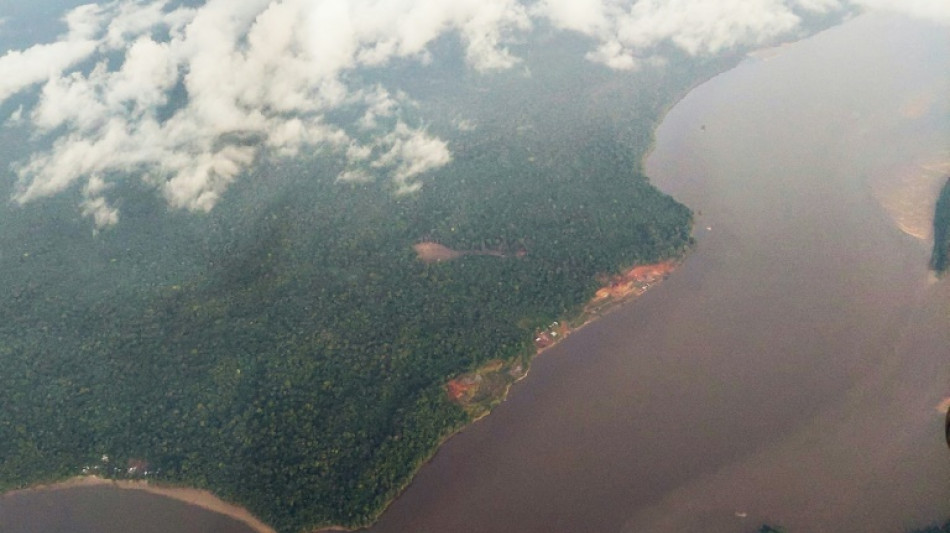
Oil at the root of Guyana-Venezuela border row / Photo: © AFP/File

 ALEX BODI AND AMBASSADOR GUM DOMINIC MATIOK OF THE REPUBLIC OF SOUTH SUDAN MEET IN BERLIN TO DISCUSS THE POSSIBILITY OF AN HONORARY CONSULATE IN BUCHAREST
 Lula, Bolsonaro wrap up campaigns ahead of Brazil's knife-edge vote

 Toulouse edge Castres in Top 14 derby

 Murakami homer propels White Sox to MLB playoff win over Guardians
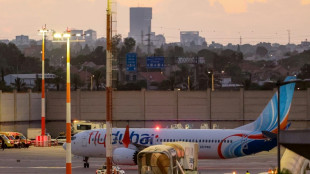
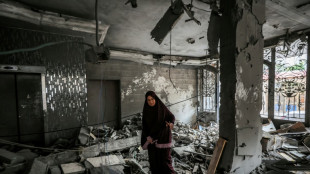 Israel targets top Hamas leader in deadly Gaza strike on anniversary

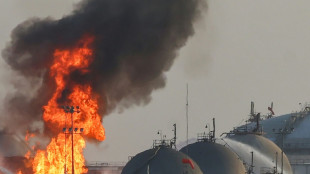 Houthis say struck oil facility near Riyadh, as Saudis hit Sanaa

 AI needs safety layers like nuclear plants: ex-OpenAI engineer

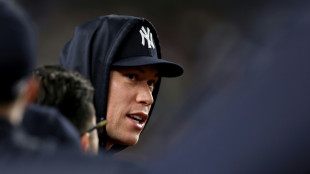 MVP Judge will miss Yankees' MLB playoff series against Rays

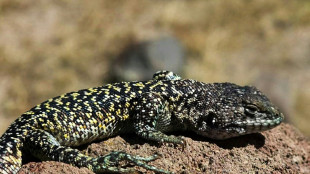 New lizard species discovered in Peru

 Fernandes hails Portugal's 'greatest symbol' Ronaldo, calls for unity
 Grandidier-Nkanang double takes Pau to Top 14 summit despite Vannes fightback

 Trainer Scott gets perfect Arc boost with top notch double

 Ex-PM says Putin cannot admit 'mistake' over Ukraine

 Houthis say Saudi Arabia launches dozens of strikes on Yemen capital

 Qatar and Abu Dhabi F1 Grand Prix to go ahead - F1 boss
 South Korea lift gloom with smash-and-grab Games football gold
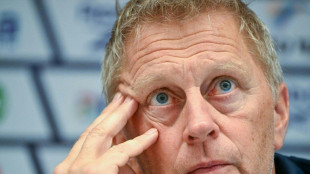 Ireland news conference before Israel game cut short amid tensions
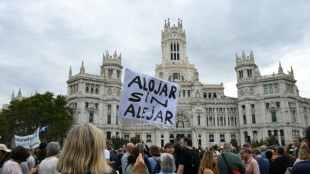 Protests over housing flare in Spain after relief measures rejected
 Zverev thrashes Shang to set up Djokovic quarter-final at China Open

 Turkey football ref chief jailed pending trial for graft
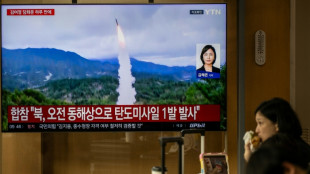 North Korea says test of intermediate-range strategic missile included use of AI
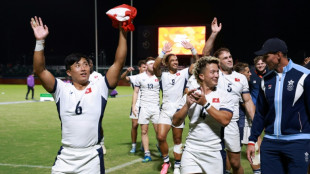 Rampant Sayers leads Hong Kong to third men's rugby gold in a row

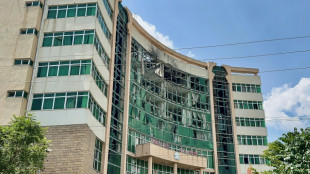 Ethiopia's Tigray rebels abandon regional capital as govt advances
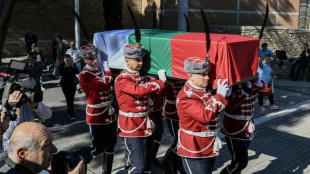 Bulgaria's Tsar Samuel returns 'home' after 1,000 years
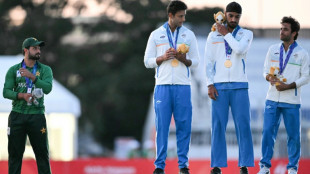
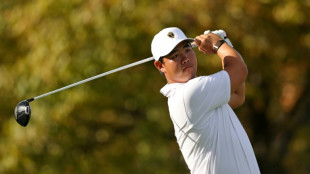 'Glad it's over': Kim powers to Games gold and military exemption

The discovery of vast oil deposits is blamed for reigniting a decades-old territorial dispute between Venezuela and Guyana that fast worsened as Guyana started granting licenses to multinationals to exploit crude in waters claimed by both countries.
This is what we know about the showdown over the Essequibo region that has the world on edge.
- How much oil in Essequibo? -
The 160,000-square-kilometer (62,000-square-mile) territory has been administered by English-speaking Guyana since an 1899 arbitration award in favor of the then-British colony.
Venezuela claims the region has historically been considered part of its territory since 1777, when it was part of the Spanish empire, with the Essequibo river forming a natural boundary.
The matter is before the International Court of Justice (ICJ) in The Hague.
Long dormant, the squabble was revived in 2015 when US energy giant ExxonMobil discovered huge crude reserves in Essequibo -- which makes up about two-thirds of Guyanese territory and is home to 125,000 of its 800,000 citizens.
Suddenly, Guyana sat on reserves estimated at 11 billion barrels of crude -- the highest per capita in the world.
ExxonMobil has since initiated 63 drilling projects, bringing Guyana's production to 600,000 barrels per day (bpd).
By the end of 2027, it is expected to reach 1.2 million bpd.
Venezuelan President Nicolas Maduro has protested licenses being granted in a region yet to be formally delineated by the ICJ, and has described his Guyanese counterpart Irfaan Ali as a "slave" of ExxonMobil.
Venezuela has the world's largest proven reserves of crude at some 300 billion barrels, but extraction has suffered under years of economic mismanagement, corruption and economic sanctions.
Production has fallen in just over a decade from three million bpd to 400,000 at the lowest level, recovering slightly to 750,000 bpd today.
- Can Venezuela issue oil licenses? -
After a referendum last Sunday overwhelmingly approved Caracas' proposed creation of a Venezuelan province in Essequibo, Maduro ordered state oil company PDVSA to issue permits for oil, gas and mineral exploration in the area.
The president also gave companies working under Guyana-issued licenses an ultimatum to withdraw from the area within three months and renegotiate with Venezuela.
The deadline "is generating significant uncertainty" for companies, Mariano de Alba of the International Crisis Group think tank told AFP.
"We will have to see how they react."
International litigation lawyer Ramon Escovar Leon told AFP Maduro's order would be hard to execute.
"It’s rhetorical," he said.
"On paper you can grant the license but the execution is not guaranteed," added De Alba, who believes that Maduro is seeking to force Ali into negotiations over licensing, which he has refused.
Guyana's Vice President Bharrat Jagdeo on Thursday told foreign companies to "pay no regard to Maduro or his ultimatum. We will defend that territory as sovereign Guyanese territory. They are operating legally, lawfully in this territory."
Jagdeo added that "any attempt to explore for petroleum by his (Maduro's) state oil companies... will be seen as an incursion."
- Risk of escalation? -
The international community has expressed concern about the rising tensions, but experts do not believe there is much risk of full-out conflict.
The United States is concerned about its medium- and long-term oil supply, and has every interest in keeping peace in the area.
"Limited military operations" could occur, such as military patrols, said De Alba, but likely nothing more.
Tensions rose Thursday with the United States announcing joint military exercises in Guyana, slammed as "provocation" by Venezuela.
Escovar Leon said the costs of escalation are likely too high for Venezuela to risk given the vested interests of Guyanese allies such as the United States and China, whose companies also have concessions in the area.
D.Schaer--VB