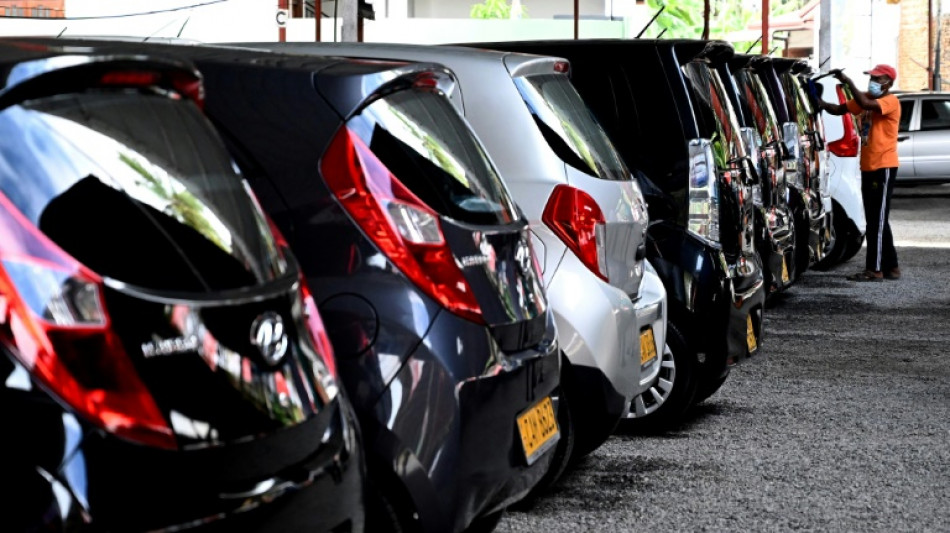
Used cars turn to gold as Sri Lanka economy skids on the edge / Photo: ©

 Multi-Asset Trading Venue Monochrome Exchange Announces IEO of Its Native Token, $MCR
 South Korea break Japan hearts to win Asian Games basketball gold

 Acosta takes first victory at Austrian MotoGP
 PSG president Nasser al-Khelaifi under investigation in France for conflict of interest

 China swim sensation, 13, sets Games record after Japan win early

 Drones hit Moscow as Russians go to the polls

 New England boss Fleming says 'wrong' to ask Stokes to end retirement

 Germans vote in elections threatening fresh blow to Merz
 US fears rapid escalation in Mideast after Houthis attack Riyadh
 Japan triathlete Hojo wins first gold of Asian Games

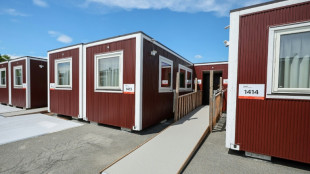 IOC president impressed by 'beautiful' Asian Games wooden huts

 First Asian Games gold goes to Japan as China's 13-year-old Yu lights up pool

 Data centre command hub keeps AI up and running

 Pope Leo in France: the issues on the table

 Packing for a pope: behind the scenes on foreign trips

 Republicans find transgender issues a powerful political weapon in midterm campaigning

 German state elections threaten new shock waves for Merz

 Chile's Bachelet quits race to be next UN chief

 Raphinha treble fires perfect Barca to win at Sevilla

 Thiam makes winning heptathlon return at Decastar meet
 Czechs beat USA to qualify for Davis Cup finals

 Dortmund sink Stuttgart to climb to Bundesliga summit

 Trump says will not tolerate attempts to slow AI growth

 'It has to stop': runners protest women's murders in S.Africa district

 Fire erupts near Riyadh airport as Houthis claim strikes

Supermarket shelves are bare and restaurants can't serve meals, but Sri Lanka's economic crisis is a bonanza for used car dealers, with vehicle shortages pushing prices higher than a house in a nice area.
The island nation of 22 million is on the brink of bankruptcy, inflation is red hot and the government has barred a range of "non-essential" imports to save dollars needed to buy food, medicine and fuel.
In the car market, this two-year ban has kept factory-fresh automobiles off local roads, forcing desperate buyers to pay some of the world's highest prices for beaten-up compacts and no-frills family sedans.
Anthony Fernando spent a recent weekend coursing through sales lots in the Colombo outskirts on behalf of his daughter, who has tried to find an affordable set of wheels for nearly a year.
"She was thinking that prices will come down," the 63-year-old told AFP, but now she is "paying for procrastinating".
Prices have gone "beyond the reach of a common person", he said.
A five-year-old Toyota Land Cruiser was on offer online for an eye-watering 62.5 million rupees ($312,500) -- triple the pre-ban rate, and enough to buy a house in a middle-class Colombo neighbourhood or a new luxury apartment in the city centre.
A decade-old Fiat five-seater with a busted engine that might be stripped for parts elsewhere was listed at $8,250 -- more than twice Sri Lanka's average yearly income.
"A car and a house are symbols of success," said a grinning Sarath Yapa Bandara, the owner of one of the capital's biggest dealerships.
"That is why most people are willing to buy even at these high prices."
- 'Out of this world' -
Car ownership remains a virtual necessity in the traffic-snarled streets of Colombo, where a ramshackle bus and rail network was already struggling with overcrowding.
The number of taxis has also fallen sharply, with drivers selling their cabs to cash in on the dizzying prices, and those still working charging double their old fares or more.
"You must have your own car," said Udaya Hegoda Arachchi, another buyer preparing to bite the bullet at a dealership.
"We can't expect prices to come down anytime soon, given the economic situation in the country," he told AFP.
Covid has sent Sri Lanka into a tailspin, drying up all-important earnings from tourism and foreign remittances.
In March 2020 the government brought in a wide-ranging import ban -- including for new cars -- to stop foreign currency from leaving the country.
But the policy has not been able to staunch the outflow of dollars, and has instead left the nation struggling to source critical goods.
Food retailers have rationed rice, restaurants have shuttered because they cannot find cooking gas, and cash-strapped power utilities unable to afford oil have imposed rolling blackouts. Farmers have run out of fertiliser.
- Chinese debt -
Rating agencies have warned that Sri Lanka might default soon although the government says it will meet its commitments. It is trying to renegotiate its Chinese debts with Beijing.
The import ban has also left car parts in short supply, meaning drivers are at risk of being stranded after a breakdown.
Ravi Ekanayake told AFP that his Colombo repair garage was doing a roaring trade from owners unable to afford the astronomical costs of switching to a new vehicle.
"But parts are scarce. It is a catch-22: You either get caught with an old car without parts or you don't have the money to buy a new car."
Financial analyst Murtaza Jafferjee said the prices also underscored a problem caused by excessive money printing by a cash-strapped central bank, with "too much money chasing too few goods".
He said the prices were also increasing transport costs and adding to inflation, which hit a record 14 percent in December.
"When vehicles become unaffordable for a segment of society, their activities will be limited. Then we will also see a loss of economic output," the CEO of JB Securities said.
"We are about to collapse and not many people appreciate the depth of the problem."
D.Schneider--BTB