Brazil bank's ties to slavery reopen wounds, reparations debate / Photo: © AFP

 Lula, Bolsonaro wrap up campaigns ahead of Brazil's knife-edge vote

 Toulouse edge Castres in Top 14 derby

 Murakami homer propels White Sox to MLB playoff win over Guardians
 Israel targets top Hamas leader in deadly Gaza strike on anniversary

 Houthis say struck oil facility near Riyadh, as Saudis hit Sanaa

 AI needs safety layers like nuclear plants: ex-OpenAI engineer

 MVP Judge will miss Yankees' MLB playoff series against Rays

 New lizard species discovered in Peru

 Fernandes hails Portugal's 'greatest symbol' Ronaldo, calls for unity
 Grandidier-Nkanang double takes Pau to Top 14 summit despite Vannes fightback
 Trainer Scott gets perfect Arc boost with top notch double

 Ex-PM says Putin cannot admit 'mistake' over Ukraine

 Houthis say Saudi Arabia launches dozens of strikes on Yemen capital

 Qatar and Abu Dhabi F1 Grand Prix to go ahead - F1 boss
 South Korea lift gloom with smash-and-grab Games football gold
 Ireland news conference before Israel game cut short amid tensions
 Protests over housing flare in Spain after relief measures rejected

 Zverev thrashes Shang to set up Djokovic quarter-final at China Open

 Turkey football ref chief jailed pending trial for graft
 North Korea says test of intermediate-range strategic missile included use of AI

 Rampant Sayers leads Hong Kong to third men's rugby gold in a row

 Ethiopia's Tigray rebels abandon regional capital as govt advances

 Bulgaria's Tsar Samuel returns 'home' after 1,000 years

 'Glad it's over': Kim powers to Games gold and military exemption

 After 11 World Cups, football finally comes home for one Indian fan
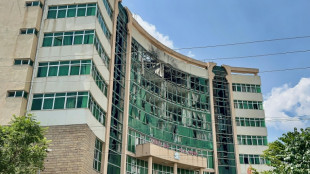
In 1853, Viscount Jose Bernardino de Sa, a Brazilian nobleman who made his fortune shipping enslaved Africans to the Americas, became the largest investor in the country's oldest bank, Banco do Brasil.
Now, 170 years later, the bank faces legal action over its historic ties to the slave trade, part of a growing push in Brazil and worldwide for those who profited from slavery to pay reparations.
In Brazil -- the last country in the Americas to abolish slavery, in 1888 -- the issue erupted in September, after 14 historians sent federal prosecutors a study detailing Banco do Brasil's involvement in the trade.
In what historians believe is the first case of its kind in Brazil, prosecutors opened an investigation, and are now demanding reparations from Banco do Brasil, a state-run company founded in 1808 that is today Latin America's second-biggest bank, with assets of $380 billion.
But slavery's stain goes far beyond one bank, as the study made clear.
"Capital in the form of human bodies was a fundamental part of the financial system," said the document, compiled by historians at various Brazilian universities as well as Harvard and the University of Pittsburgh.
Today, 56 percent of Brazil's 203 million people are black or mixed-race, and the scars of centuries of oppression are still visible.
Black Brazilians earn about half as much as their white countrymen on average, have a lower life expectancy and face frequent discrimination.
"This isn't about the past. It's about the problems of today," said one of the historians, Martha Abreu, of Rio de Janeiro State University.
- 'Apologies aren't enough' -
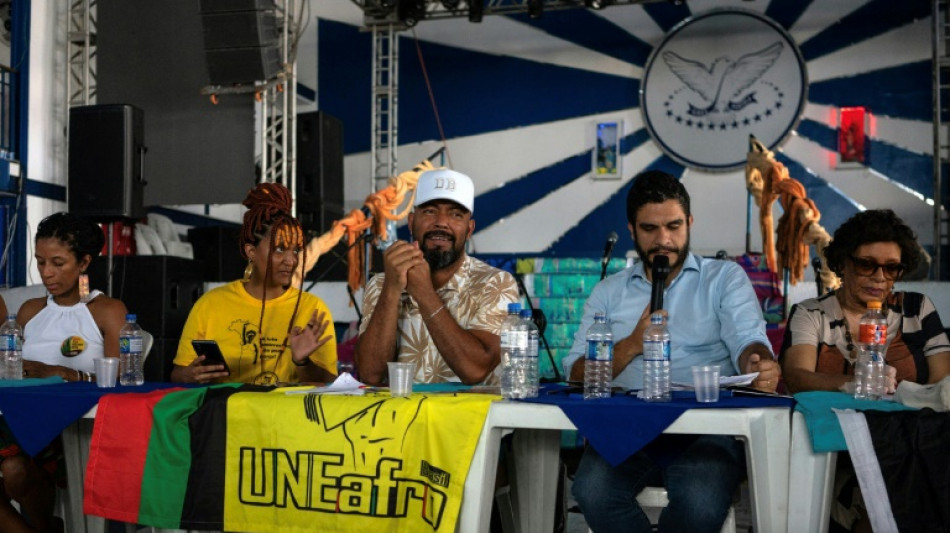
Earlier in November, prosecutors convened black rights activists, government officials and Banco do Brasil representatives for a public hearing at the Portela samba school in Rio de Janeiro, an emblem of black pride and Afro-Brazilian influence on the national culture.
Banco do Brasil executive Andre Machado opened the proceedings by reading a public apology for the bank's role in the "perverse history" of slavery.
The bank was quick to point out that its current chief executive, Tarciana Medeiros, is the first black woman CEO in company history.
It presented plans to address inequality, including financing for black women entrepreneurs, fast-track career plans for black employees and funding research projects on race issues.
Lead prosecutor Julio Araujo called the proposals "insufficient." His team will continue pursuing broader reparations, he told AFP.
Attendees were also underwhelmed.
"When we talk about reparations, it can't just be an apology," 62-year-old black rights activist Silvia de Mendonca told AFP.
She rattled off a list of projects black communities want funded by reparations: education, affordable childcare, cultural centers, police reform, job training, recreation centers.
"It's about empowering and including people," she said.
- Finding the 'fingerprints' -
Brazil was the world's biggest importer of Africans during the transatlantic slave trade.
From the 16th to 19th centuries, an estimated 5.5 million slaves were shipped to the one-time Portuguese colony, which gained independence in 1822.
Historians say Banco do Brasil had close links to slavery.
Bernardino de Sa, its biggest individual shareholder, was one of the world's top slave traffickers, transporting at least 19,000 Africans to Brazil from 1825 to 1851, even after the country banned the trade in 1850.
Then-bank director Joao Henrique Ulrich got his start as a slave trader in Angola. Bank vice president Joao Pereira Darigue Faro came from the biggest slave-owning family in Brazil's top coffee-producing region.
But besides exposing individual bankers, the study underlined how Banco do Brasil used its capital -- much of it from the slave-trade -- to underwrite an entire slavery-based economy, helping turn black people into not just labor but financial assets that guaranteed loans and generated vast wealth.
The issue goes beyond Brazil.
Two weeks ago, African nations held a groundbreaking conference on reparations for slavery's devastating legacy on the continent.
The host, Ghanaian President Nana Akufo-Addo, called for African and Caribbean nations to unite to demand justice from Western countries.
In Brazil, historians now plan to investigate other companies and families whose present-day wealth is linked to slavery, Abreu said.
"Sometimes in Brazil it seems like slavery doesn't have anyone's fingerprints on it," said prosecutor Araujo.
"But a crime against humanity was committed. We need to talk about how those responsible make amends."
T.Suter--VB