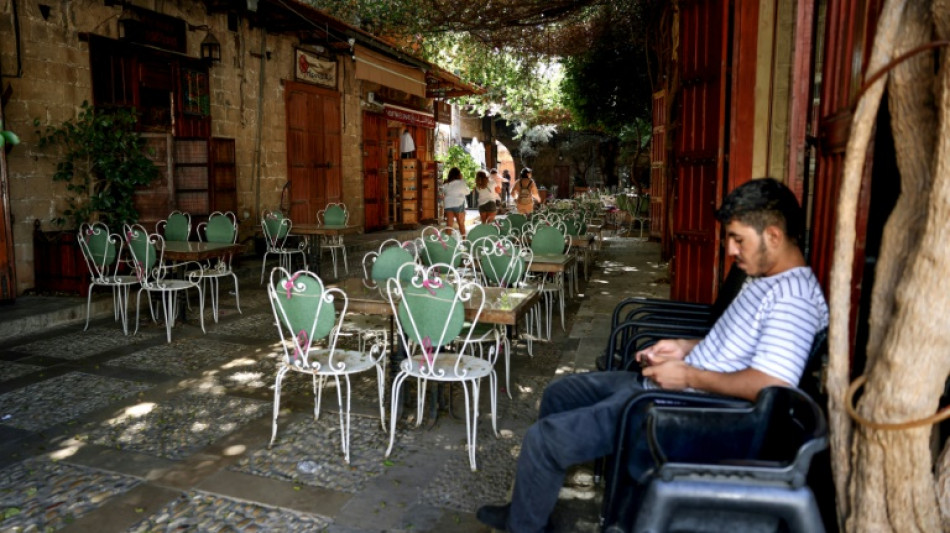
Spectre of war paralyses Lebanon's hospitality sector / Photo: © AFP

 Tuchel hails 'complete' England after Croatia demolition

 Fury to invite Trump to lead ring walk before Joshua showdown

 Fashion industry in 'precarious moment', says Vivienne Westwood supremo

 Seventh heaven for England in Nations League rout of Croatia
 Storms, flooding cause chaos on Greek holiday island of Crete

 #IAmJaneDoe: online support campaign in US university rape case

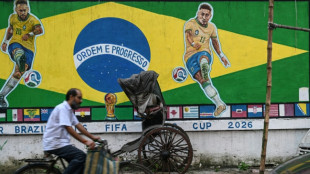
 Brazil shine on Selecao's first visit to India
 Zverev sets up Djokovic quarter-final at China Open, Rybakina out
 Happier at home, Bordeaux hammer Lyon in Top 14
 Lula, Bolsonaro in final push for votes ahead of knife-edge election

 Boisterous fashion week barnstorms 'sleepy' Nigerian capital

 UAE investigators say flydubai co-pilot was planning 'terrorist act'
 Rahul smacks century in India v Windies ODI

 Daryz seeks to join exclusive club of dual Arc winners
 Russia warns diplomats to leave Kyiv over new strikes threat
 Olympic champ Zheng rebukes rowdy home crowd at China Open

 World No.1 Sinner pulls out of Shanghai Masters to delay return
 Red Bull's Verstappen grabs pole position for Bahrain GP
 India beat Pakistan in blockbuster as golfer Kim wins 'crazy' gold

 India beat arch-rivals Pakistan to win Asian Games cricket gold
 Ethiopia's Tigray rebels abandon regional capital as govt advances: journalist

 Tom Kim powers to Games gold and exemption from military service

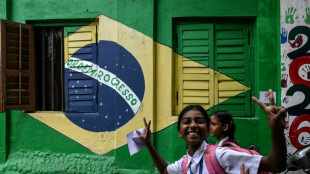 Split loyalties for Indian football fans at Brazil friendly

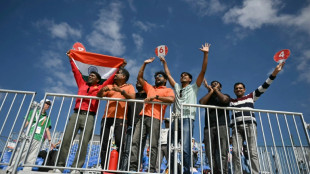 India-Pakistan blockbuster brings cricket fever to Japan baseball field

 Wong waiting on Rafa after winning Asian Games tennis gold
Bartender Richard Alam has poured hardly any drinks at his pub in Lebanon's seaside city of Byblos, where once-busy streets have emptied of customers scared by border tensions during the Israel-Hamas war.
"I opened this whiskey bottle two weeks ago and it still isn't empty," said Alam, 19, standing behind his empty bar in the coastal city, home to a World Heritage site north of Beirut.
"Before, we would go through a bottle every day or every other day," he told AFP.
Four years into an economic meltdown, Lebanon's restaurants, cafes, hotels and shops face yet another challenge: keeping afloat during the Israel-Hamas war and related hostilities on the Lebanon-Israel border.
Gaza-based Hamas militants attacked southern Israel on October 7, triggering retaliatory Israeli bombing and a ground offensive in Gaza. Since then, Lebanon's southern border has seen deadly escalating skirmishes, mainly between Israel and Hamas ally Hezbollah.
The fighting has so far been limited to the south, but some Western and Arab countries have advised their citizens to leave Lebanon, fearing a broader conflict.
Byblos, on Lebanon's northern coast, "relies on tourists," Alam said, wearing a bow tie and a suit.
"Our work has gone down from at least 40 to 50 tables a day to... seven at most."
Nearby, customers are also scarce at Mona Mujahed's souvenir shop, usually bustling with tourists and locals alike.
But there has been "no work, no money", Mujahed, 60, said, sipping coffee in front of her shop where souvenirs sit untouched on the shelves.
- 'War ruined everything' -
Many domestic visitors fearful of war have also cut back on expenses, hitting restaurants, cafes, bars and shops hard.
Since 2019 Lebanese have suffered from a financial crisis branded by the World Bank as one of the planet's worst since the 1850s. It pushed most of the population into poverty, and forced half of all restaurants, cafes, pubs and nightclubs to close down, said Tony Ramy, who heads an industry syndicate.
Ramy said the sector was just recently beginning to recover, after expatriate visitors flocked back to Lebanon over the summer following the coronavirus pandemic, the economic collapse and a catastrophic explosion at Beirut's port in 2020.
"We had just turned the page on four difficult years with renewed momentum, but unfortunately the war ruined everything," said Ramy, of the restaurant, cafe, nightclub and pastry shop owners' syndicate.
"Since October 7 we have seen a dramatic decrease in clientele... (dropping) by up to 80 percent on weekdays and 30 to 50 percent on the weekend," he said.
"No one knows if the situation in the south will deteriorate and no one can plan for anything," he said, warning of the potential for "huge losses".
Cross-border skirmishes have killed at least 88 people in Lebanon, mostly Hezbollah combatants but also 10 civilians, according to an AFP tally.
In northern Israel, nine people including six soldiers have been killed, according to official figures.
Lebanon's national carrier Middle East Airlines (MEA) has slashed flights, and passenger numbers from the region to Beirut have dropped by 54 percent compared to last year, said the airline's spokesperson Rima Makkawi.
MEA passengers from Europe have also dropped by 30 percent compared to the same period last year, she added.
- Optimism born of tragedy -
In Beirut's once-bustling and vibrant Hamra area, the four-star Hotel Cavalier has seen hundreds of cancellations.
"From the first week (of hostilities), cancellations soared dramatically," manager Ayman Nasser El Dine, 41, said in the deserted lobby.
"We had zero new reservations... This would be catastrophic if it lasts," he said.
More than half of the hotel's 65 rooms were pre-booked for November, but now staff barely welcome a dozen guests per day, he said.
The Cavalier was also overbooked for December and hotels had been looking forward to the Christmas holiday rush, he added.
But that was before the war.
Pierre Ashkar, who heads the hotel owners' syndicate, said room occupancy had plummeted from about 45 percent to between zero and seven percent.
"Reservations have been cancelled for the next two or three months" as countries advised their citizens against travelling to Lebanon, he said.
Even if the Hamas-Israel war ends tomorrow, Ashkar said "we need another month or two until countries change their travel advice so we can return to business as usual".
But he expressed optimism that hotels in Lebanon, which saw civil war from 1975-1990, a 2006 war between Israel and Hezbollah, and the 2020 port explosion, would rebound once calm returned.
"We are a strong-willed people, born and bred during times of war," Ashkar said. "If we didn't have a long experience in crisis management, the sector would have long gone bankrupt."
C.Stoecklin--VB