-
 Taiwan gender-row boxer Lin Yu-ting wins 'monumental' Asian Games gold
-
'We're losing our scientists': west Africa's STEM struggle
-
 Taiwan receives its first US-made F-16V fighter jets
-
World powers gather in Pacific to chart climate battle

-
 Lula, Bolsonaro trade scandal fire in final scramble for votes
-
Return of swarming moth spectacle has Australia in a flutter
-
 Not-so-brave new world: virtual taekwondo makes Asian Games debut
-
Browns snuff out Rodgers fightback to beat Steelers 27-24
-
 Arab Israeli candidate drops out of election race
-
Braves power past Phillies to set up Dodgers showdown

-
 Israel courts Europe's far right, finding friends but also unease
-
Asian stocks drop as oil spike fans rate hike bets, eyes on US jobs

-
 Lula, Bolsonaro both snub final debate before Brazil election
-
Viral anti-vax posts weaponise Philippine inoculation fears

-
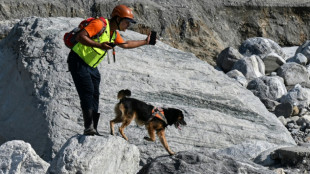 Nepal's grim DNA puzzle to identify flood dead
-
Saudi coalition accuses Houthis of drone attack on Medina

-
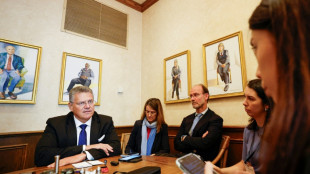 EU nations to hold emergency meeting on soaring diesel prices amid US pressure
-
Effective Altruism: the philosophy behind Silicon Valley's AI fears

-
 Anthropic's Dario Amodei: AI's most visible CEO and enigma
-
Chinese judoka accused of biting as home hope wins Asian Games gold

-
 OpenAI says three staffers fired for mishandling 'sensitive' info
-
Four-member crew docks at International Space Station

-
 Nike plans job cuts as it forecasts lower sales
-
Portugal win without Ronaldo as Klopp's Germany get first victory

-
 Ireland game interrupted twice by Gaza protests
-
Wemby: 'Very sad' to see players endorse betting firms

-
 Judge denies acquittal bid by US woman who killed her kids
-
Manchester City Women scrape draw with Real Madrid

-
 Klopp averts crisis with first win as Germany boss
-
India, Australia and Pakistan in same World Cup group

-
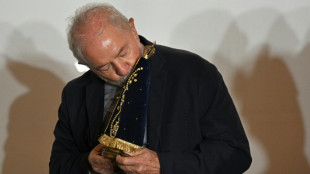 A saintly spat and debate snub: Brazil enters final campaign stretch
-
Daryz's hopes of repeat Arc win boosted by draw

-
 US tells European allies to act 'immediately' to lower diesel prices
-
Steelers ship disgruntled defender Porter to Cowboys

-
 G20 trade ministers fail to see consensus against overproduction
-
Klopp gets first win as Germany boss

-
 Portugal edge Denmark in Ronaldo's absence
-
Bolivia's attorney general arrested on drugs, money laundering charges

-
 US stocks edge higher as bond yields retreat for now
-
Raiders host Chiefs in battle of unbeaten division rivals

-
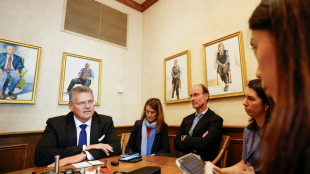 US tells European allies to 'immediately' act to lower diesel prices
-
Lowest Fee Bitcoin ATMs Announces Launch of More Than 400 ATMs Nationwide

-
 Trump vows to hit Iran 'very hard' if linked to flydubai attack
-
G20 against 'weaponization' of food trade: French minister
-
 Williams leaves Spain camp with thigh knock
-
Female US inmate in critical condition after botched execution

-
 WTA reduces 2027 schedule for world's top 50
-
Spotlight on UK-UAE ties amid Manchester City scandal

-
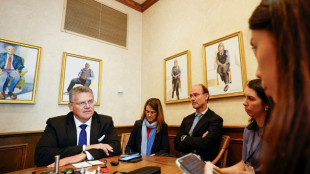 US says 'in Europe's best interest' to cooperate on fuel supply
-
Ethiopia and Eritrea break diplomatic ties over conflict
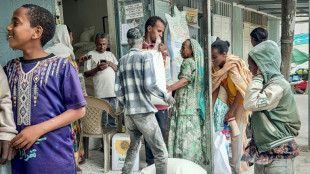
Designer Avido puts Kenyan slum on the fashion map
His creations are made in Kibera, the largest urban slum in Kenya, but have attracted the attention of global stars such as Beyonce and Bruno Mars and featured in Vogue magazine.
For Avido, his designs have a dual purpose: both to show to the world what can come from the impoverished Nairobi neighbourhood where he was born and raised, and to make it a better place.
Last year, the 27-year-old designer launched Kibera Fashion Week and the second edition was staged on Saturday in the heart of the sprawling slum.
Avido, whose real name is David Ochieng, drew inspiration from his journey to create one of his mottos: "Great things can come from places least expected."
The eldest of four children raised by a single mother in Kibera, Avido had never thought about pursuing a career in fashion.
"Looking for an alibi to keep me alive is what pushed me into fashion," he said in his deep voice.
He wanted to escape life on the street, saying 60-70 percent of his childhood friends had lost their lives through crime or drugs.
Forced to leave school at the age of 11 because of a lack of money, he tried to stay out of trouble -- first by playing football and later working on construction sites before he joined a dance troupe.
He then began designing outfits for the dancers.
"I started spending time with the tailors that were sewing the clothes that we were dancing with," he said. "I learned sewing even without knowing."
- Basket hat, bomber jackets and kimonos -
He went on to train as a fashion designer.
"He was really motivated... a go-getter," recalled Japheth Okoth, a charity employee who helped Avido get his first sewing machine.
"The moment he got that machine, he started designing clothes, making shirts," he said.
One of his garments brought him to the attention of Jamaican singer Don Carlos, the founder of reggae group Black Uhuru who was visiting Kibera on the sidelines of a concert in Kenya in 2017.
Avido offered him a shirt, and the encounter convinced him to devote his life to fashion.
With his "Lookslike Avido" label, he developed a colourful, gender-neutral style, mixing a variety of patterns and textures, notably ankara, the vibrant African wax fabric, and the velvet found on his kimonos and bomber jackets.
His inspiration comes not from the catwalks of New York, Paris or Milan, but from the streets of Kibera.
"Here in the street you get to have everything: when you speak about avant-garde, official, everything is in the street," he said.
One of his signature products, however, comes from the Kenyan countryside: a conical basket woven by his grandmother, which he turned upside down and wore as a hat one rainy day.
His style has caught the eye of Bruno Mars, rapper Ty Dolla Sign, reggae singer Chronixx, Coldplay frontman Chris Martin and Beyonce, who commissioned him and other African designers for her "Black is King" project.
His creations were also featured during Berlin Fashion Week in 2019.
- 'No point growing alone' -
But Avido keeps both feet firmly in Kibera, where all his clothes are made.
When Vogue Italia contacted him for an interview and photoshoot, he insisted that the models they used were young women from Kibera and that they were paid.
Traumatised by his childhood days when he would have to go to class in ragged uniforms, Avido -- through his eponymous foundation -- also makes uniforms for Kibera pupils, pays school fees for some and teaches young mothers and deaf women how to sew.
During the Covid-19 pandemic, he also produced thousands of masks to be distributed free of charge.
"Fashion is not just about making clothes, but it's a platform to be able to make our community a better place," he said.
"When it comes to projects, I try to think of the impact that it is going to have and if it is not going to have an impact around, I normally am not going into it," he added.
Despite his global renown, he has no intention of leaving his native slum.
"I don't see the point of growing alone. I could grow, leave, be part of the Paris Fashion Week. But I'd rather have a fashion week here and inspire people here," he said.
L.Maurer--VB