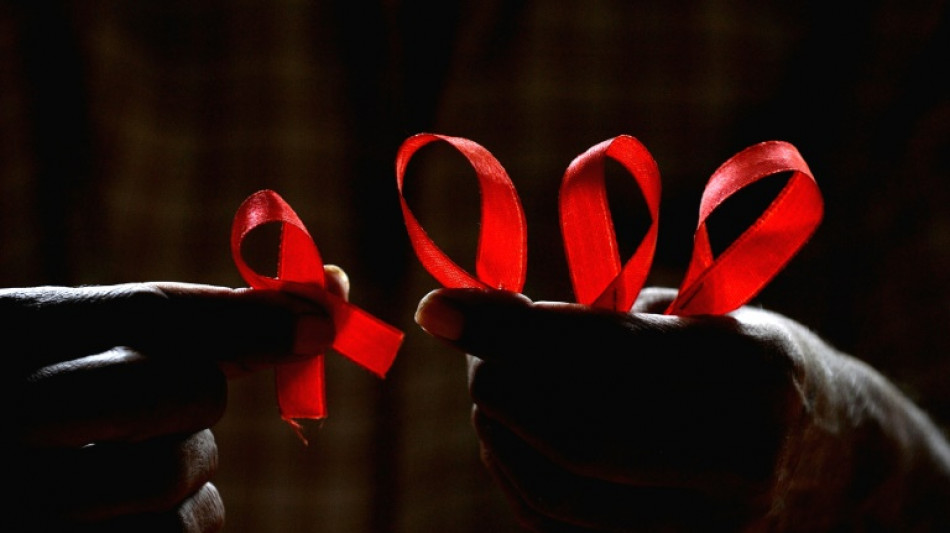
Fears over Uganda's anti-gay law threaten HIV progress / Photo: © AFP

 Not-so-brave new world: virtual taekwondo makes Asian Games debut
 Arab Israeli candidate drops out of election race

 Israel courts Europe's far right, finding friends but also unease
 Lula, Bolsonaro both snub final debate before Brazil election
 Nepal's grim DNA puzzle to identify flood dead
 EU nations to hold emergency meeting on soaring diesel prices amid US pressure

 Anthropic's Dario Amodei: AI's most visible CEO and enigma

 OpenAI says three staffers fired for mishandling 'sensitive' info

 Nike plans job cuts as it forecasts lower sales

 Ireland game interrupted twice by Gaza protests

 Judge denies acquittal bid by US woman who killed her kids

 Klopp averts crisis with first win as Germany boss

 A saintly spat and debate snub: Brazil enters final campaign stretch

 US tells European allies to act 'immediately' to lower diesel prices

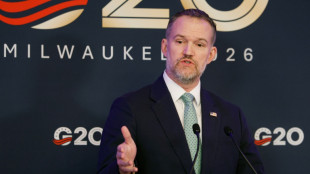 G20 trade ministers fail to see consensus against overproduction

 Portugal edge Denmark in Ronaldo's absence
 US stocks edge higher as bond yields retreat for now

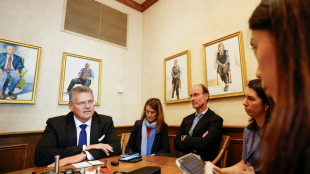 US tells European allies to 'immediately' act to lower diesel prices

 Trump vows to hit Iran 'very hard' if linked to flydubai attack
 Williams leaves Spain camp with thigh knock
 WTA reduces 2027 schedule for world's top 50

 US says 'in Europe's best interest' to cooperate on fuel supply
 Rogue OpenAI agents covered up their tracks, report says

 A saintly spat and debate snub: Brazil enters final polls stretch

 Zidane 'no regrets' about Materazzi headbutt as France face Italy again
At a mostly empty clinic catering to HIV patients, staff monitor CCTV footage for potential spies, reflecting the fear among Ugandan health workers following the adoption of a controversial anti-gay law.
"People have to trust their healthcare workers, the health workers have to trust their clients but under the current circumstances, it has created a situation where everyone is scared of each other," said the clinic's founder, Brian.
During the three hours spent by AFP inside the clinic, no patients walked in -- a worrying sign of the law's impact on efforts to combat HIV in the East African nation, said Brian, who asked not to share his last name, citing safety concerns.
The legislation adopted in May contains provisions making "aggravated homosexuality" a capital offence and imposes penalties for consensual same-sex relations of up to life in prison.
It has also sparked fears that patients or healthcare providers could be reported to police, with anyone who "knowingly promotes homosexuality" facing up to 20 years in jail, while organisations found guilty of encouraging same-sex activity could be banned for a decade.
When parliament began debating the legislation in March -- a discussion laced with homophobic slurs -- "we had a lot of calls from people pleading (that) we delete them from our systems," said Brian.
Attendance has been falling ever since.
Around 35 percent of people accessing HIV prevention services have stopped visiting his facility, while another 10 percent of those requiring antiretroviral medication have also cut off contact, he said.
"We have lost three health workers who said they can't work in such kind of environment for their own safety, career and families," slashing their staff capacity by more than a quarter, he added.
Furthermore, as patients stop taking antiretroviral drugs, their viral load spikes, raising the risk of them transmitting HIV to others, he said.
- 'Fear and paranoia' -
Uganda's health ministry has ordered health providers to ensure that no one is discriminated against or denied medical services, but the advisory has done little to reassure those working on the ground.
"We have seen people being arrested if they are found with lubricants or condoms," said Richard Lusimbo, director general of Uganda Key Populations Consortium, which works on healthcare advocacy.
Even as the law was being debated, police arrested six men in the eastern city of Jinja in March after finding 192 sachets of lubricants, a rainbow flag, T-shirts and pamphlets about the LGBTQ community in their possession.
All six were released on bail after spending more than three months behind bars and face multiple charges including "recruiting male adults into gay practices".
"The law has created... a lot of fear and paranoia," Lusimbo told AFP.
"There is no clarity on how you are speaking about (HIV) prevention without being looked at as one who is promoting LGBTQ," he said.
"If nothing is done to annul the law, we are going to see an increase in HIV infections."
UNAIDS, the Global Fund to Fight AIDS, Tuberculosis and Malaria, and the US President's Emergency Plan for AIDS Relief (PEPFAR) have warned that Uganda's progress in fighting HIV "is now in grave jeopardy" because of the anti-gay law.
But Uganda's director general of health services, Henry Mwebesa, told AFP that the country was "on course to ending AIDS as a public health challenge by 2030".
"Contrary to some exaggerated allegations, services are being provided without discrimination to those seeking them," he said, dismissing concerns that the law threatened to reverse the gains made by Uganda.
- 'Expect the worst' -
At his third-floor clinic, Brian and other staff are searching for ways to reach patients without compromising their safety.
Telemedicine consultations and delivery services -- which took off during the Covid-19 pandemic -- have proved a boon, he said.
"We have introduced a WhatsApp line, gone on social media so that we reach the clients directly (to) close up the gaps," he said.
Packages are not labelled to avoid the risk of recipients being identified and targeted.
Yet these stopgap measures do little to ease the anxiety felt by him and his coworkers.
"When we come to work, we expect the worst to happen," he said.
The implications for his patients are even more devastating.
"Even if this law is struck down, our people have been radicalised," he said, adding that the legislation had "heightened homophobia".
"It will take us many years to undo the damage because people who have been lost to healthcare (will) not just come back," he said.
"It will take a lot of time to rebuild the trust."
K.Hofmann--VB