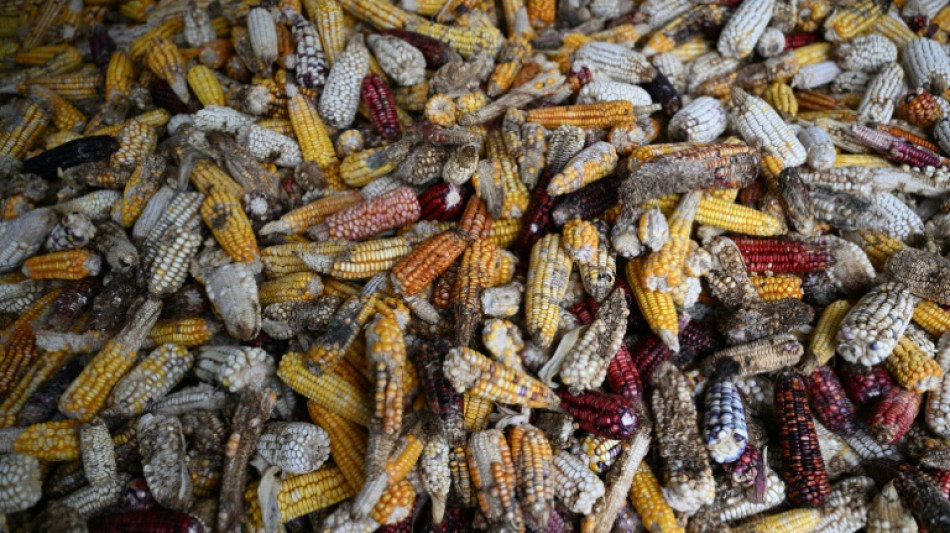
As rain vanishes, Guatemalans learn to use every drop of water / Photo: © AFP

 Asian stocks drop as oil spike fans rate hike bets, eyes on US jobs

 Viral anti-vax posts weaponise Philippine inoculation fears
 Saudi coalition accuses Houthis of drone attack on Medina

 Effective Altruism: the philosophy behind Silicon Valley's AI fears

 Chinese judoka accused of biting as home hope wins Asian Games gold

 Four-member crew docks at International Space Station

 Portugal win without Ronaldo as Klopp's Germany get first victory
 Wemby: 'Very sad' to see players endorse betting firms

 Manchester City Women scrape draw with Real Madrid

 India, Australia and Pakistan in same World Cup group

 Daryz's hopes of repeat Arc win boosted by draw

 Steelers ship disgruntled defender Porter to Cowboys

 Klopp gets first win as Germany boss

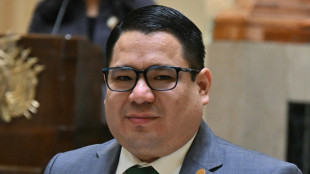 Bolivia's attorney general arrested on drugs, money laundering charges

 Raiders host Chiefs in battle of unbeaten division rivals

 Lowest Fee Bitcoin ATMs Announces Launch of More Than 400 ATMs Nationwide

 G20 against 'weaponization' of food trade: French minister

 Female US inmate in critical condition after botched execution

 Spotlight on UK-UAE ties amid Manchester City scandal

 Ethiopia and Eritrea break diplomatic ties over conflict

 Downing Street says Manchester City not 'above the rules'

 Hadjar wants to 'fight for the title' from next season

 Bolivia's attorney general arrested for alleged drug trafficking, money laundering
 German sugar tax sparks new government row

 Musk returns to US government for Pentagon war study

As rain becomes ever scarcer in northern Guatemala, communities are learning how to carve out makeshift irrigation canals and purify their water to conserve every last precious drop.
"No water, no rain, so not a good harvest," says Francisco Carrillo, 87, as he desolately sifts through his measly corn crop, tossing aside scores of desiccated and stunted heads.
Some have given up even trying to plant, and with children constantly sick with stomach bugs from dirty drinking water, new methods are desperately needed.
Guatemala -- which forms part of Central America's Dry Corridor -- is regularly listed by international organizations among the top ten countries most vulnerable to climate change.
Situated on a narrow strip of land between two oceans, and heavily dependent on agriculture, different parts of Guatemala are increasingly battered by drought and intense rains -- often at the same time.
These extreme weather events are fueling massive waves of migration, notably to the United States.
In the northern region of Quiche, mostly home to indigenous communities such as Mayans, residents are learning to build ditches above their sloped fields of corn or beans, so that water trickles down through the plants and keeps the soil moist for longer.
"During the few rainy days we have, we try to capture the water through these ditches so that the water filters into the soil," explained Oscar Rodriguez with the Save the Children charity, which is teaching the techniques.
To improve their yields, residents are also being taught to make home-made fertilizer with a mixture of herbs, chillis and garlic.
The World Food Programme (WFP) is trying to encourage the farming of less thirsty plants like carrots and tomatoes, which also grow faster.
- 'The children get sick' -
Save the Children says that 3.5 million of the country's 18 million inhabitants are threatened with an "unprecedented food crisis."
In rural Quiche, Indigenous families without potable water have long collected rainwater from streams or in wells they dig in the ground.
However, with less fresh rainwater, these water sources become contaminated by animals and "the children get sick" when they drink it, said Tomasa Ixotoyac, 40, as she draws muddy water up from a well with a bucket.
Save the Children has also shown the villagers how to use a few drops of chlorine to filter their water before boiling it.
Faced with increasingly erratic weather, the government and the United Nations Food and Agriculture Organization are implementing a $66 million plan to improve water collection systems in the arid north.
"The rain has become scarcer, it no longer rains like normal," said Gladys Azanon, from the Cerro Negro village.
- 'Is it fair?' -
Guatemala's rainy season runs from May to October.
While the El Nino warming phenomenon has intensified the drought in the north, it has had the opposite effect in the south -- highlighting the different extremes of climate change.
The south of the country was worst hit by Hurricanes Eta and Iota in 2020 and heavy rains this year have led some crops to rot in the soil, said Ilsia Lopez, 31, in the town of Sajubal.
Flash floods have left dozens dead, destroying homes and bridges.
"We get scared when it rains," said Lopez.
Earlier this month, Guatemala's President Alejandro Giammattei complained in a speech at the United Nations Security Council about the treatment of poor countries like his, which bear the brunt of climate change while being among the least responsible.
"We are the ones who suffer the most damage year after year. Is it fair?"
C.Stoecklin--VB