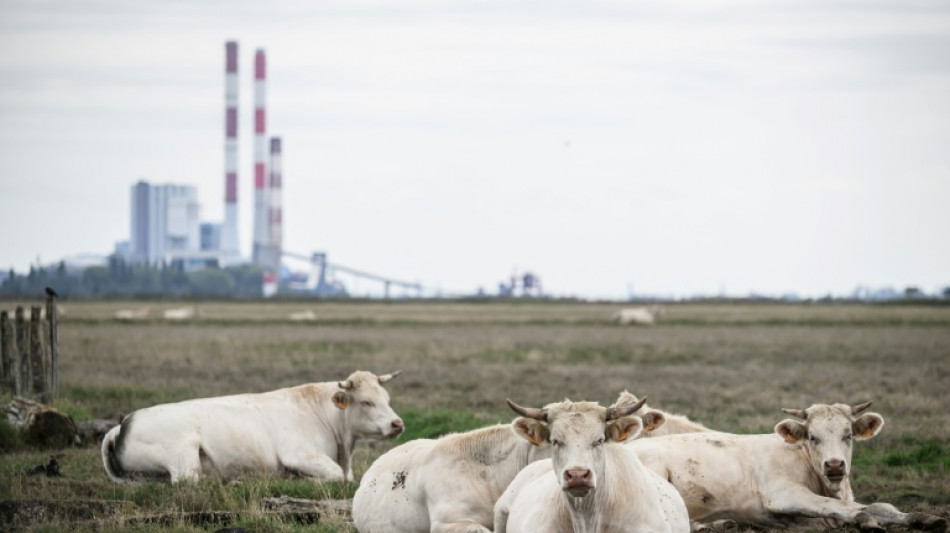
Meat, milk alternatives could slash food system emissions a third: study / Photo: © AFP

 Spotlight on UK-UAE ties amid Manchester City scandal

 Ethiopia and Eritrea break diplomatic ties over conflict

 Downing Street says Manchester City not 'above the rules'

 Hadjar wants to 'fight for the title' from next season

 Bolivia's attorney general arrested for alleged drug trafficking, money laundering

 German sugar tax sparks new government row

 Musk returns to US government for Pentagon war study
 Stocks slide as bond yields spike

 Thousands rally as EU chief urges respect for Kosovo war crimes court
 Man City sponsor Etihad says considering legal action against Premier League

 Family of woman killed by US immigration agent sues Trump administration

 French school protests spread as fires, blockades deepen unrest

 UK tribunal overturns ban on Naomi Campbell leading charities

 Louvre launches appeal as part of new fundraising drive

 Croatian ex-international Simic charged in graft case

 76% of Treasury Teams Hit by Fraud as Deepfake Attacks Rise, Treasury Dragons & nsKnox 2026 Index Finds

 Malawi ex-army chief arrested following allegations over Sudan arms

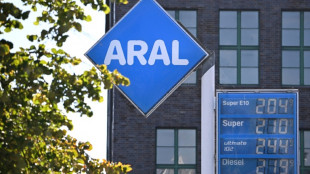 German fuel price cuts kick in to ease Mideast energy shock

 'It's history': Zverev against shortening Grand Slam match format

 From Question to Action: Leverate Launches ASK, Its Native AI Assistant for Traders

 UN says strikes on Afghanistan kill 10 civilians

 Two Russian drones hit major bridge in Kyiv

 Alcaraz begins Japan Open defence with win over Michelsen

 ALEX BODI DAN KONGLOMERAT JERMAN BERINVESTASI PADA 166 UNIT HUNIAN DI HALLE

 Ronaldo's Portugal future in doubt after walkout

Replacing half of the pork, chicken, beef and milk products we consume with plant-based alternatives could reduce global greenhouse gas emissions from agriculture and related land use by nearly a third, and virtually halt forest loss, according to research published on Tuesday.
Population growth and higher incomes are on track to increase global demand for these key animal products, which can bring damaging environmental consequences.
Forests are cleared to make way for cattle and the grain needed to feed them, while cows belch methane, a potent greenhouse gas whose warming effect is much more powerful than carbon dioxide.
The study, published in the journal Nature Communications, used modelling to analyse the impact of a worldwide dietary shift towards plant-based alternatives to pork, beef, chicken and milk with the same nutritional value.
It suggested that greenhouse gas emissions connected to agriculture and land use could be cut by 31 percent in 2050 compared to 2020 levels if consumption were reduced by half.
In that scenario, the amount of land dedicated to agricultural uses falls by 12 percent instead of continuing to expand.
The extent of forests and other natural land area would remain nearly the same as in 2020, as land earmarked for livestock and production of feed is spared rather than burned or cleared.
The increased use of nitrogen for crops is almost half of what it would otherwise be on expected trends, while water use drops 10 percent.
- 'Critical opportunity' -
A massive shift to plant-based foods would also improve global food security, with the number of undernourished people falling by 31 million by 2050, the researchers said.
In addition, it would boost biodiversity. Restored land area could contribute between 13 and 25 percent of the estimated land restoration needed by 2030 under a target set in a global treaty hammered out at the end of last year.
The decline of life-sustaining ecosystems on current trajectories would be more than halved by 2050, the study suggested.
"Plant-based meats are not just a novel food product but a critical opportunity for achieving food security and climate goals while also achieving health and biodiversity objectives worldwide," study co-author Eva Wollenberg said.
Sub-Saharan Africa, China and Southeast Asia would see the biggest reductions in biodiversity losses, while carbon sequestration levels would improve the most in sub-Saharan Africa and South America, notably Brazil.
Freeing up cropland would especially affect China, the world's top consumer of pork and chicken meat.
Replacing beef alone would provide around half of the emissions reductions achieved through reducing consumption of all four animal products.
The researchers cautioned that such changes should take into account the importance of livestock in some cultures and to small-scale farmers, but noted that climate change also represented a major risk to them.
The pricing of plant-based products will greatly determine the evolution of the market, while the speed and fairness of the change will depend much on public policies, they said.
T.Suter--VB