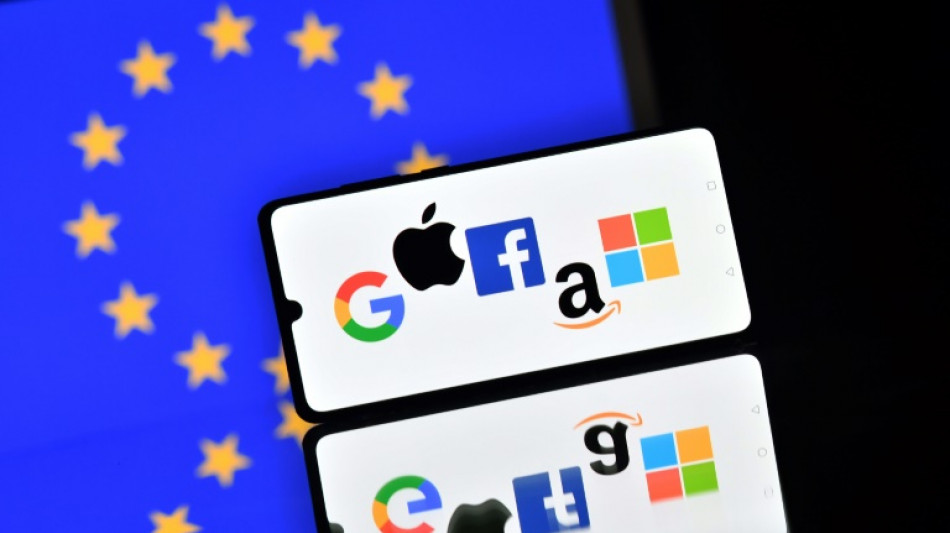
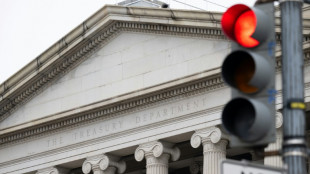
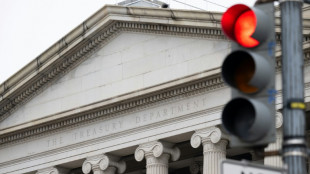
EU hits tech titans with tougher market restraints / Photo: © AFP/File

 Libya's pay strike rallies teachers across divided nation

 Four-member crew blasts off for International Space Station

 i-payout Expands True Local Payment Capabilities to Help Enterprises Pay Recipients Globally
 Botched US execution prompts global calls to scrap death penalty

 Algeria adopts law imposing death penalty on forest arsonists

 France unveils cost-cutting 2027 budget as borrowing costs rise

 Brazil court orders removal of fake posts amid patron saint election row

 Italy's firefighting planes return home after scorching summer

 How airlines try to make sure pilots are safe to fly

 Bolivia's attorney general arrested for alleged money laundering and drug trafficking

 Zverev beats Norrie to kick off Sinner-less China Open
 Wall Street stocks rise after bond yield spike eases

 Finland investigates suspected break-ins at MPs homes

 London's Bayeux Tapestry show to offer audio tour for blind people

 Smouldering bins, halted trams as French pupils protest
 Malone Life and Pensions Expands Internationally Beyond the European Union

 England paceman Archer rested for ODI tri-series

 Queiroz exits Ghana as Black Stars crisis deepens

 ALEX BODI VE ALMAN ŞİRKETLER GRUBUNDAN HALLE’DE 166 DAİREYE YATIRIM

 อเล็กซ์ โบดี และกลุ่มบริษัทจากเยอรมนีลงทุนในอพาร์ตเมนต์ 166 ยูนิตที่เมืองฮัลเลอ

 ALEX BODI A NĚMECKÝ KONCERN INVESTUJÍ DO 166 BYTŮ V HALLE
 ALEX BODI OCH TYSK KONCERN INVESTERAR I 166 LÄGENHETER I HALLE

 England forward Toney pleads not guilty to nightclub assault

 Tom Kim finishes marathon Asian Games second round under floodlights

 Work on migrant return hubs progressing well, EU countries say
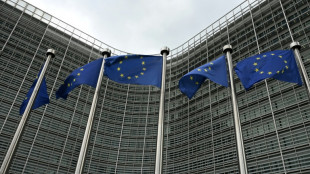
The European Union on Wednesday unveiled the list of digital giants -- including Apple, Facebook owner Meta and TikTok parent ByteDance -- that will face tough new curbs on how they do business.
Brussels is working through a dense legislative agenda to build tougher regulation of big tech, arguing it needs to protect European consumers online and to encourage competition in an industry dominated by US giants.
The latest announcement is a milestone in the application of the Digital Markets Act (DMA), which will force the largest firms to change their ways under a checklist of dos and don'ts and, regulators hope, create a fairer market.
Observers say the law could open a new battlefront between digital titans and the European Union as some companies consider launching legal challenges.
The European Commission, the EU's powerful antitrust body, named 22 "core platform" services belonging to five US tech behemoths identified as "gatekeepers" -- Google parent Alphabet, Amazon, Apple, Meta, Microsoft -- and China's ByteDance.
The services included Apple's App Store; Meta's Facebook, Instagram and WhatsApp; Google's YouTube video platform and Chrome browser, as well as Apple's Safari.
Others included operating systems run by Apple, Microsoft and Google as well as Alphabet's Google Maps, Play and Shopping.
They must fully comply with the DMA by March 6, 2024.
The "gatekeeper" status applies when a service has more than 45 million monthly active users and more than 10,000 yearly active business users established in the EU.
Apple on Wednesday said it was "very concerned about the privacy and data security risks the DMA poses for our users" and said it would seek to "mitigate these impacts".
There will be fines of up to 10 percent of a firm's global revenues for breaking some of the most serious competition rules, and even up to 20 percent for repeat offenders.
One major change under the DMA is the rule that forces interoperability between messaging apps, making it easier for users to share links and images.
"With today's designation we are finally reining in the economic power of six gatekeepers, giving more choice to consumers and creating new opportunities for smaller innovative tech companies," said the EU's top tech enforcer, industry commissioner Thierry Breton.
- Taking a bite of the Apple -
Apple and Microsoft argued parts of their businesses should not be classified as a "core" service, and the commission said it launched probes to assess Apple's claims regarding iMessage, and Microsoft for Bing, Edge and its advertising platform.
A Microsoft spokesperson welcomed the decision to launch an investigation into the three services which the company said "operate as challengers in the market".
Meanwhile, Apple said it looked "forward to explaining to the commission why iMessage is outside the scope of the DMA".
The EU has led the way globally for taking on big tech.
The DMA, alongside its sister law, the Digital Services Act (DSA), gives the commission sharper teeth against tech behemoths that critics say have for too long been given free rein to act to the detriment of users.
One of the DMA's main aims is to stop larger players crushing the progression of smaller companies that threaten to become rivals by gobbling them up through takeovers.
The EU believes past examples of this are Facebook's buyouts of Instagram and WhatsApp as well as Google's purchase of YouTube and Waze.
The commission must be notified of all takeovers, regardless of size, under the DMA.
One of the law's main targets is Apple, previously the subject of multiple investigations and slapped with huge EU fines.
The new rules will force the iPhone-maker to allow alternative app stores on its products, allowing software and payments to be made outside of its control.
The commission is also looking into whether Apple's iPadOS system should be designated as a "gatekeeper, despite not meeting the thresholds", it said.
Under the DMA, companies are forbidden to favour their own services over those offered by competitor firms and will have to share key information with business customers.
- Bumpy road ahead -
Some experts predict legal challenges to the DMA designations, just as some were made against the DSA.
"When you have a new law which is a complex law in a complex environment, it's inevitable to have legal challenges at the beginning," said Alexandre de Streel, academic director of the digital research programme at the Centre on Regulation in Europe think tank.
Amazon and European clothing retailer Zalando filed a case in the EU courts against their designation as "very large" online platforms under the DSA.
And big tech faces more regulation as the EU races to pass the world's first law on artificial intelligence, an issue that gained urgency after dizzying advances in 2022.
K.Brown--BTB