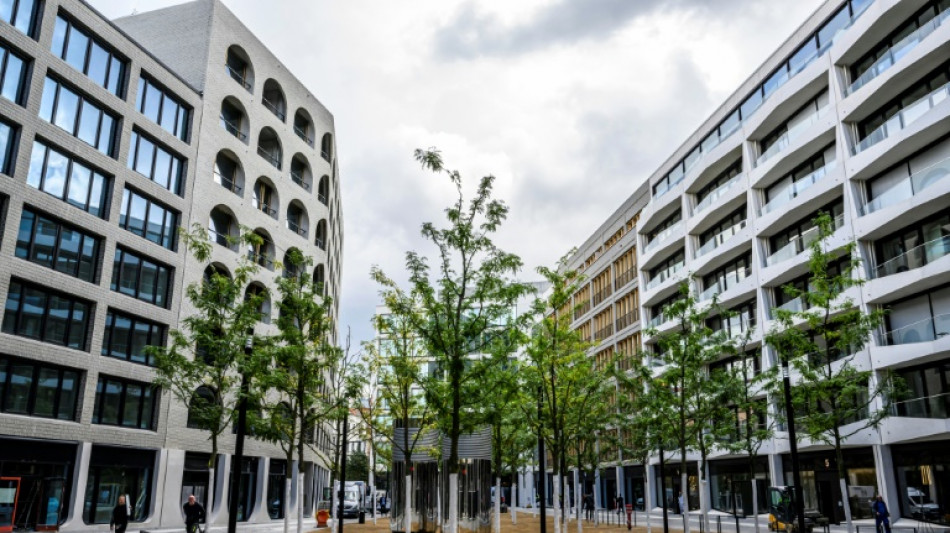
From art squat to Berlin gentrification lightning rod / Photo: © AFP

 Libya's pay strike rallies teachers across divided nation
 Four-member crew blasts off for International Space Station
 i-payout Expands True Local Payment Capabilities to Help Enterprises Pay Recipients Globally
 Botched US execution prompts global calls to scrap death penalty

 Algeria adopts law imposing death penalty on forest arsonists
 France unveils cost-cutting 2027 budget as borrowing costs rise
 Brazil court orders removal of fake posts amid patron saint election row
 Italy's firefighting planes return home after scorching summer

 How airlines try to make sure pilots are safe to fly
 Bolivia's attorney general arrested for alleged money laundering and drug trafficking

 Zverev beats Norrie to kick off Sinner-less China Open

 Wall Street stocks rise after bond yield spike eases

 Finland investigates suspected break-ins at MPs homes
 London's Bayeux Tapestry show to offer audio tour for blind people

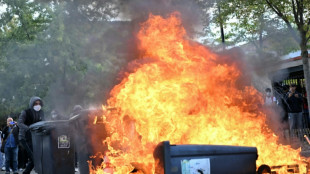 Smouldering bins, halted trams as French pupils protest

 Malone Life and Pensions Expands Internationally Beyond the European Union
 England paceman Archer rested for ODI tri-series
 Queiroz exits Ghana as Black Stars crisis deepens
 ALEX BODI VE ALMAN ŞİRKETLER GRUBUNDAN HALLE’DE 166 DAİREYE YATIRIM
 อเล็กซ์ โบดี และกลุ่มบริษัทจากเยอรมนีลงทุนในอพาร์ตเมนต์ 166 ยูนิตที่เมืองฮัลเลอ

 ALEX BODI A NĚMECKÝ KONCERN INVESTUJÍ DO 166 BYTŮ V HALLE
 ALEX BODI OCH TYSK KONCERN INVESTERAR I 166 LÄGENHETER I HALLE
 England forward Toney pleads not guilty to nightclub assault

 Tom Kim finishes marathon Asian Games second round under floodlights

 Work on migrant return hubs progressing well, EU countries say
Berlin's Tacheles art squat, a symbol of the anything-goes vibe of the city after the fall of the Wall, is completing a disputed transformation into offices, shops and luxury flats.
An outlet of the Fotografiska museum chain is set to open inside the hulking, battle-scarred edifice on September 14 and the first residents of newly built homes will move in this autumn.
When it is completed, planned for the end of 2024, the complex will boast 265 apartments sized from 25 to 360 square metres (269 to 3875 square feet) as well as new digs in the German capital for the likes of Netflix and Pfizer.
Of the 176 apartments available for purchase -- with prices per square metre ranging from 9,500 to 30,000 euros ($10,300 to $32,600) -- around 45 are still for sale, according to developer PWR.
The remaining 89 apartments are reserved for rental.
Investment fund Perella Weinberg Real Estate bought the property encompassing 25,300 square metres in 2014 for 150 million euros -- a steal in the current market.
In addition to the historic building that will house Fotografiska Berlin, the site will include an ultramodern open-air shopping plaza and glass-and-steel office compounds.
Tacheles, which means "straight talk" in Yiddish, was a popular department store in the early part of the 20th century but suffered damage during World War II and was partially demolished by the East German communists.
Young artists flocked to east Berlin after the fall of the Wall in 1989, drawn by the low cost of living, and squatted disused buildings including the dilapidated five-storey complex on Oranienburger Street.
At its peak as a subculture mecca, the graffiti-covered Tacheles housed a cinema, restaurant and bar as well as art studios and galleries, drawing about 400,000 visitors a year.
However in 2012, bailiffs and police evicted the artists to make way for construction work, signalling the end of an era.
"Between 2010 and 2012, we were threatened, offered money to leave and had our electricity cut off," Bruno di Martino, a 56-year-old Frenchman who had his studio at the Tacheles since 2006, told AFP.
- Waves of displacement -
"After the downfall of the communist regime in the former GDR in 1990, it was no longer clear who owned the buildings," said Hanno Hochmuth, historian at the Leibniz research centre in Potsdam.
The chaotic conditions allowed for creative ferment, making the "new" Berlin a unique attraction with countless blank slates for development.
"In East Berlin, many properties were returned to their former owners or their descendants, and this almost always resulted in resale to real estate speculators," Matthias Bernt, an urban planner at the Leibniz centre, told AFP.
Property prices soared, touching off waves of displacement from the heart of the city that have gathered pace in recent years.
- 'Playground' -
Bruno di Martino was among those impacted. When forced to leave Tacheles, he set up his studio in the Friedrichshain district on another disused site, RAW, previously owned by the German railways.
For him, the new Tacheles complex is "a pure profit project aimed at the privileged few".
"Berlin used to attract tourists for its artists, its underground, its alternative side, but all that is in danger of disappearing," he said.
There is a certain irony that the Fotografiska photography museum is moving into the building where art was once made. A top-to-bottom renovation has nevertheless retained some of their graffiti and artwork.
"We think it's important to continue the spirit of the building," Fotografiska executive chairman Yoram Roth told AFP. "It was a creative hub. It inspired creativity".
Born in West Berlin and a descendant of Holocaust survivors, Roth rejects criticism of the city's rampant real estate development.
"There is this romantic view of what happened here after the Wall fell," he said.
"People want to keep certain things for ever in a certain way. But I think it's also important to remember that whatever happened there was born out of serious tragedy," including two world wars and the Cold War.
Roth said Berlin was calling time on the city as a "playground" of vacant lots and squatted property.
"It's normal to expect this space to fill back in with something."
E.Schubert--BTB