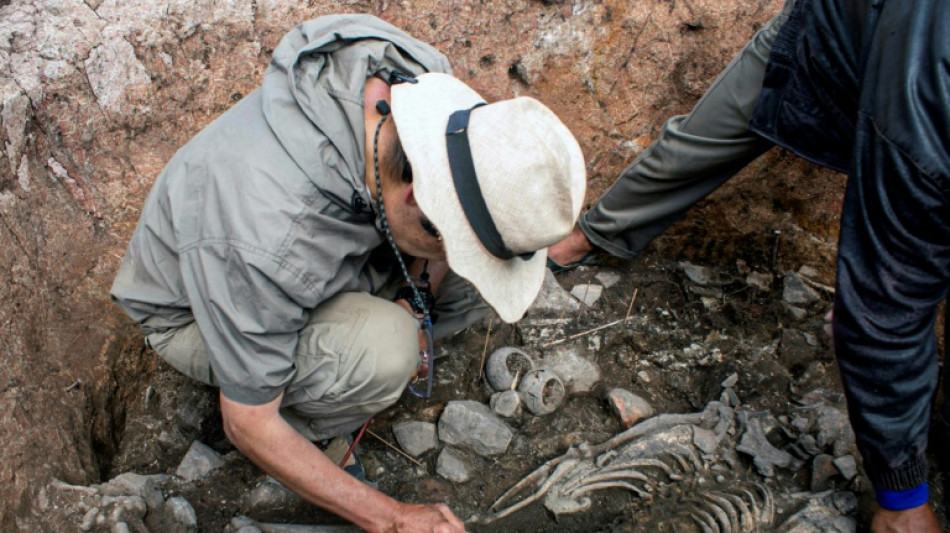
Ancient priest's remains are a first-of-a-kind find for Peru team / Photo: © Ministerio de Cultura de Perú/AFP

 Finland investigates suspected break-ins at MPs homes

 London's Bayeux Tapestry show to offer audio tour for blind people

 Smouldering bins, halted trams as French pupils protest

 Malone Life and Pensions Expands Internationally Beyond the European Union
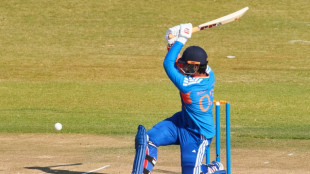
 England paceman Archer rested for ODI tri-series
 Queiroz exits Ghana as Black Stars crisis deepens

 ALEX BODI VE ALMAN ŞİRKETLER GRUBUNDAN HALLE’DE 166 DAİREYE YATIRIM

 อเล็กซ์ โบดี และกลุ่มบริษัทจากเยอรมนีลงทุนในอพาร์ตเมนต์ 166 ยูนิตที่เมืองฮัลเลอ

 ALEX BODI A NĚMECKÝ KONCERN INVESTUJÍ DO 166 BYTŮ V HALLE

 ALEX BODI OCH TYSK KONCERN INVESTERAR I 166 LÄGENHETER I HALLE

 England forward Toney pleads not guilty to nightclub assault
 Tom Kim finishes marathon Asian Games second round under floodlights

 Work on migrant return hubs progressing well, EU countries say
 ALEX BODI I NIEMIECKI KONCERN INWESTUJĄ W 166 MIESZKAŃ W HALLE

 Tearful Nishikori calls time on career with defeat at Japan Open

 أليكس بودي ومجموعة ألمانية يستثمران في 166 شقة في هاله

 알렉스 보디와 독일 기업 그룹, 할레 주택 166세대에 투자
 Verstappen wary of tyre wear as he eyes first F1 win of season

 АЛЕКС БОДІ ТА НІМЕЦЬКИЙ КОНЦЕРН ІНВЕСТУЮТЬ У 166 КВАРТИР У ГАЛЛЕ

 Kremlin critic Kasparov says US intelligence warned life 'in danger'

 Qatar 'ready' if 2030 Asian Games moved back: official

 Indian pilot hailed as 'hero' after cockpit struggle
 Asian tech firms stand out on mixed day for stocks
 Flags and pho on show as jeweller opens huge Vietnam plant

 Indian football fans relish rare friendly against Brazil

A group of Japanese and Peruvian archaeologists have discovered the 3,000-year-old tomb of a priest alongside ceramic offerings in northern Peru.
"We have recently discovered the tomb of a 3,000-year-old figure at the Pacopampa archaeological site," in the Cajamarca region, 900 kilometers (560 miles) north of Lima, archaeologist Juan Pablo Villanueva told AFP on Saturday.
"He is one of the first priests in the Andes to have a series of offerings," the researcher said, adding that "the funerary context is intact."
The body, its lower extremities partially flexed, was oriented from south to north. On the western side of the tomb were small spherical ceramic bowls, a carved bone spatula and other offerings.
Two seals were also found, one with designs of an anthropomorphic face and the other with that of a jaguar.
The body and the offerings were covered by at least six layers of ash and earth. The tomb is circular, three meters in diameter and one meter deep (10 feet by 3.3 feet).
- Powerful leaders -
"The find is extremely important because he is one of the first priests to begin to control the temples in the country's northern Andes," Japanese archaeologist Yuji Seki, who has been working at the site for 18 years, told AFP.
Researchers estimate that the priest lived around 1,000 BC.
Seki said the find helped demonstrate that even that long ago, "powerful leaders had appeared in the Andes."
In September 2022, the same group of archaeologists had discovered the tomb, more than 3,000 years old, of a man they called the "Priest of the Pututos," along with musical instruments made of seashells.
Pututos or pututus are conch-like shells that the inhabitants of ancient Peru could use to make trumpet-like sounds.
The Pacopampa site, at an altitude of 2,500 meters (8,200 feet), includes nine monumental ceremonial buildings of carved and polished stone.
Other burials found in the same site include those of the "Lady of Pacopampa," found in 2009, and of two "Jaguar Serpent priests," discovered in 2015.
They are estimated to date from around 700 to 600 years BC.
Archaeologists from the National Museum of Ethnology in Japan and from Peru's National University of San Marcos participate in the work in Pacopampa.
B.Shevchenko--BTB