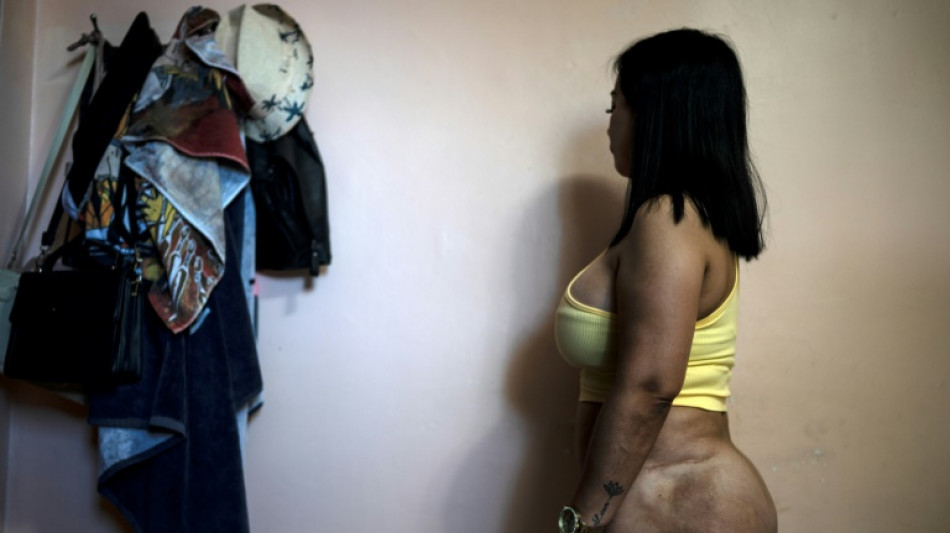
In Venezuela, women left 'mutilated' by butt lifts / Photo: © AFP

 Finland investigates suspected break-ins at MPs homes

 London's Bayeux Tapestry show to offer audio tour for blind people

 Smouldering bins, halted trams as French pupils protest

 Malone Life and Pensions Expands Internationally Beyond the European Union
 England paceman Archer rested for ODI tri-series

 Queiroz exits Ghana as Black Stars crisis deepens

 ALEX BODI VE ALMAN ŞİRKETLER GRUBUNDAN HALLE’DE 166 DAİREYE YATIRIM
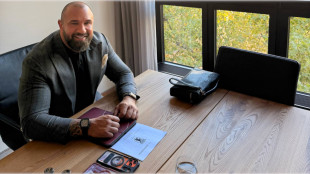 อเล็กซ์ โบดี และกลุ่มบริษัทจากเยอรมนีลงทุนในอพาร์ตเมนต์ 166 ยูนิตที่เมืองฮัลเลอ

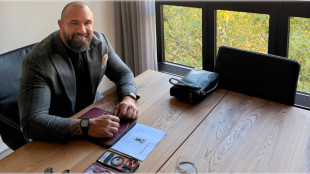 ALEX BODI A NĚMECKÝ KONCERN INVESTUJÍ DO 166 BYTŮ V HALLE
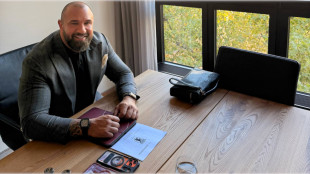 ALEX BODI OCH TYSK KONCERN INVESTERAR I 166 LÄGENHETER I HALLE
 England forward Toney pleads not guilty to nightclub assault
 Tom Kim finishes marathon Asian Games second round under floodlights

 Work on migrant return hubs progressing well, EU countries say
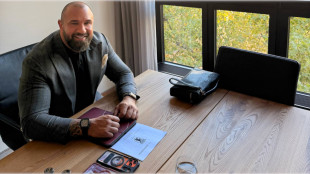 ALEX BODI I NIEMIECKI KONCERN INWESTUJĄ W 166 MIESZKAŃ W HALLE
 Tearful Nishikori calls time on career with defeat at Japan Open
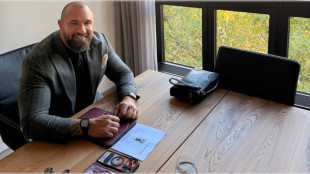
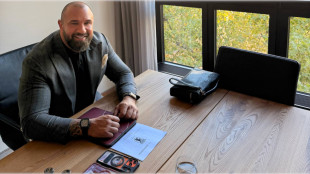 أليكس بودي ومجموعة ألمانية يستثمران في 166 شقة في هاله
 알렉스 보디와 독일 기업 그룹, 할레 주택 166세대에 투자
 Verstappen wary of tyre wear as he eyes first F1 win of season
 АЛЕКС БОДІ ТА НІМЕЦЬКИЙ КОНЦЕРН ІНВЕСТУЮТЬ У 166 КВАРТИР У ГАЛЛЕ
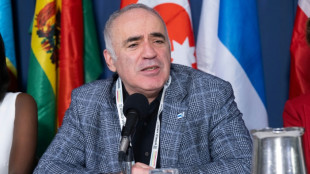 Kremlin critic Kasparov says US intelligence warned life 'in danger'
 Qatar 'ready' if 2030 Asian Games moved back: official
 Indian pilot hailed as 'hero' after cockpit struggle
 Asian tech firms stand out on mixed day for stocks
 Flags and pho on show as jeweller opens huge Vietnam plant
 Indian football fans relish rare friendly against Brazil

Maria Sanchez walks slowly through her house in the Venezuelan capital with two surgical drainage bags hanging from her waist -- the nightmare result of her search for the perfect derriere.
Almost a decade ago she underwent a backside-enhancing procedure, the kind that has soared in popularity as women crave a figure popularized by celebrities like Jennifer Lopez or Kim Kardashian.
"I was mutilated," the 50-year-old tells AFP, but "I had to assume the consequences."
In 2006, she was injected with what is known as a biopolymer, a term commonly used to refer to naturally derived products, but which also encompasses synthetic fillers made from silicone or even paraffin.
Sanchez now has a scar running across her lower back as a painful reminder of the reconstruction surgery in which doctors managed to extract 90 percent of the filler.
The fillers, seen as a cheaper and less invasive alternative to fat grafting, are injected and expand inside the body.
Their use was banned in Venezuela in 2012 after years of massive commercialization in outpatient clinics but also in hair salons and even in doctors' offices.
Recognition of their toxicity is growing.
Neighboring Colombia on Tuesday enacted a law imposing two- to 10-year jail terms on those who inject biopolymers in consumers as well as fines up to US$70,000.
Growing numbers of people suffering chronic pain are seeking to have biopolymer removed from their bodies.
Last year, American rapper Cardi B admitted she had had polymer filler removed from her buttocks, warning young women against the procedure.
- 'Little fat balls' -
The presence of biopolymers triggers the immune system, which constantly fights them, causing fever, swelling and pain.
Over the course of two years, Sanchez was successively diagnosed with arthritis, rheumatism and lupus before reaching a diagnosis that the chemical was actually the cause of her ailments.
An acquaintance, a public hospital employee, referred her to plastic surgeon Juan Carlos Blanco, who has treated some 50 cases in the last five years, of which 20 ended in surgery, including Sanchez's.
Blanco told AFP that when he goes in to remove the filler he finds "little fat balls."
When he cauterizes them "they explode and what comes out is oil."
There are no official figures on the number of people suffering from biopolymer injection in Venezuela, although local media have documented deaths. AFP unsuccessfully requested statistics from the Ministry of Health.
Venezuela is famous for producing beauty queens sculpted by cosmetic doctors and has a deep-rooted culture of plastic surgery.
Sanchez says her "bad decision" to get the fillers was about conforming to a stereotype, "for not feeling somehow all right about my silhouette."
"But it was allowed. It wasn't that I was crazy."
She was unable to sit down for 20 days after her reconstruction surgery.
While buttock enhancement was the most popular biopolymer treatment, it has also been used to enhance breasts, calf muscles, or even for penis enlargement.
- Fever, swelling, pain -
Surgical removal of the biopolymer has been performed for about five years, but before that the recommendation was not to touch the affected area.
Surgeons agree that it is impossible to remove 100 percent of the biopolymer, and whoever offers a different assessment is lying, Blanco says.
Extraction operations can cost up to $11,000.
That's what 39-year-old Susana will have to pay for her third attempt to remove the toxic filler she had injected in her buttocks 12 years ago.
Susana, who asked that her real name not be used because of the stigma attached to those who have opted for these treatments, lives in a shantytown in the hills of Caracas.
Getting around is an ordeal.
"I can't walk very far," she says. "I have to put my feet in hot water."
She began to suffer pain five years after the injections, after her second pregnancy, and made "the mistake" of having surgery in 2017 with a contraindicated technique similar to liposuction, which only made things worse and cost $3,000.
"I couldn't walk anymore," she recalls, and a doctor performed emergency surgery on her in 2019 -- for an additional $5,000.
She has scars on her upper and lower buttocks, bruised from the operations.
In the upcoming third operation, the specialist "is going to take out as much as she can."
The doctor warned Susana "not to hate her if she leaves me 'flat'" in the buttocks," she said. "I'm not going to hate her. I'm going to thank her very much."
S.Keller--BTB