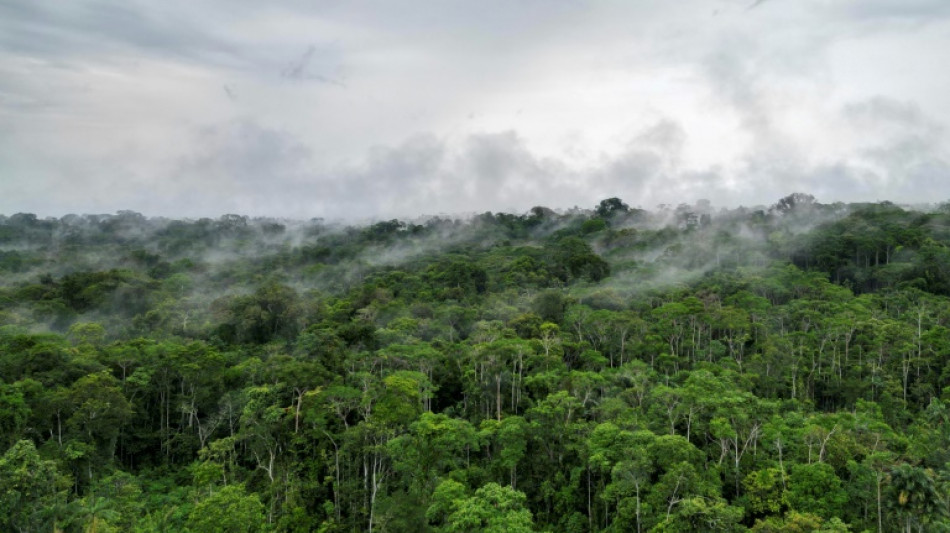
In a first, Ecuador to vote on oil drilling in the Amazon / Photo: © AFP/File

 Trump says Iran ceasefire 'over' after fighting flares

 Thai beer dynasty mother drops 'ungrateful child' case against son
 France v Morocco rematch as World Cup quarter-finals get under way

 Modi visits Australia for minerals talks and rockstar welcome
 Sensors, early starts: how Spain keeps working when heat hits
 Kenya Rastafarians hope for freedom to smoke

 Pacific nation of Tuvalu condemns Chinese missile launch into Pacific
 How a viral post sparked India's Gen-Z protest

 Cambodia wants to bring tigers back, but should it?
 Chinese repairwomen smash stereotypes with power tools

 Ecuador's Death Canal: watery grave for victims of gang violence
 'Unique event': Solar eclipse fever fills empty Spain

 Venezuela says Caracas airport to reopen to commercial flights 'soon as possible'
 World Cup: Eight teams remain in the hunt for glory

 'A nice surprise': Marathon man Djokovic revels in Wimbledon epic

 Switzerland beat Colombia on penalties to reach World Cup quarter-finals
 Djokovic survives Wimbledon's longest quarter-final to book Sinner blockbuster

 'Flunked': US soccer seeks answers as World Cup dream shattered
 Mbappe revels in captain's role for France at World Cup

 Iyer's India 'atrocious' in record 125-run T20 defeat by England
 Rain hands West Indies series win over Sri Lanka

 World Cup exit puts another nail in America's summer of fun

 US revokes Iran oil waiver after Hormuz tanker attacks

 England quicks star as India suffer record 125-run T20 defeat

 Cardinal tipped to be pope accused of molesting several women
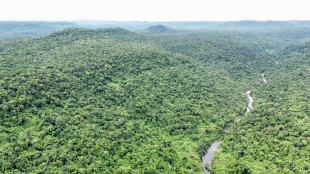
To some, Ecuador's jungle is a home and a valuable tool in fighting climate change, to others, it is a vital solution to a struggling economy.
In an unusual example of climate democracy, it is Ecuadorians who will decide what is more important, drilling for oil or protecting the Amazon, in a closely watched referendum on Sunday.
The drilling is taking place in the Yasuni National Park, one of the most diverse biospheres in the world, and home to three of the world's last uncontacted Indigenous populations.
It began in 2016 after years of fraught debate and failed efforts by then president Rafael Correa to persuade the international community to pay cash-strapped Ecuador $3.6 billion not to drill there.
After years of demands for a referendum, the country's highest court authorized the vote in May to decide the fate of "block 43," which contributes 12 percent of the 466,000 barrels per day produced by Ecuador.
The government of outgoing President Guillermo Lasso has estimated a loss of $16 billion over the next 20 years if drilling is halted.
"The Yasuni has been like a mother to the world... We need to raise our voices and hands so that our mother can recover, that she is not injured, that she is not beaten," said Alicia Cahuiya, a Waorani leader born in the heart of the jungle.
The reserve is home to the Waorani and Kichwa tribes, as well as the Tagaeri, Taromenane and Dugakaeri, who choose to live isolated from the modern world.
Cahuiya said the reserve was "a lung for the world," capturing carbon dioxide and pumping out oxygen and water vapor.
"Water vapor helps maintain a low temperature on the planet, it's like air conditioning" for the atmosphere, said Gonzalo Rivas, director of the Tiputini scientific station at the private San Francisco University in Quito.
- 'Climate democracy' -
The Amazon basin -- which stretches across eight nations -- is a vital carbon sink.
But scientists warn its destruction is pushing the world's biggest rainforest dangerously close to a tipping point, beyond which trees would die off and release carbon rather than absorb it, with catastrophic consequences for the climate.
"This forest has allowed us to survive until today," said Rivas.
The Yasuni National Park houses some 2,000 tree, 610 bird, 204 mammal, 150 amphibian and more than 120 reptile species, according to the university.
The fate of the reserve has drawn the attention of international celebrities such as Hollywood star and environmental activist Leonardo DiCaprio.
"With this first-of-its-kind referendum worldwide, Ecuador could become an example in democratizing climate politics, offering voters the chance to vote not just for the forest but also for Indigenous rights, our climate, and the well-being of our planet," he wrote on Instagram this month.
Swedish climate campaigner Greta Thunberg also hailed the "historic referendum."
The NGO Amazon Frontlines said the vote was "a first-of-its-kind demonstration of climate democracy, where people, not corporations, get to decide on resource extraction and its limits.
Opinion polls published earlier this month showed a slight leaning to a "Yes" vote to halt oil drilling.
National oil company Petroecuador argues the block only occupies 80 hectares (200 acres) of more than a million hectares that make up the reserve.
Locals in Yasuni are divided, with some supporting the oil companies and the benefits economic growth have brought to their villages.
L.Janezki--BTB