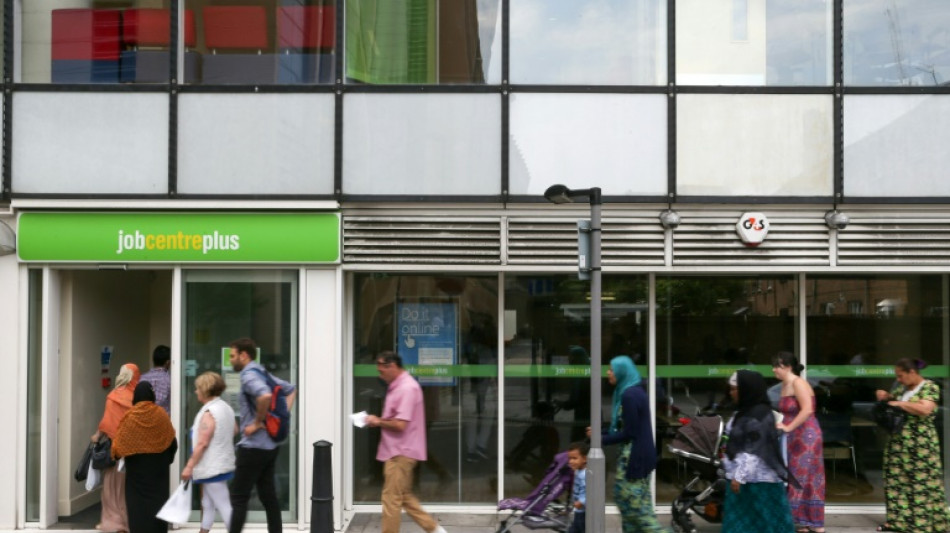
UK's long-term sick pile pressure on economy / Photo: © AFP/File

 Alcaraz begins Japan Open defence with win over Michelsen

 อเล็กซ์ โบดี และกลุ่มบริษัทจากเยอรมนีลงทุนในอพาร์ตเมนต์ 166 ยูนิตที่เมืองฮัลเลอ

 ALEX BODI A NĚMECKÝ KONCERN INVESTUJÍ DO 166 BYTŮ V HALLE

 ALEX BODI OCH TYSK KONCERN INVESTERAR I 166 LÄGENHETER I HALLE

 England forward Toney pleads not guilty to nightclub assault

 Tom Kim finishes marathon Asian Games second round under floodlights

 Work on migrant return hubs progressing well, EU countries say

 ALEX BODI I NIEMIECKI KONCERN INWESTUJĄ W 166 MIESZKAŃ W HALLE

 Tearful Nishikori calls time on career with defeat at Japan Open

 أليكس بودي ومجموعة ألمانية يستثمران في 166 شقة في هاله

 알렉스 보디와 독일 기업 그룹, 할레 주택 166세대에 투자

 Verstappen wary of tyre wear as he eyes first F1 win of season

 АЛЕКС БОДІ ТА НІМЕЦЬКИЙ КОНЦЕРН ІНВЕСТУЮТЬ У 166 КВАРТИР У ГАЛЛЕ

 Kremlin critic Kasparov says US intelligence warned life 'in danger'

 Qatar 'ready' if 2030 Asian Games moved back: official

 Indian pilot hailed as 'hero' after cockpit struggle

 Asian tech firms stand out on mixed day for stocks

 Flags and pho on show as jeweller opens huge Vietnam plant

 Indian football fans relish rare friendly against Brazil

 Yankees, White Sox, Padres advance, Phillies survive in MLB playoffs

 Tennessee woman in hospital after execution 'failed': lawyers

 Cable car offers small hope for Mongolia's gridlocked capital

 Man City scandal risks damage to Premier League's booming brand

 First-time Sepang F1 racers will master track 'from opening lap'

 Japan tightens rules for foreigners wanting permanent residency

The number of people not working in the UK due to chronic illnesses has soared since the pandemic, putting pressure on the British economy, analysts said on Tuesday.
The proportion of the population in the labour market peaked in early 2020 but "the pandemic saw a sudden and dramatic reversal of this trend", according to public budget forecasting body the OBR.
This was driven mostly by people citing poor health as a main reason for their inactivity, it said.
At the start of 2023, 2.6 million Britons of working age (6.1 percent of the total) were out of the labour force for health reasons, the body said in a report published last month.
In its latest figures published on Tuesday, in which it reports an unemployment rate of 4.2 percent at the end of June, the Office for National Statistics (ONS) notes that the number of people out of work due to ill health had "climbed to a new record".
Chris Thomas, researcher at the Institute for Public Policy Research, pointed to the Covid-19 pandemic and the preceding decade of economic austerity following the 2008 banking crisis.
"It's an incredibly substantial drag on the economy," he said, adding that the UK was struggling more than other comparable countries.
"It's not the sole factor but it's underpinning the vast majority of the biggest economic challenges the UK faces."
The proportion of the workforce unavailable for employment on health grounds is exacerbating labour shortages faced by many sectors since Brexit and the re-opening of the post-pandemic economy.
Their growing number is also putting pressure on British public finances, through increased spending on benefits -- around £6.8 billion ($8.6 billion) -- higher demand for spending on health and a shortfall in tax for state coffers, according to the OBR.
Chronic Illness Inclusion (CII), an organisation that helps people with chronic illnesses, has seen a shift since the pandemic.
The people who come to it once suffered from a wide range of conditions, but now so-called long Covid "is one of the main drivers", said co-chair Fran Springfield.
Long Covid had highlighted more widely the problems that people with long-term illness and energy-limiting conditions had been "experiencing for quite a long time", Springfield said.
These included long waiting times for treatment on the state-funded National Health Service (NHS), which now has a record 7.6 million people awaiting treatment in England alone.
M.Furrer--BTB