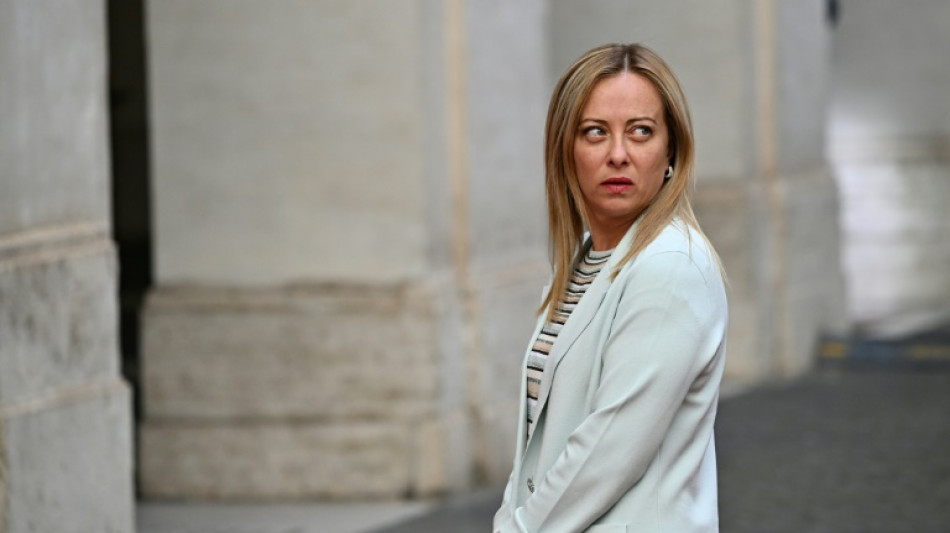
Left faces up-hill battle for minimum wage in Italy / Photo: © AFP/File

 Cash-strapped Senegalese unmoved by Youth Olympic Games
 Indonesia haze chokes neighbours, but little legal recourse
 Samad launches Pakistan into first Asian Games men's cricket final
 Yankees and White Sox advance, Phillies survive in MLB playoffs
 Asian stocks mixed as positive US data offset by elevated oil, bond yields
 Rice work: Dutch test new crop to save sinking peatlands
 Russians join street choirs to sing away sorrows -- or show dissent
 UK fears grow over AI giant Palantir's health service deal
 Empty nets in Latin America as fish flee El Nino
 Meidroth blasts White Sox through, Phillies survive in MLB playoffs
 'Catastrophic': Swiss glaciers lose fifth of mass in five years
 California roller coaster shut after brain damage claims
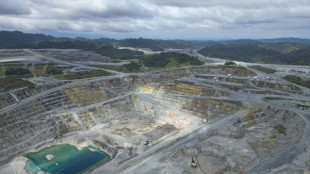 Panama ministers push for reopening of huge open-pit copper mine
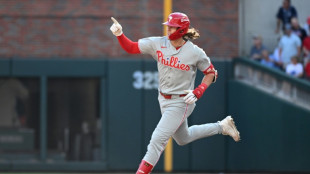 Bohm's blast keeps Phillies alive in MLB playoffs
 US judge accepts Paramount's Warner Bros. buyout settlement
 Global stocks mixed as markets weigh higher oil prices, bond yields
 Marsh hails improvements after Australia win final one-day international
 Hegseth says US cut number of generals, admirals by 20%
 Kanye West's Russian concerts have been cancelled, organisers say
 First Hollywood, now Fat Bear Week: nepobaby wins Alaska contest

 Barcelona lay down marker in Women's Champions League, Arsenal slip up
 US pushes against overproduction with eye on China at G20 meeting
 Swiss FA withdraws support for FIFA chief Infantino
 Man City's meteoric rise clouded by financial scandal
 Polish activists open first abortion pill locker in Warsaw
Security guard Aurelio Bocchi takes home just under four euros an hour in northern Italy, a paltry sum on which, he says, "we don't live, we survive".
He is not alone. Bocchi is one of more than three million workers in Italy who earn less than nine euros an hour before taxes.
Italy is one of the last countries in Europe not to have a statutory minimum wage, and the 3.96 euros net ($4.37) Bocchi pockets an hour in Padua, a wealthy city renowned for its Giotto frescoes, is determined by his union contract.
Once he has forked out his monthly rent of 610 euros, Bocchi has 260 euros left to live on.
"I don't splurge, I don't drink, I don't smoke and I save on everything", says the 64-year-old, who nevertheless has no chance of putting aside enough to fund his dream of buying a motorbike to travel the world.
Italy's opposition parties -- in a rare show of near-unity -- have been campaigning to put an end to so-called "poverty wages" by setting a legal minimum of 9.00 euros gross per hour.
But the governing right-wing coalition, led by hard-right Prime Minister Giorgia Meloni, wants none of it.
Fierce battles have raged in parliament, with Meloni saying a statutory minimum wage was "nothing more than a slogan that risks creating problems", a reference to what it would cost Italy's many small and medium-sized businesses.
On Thursday, the government cut short the debate, postponing further discussion in parliament until the beginning of October.
According to opinion polls, 70 percent of Italians, including most of Meloni's voters, are in favour of introducing a minimum wage.
Italy is one of just five European Union countries -- along with Austria, Denmark, Finland and Sweden -- where wages are determined solely by collective bargaining between employers and trade unions.
In November 2022, the EU laid down rules governing minimum wages, but does not oblige member states to adopt the system.
"We are not in the Soviet Union, where everyone had the same wage", Foreign Minister Antonio Tajani, head of the right-wing Forza Italia party, recently scoffed.
Tajani, who is also deputy prime minister, has proposed extending collective bargaining agreements to the 20 percent or so of workers not covered by the nearly 1,000 such agreements currently in force.
But many deals remain well below nine euros gross, like those for the cleaning (6.52 euros), catering (7.28 euros) and tourism (7.48 euros) sectors.
- 'Free and decent' -
According to the Organisation for Economic Co-operation and Development (OECD), Italy is the only European country where real wages -- adjusted for inflation -- fell nearly three percent between 1990 and 2020.
The average gross annual salary in Italy, at 28,781 euros, is also below the EU average.
David Benassi, a professor of sociology at Milan's Bicocca University, told AFP the resistance to a statutory minimum wage in Italy could partly be traced to the number of small and medium-sized businesses (SMEs).
"SMEs are ubiquitous in Italy, and work and wage flexibility is very important for them," Benassi said.
Simone Fana, author of a book called "Enough with Hunger-Inducing Wages", said the government was "fundamentally opposed to the minimum wage because its electoral base is made up of micro-businesses that are making profits by reducing labour costs".
They include shopkeepers, restaurant owners and farmers, who are opposed both to the minimum wage and the so-called "citizenship income", a poverty relief scheme they say makes it difficult to recruit workers.
Trade unions have traditionally rejected any interference in the wage bargaining process. Though the largest, the left-leaning CGIL, has finally come round to the idea, the other major union, the CISL, warns it could increase black-market work.
Security guard Bocchi has taken legal action against his employer, Civis, for low wages.
Milan's labour court has already ruled that Civis is in violation of the constitution, which stipulates workers have the right to salaries "sufficient to ensure for themselves and their families a free and decent existence".
In July, Bocchi's pay was increased by just 28 cents an hour -- but despite struggling he steadfastly refuses to "live off the community" by claiming benefits.
He may not have been able to anyway. Launched in 2019 by a party now in opposition, the "citizenship income" is being slashed by Meloni.
The first 159,000 families were told by text message Friday that they were no longer eligible, with others set to soon follow.
W.Lapointe--BTB