Tunisia president dismisses PM as country faces 'colossal challenges' / Photo: © AFP/File

 Cable car offers small hope for Mongolia's gridlocked capital

 Man City scandal risks damage to Premier League's booming brand

 First-time Sepang F1 racers will master track 'from opening lap'
 Japan tightens rules for foreigners wanting permanent residency

 'Happiest moment': China's Mu first woman to win eSports Games gold

 EU talks deportations as five nations seek migrant centre in Africa

 Kenneth Branagh examines the scars of Iraq war in 'Atonement'

 Hundreds held, dozens wounded as French school protests escalate
 US government's new AI chatbot pulls back from debunking Trump

 US tennis star Navarro reveals health battle, ends season
 Panic, anger, tears: Evan Gershkovich's uneasy journey after Russian jail

 UK PM says 'strong indications' Iran involved in airbase incident

 Google restricts access to new AI model over safety concerns

 Watchdog clears former US Fed chief Powell in renovation probe
 Israel PM hails Indian pilot of rerouted flight for averting disaster
 Fury, Joshua kick off 'battle of Britain' in good spirits

 Ronaldo leaves Portugal training camp after coach says he is dropped

 Florence Pugh stars in 'East of Eden' adaption on Netflix

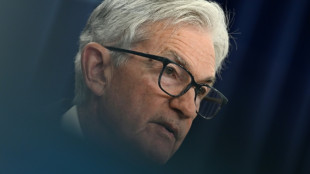 Watchdog finds no criminal misconduct over US Fed renovations despite Trump probe

 In Manchester, City fans 'devastated' while rival fans call for relegation

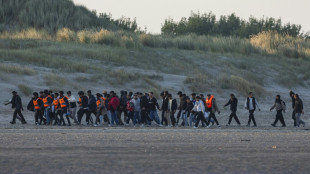 UK-France Channel migrant exchange deal scrapped: London

 Portugal boss denies 'incident' with Ronaldo

 Israel PM says one of the pilots of rerouted flight tried to crash plane

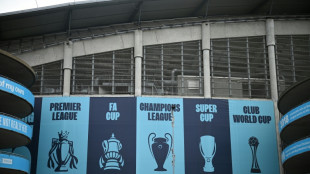 Manchester City: Main points of damning judgement and possible sanctions

 Italy looking for 'identity' under Mancini says Scalvini
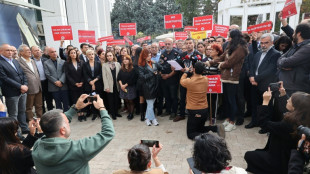
Tunisian President Kais Saied sacked Prime Minister Najla Bouden without explanation Tuesday night and replaced her with former central bank executive Ahmed Hachani, whom he tasked with overcoming the "colossal challenges" facing the cash-strapped North African country.
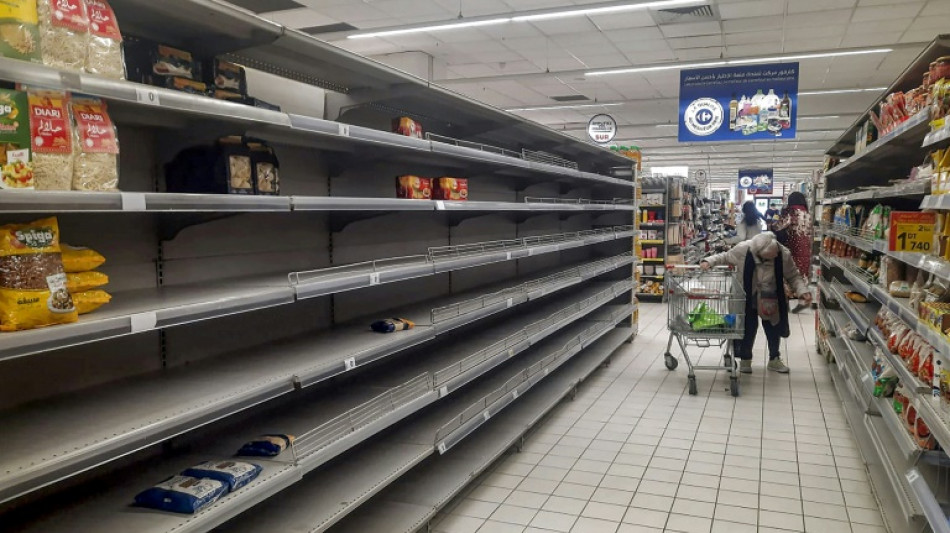
No official explanation was given for Bouden's dismissal, but several local media outlets highlighted Saied's displeasure over a number of shortages, particularly of bread in state-subsidised bakeries.
Saied "terminated the functions" of Bouden, who had been the first woman to head a government in Tunisia, according to a press release and video released by the presidency shortly before midnight.
Saied immediately appointed in her place Hachani, who until now worked at the Tunisian central bank and studied law at the University of Tunis, where Saied taught, according to Hachani's Facebook profile.
The new head of government, a figure unknown to the general public, was sworn in before the president, according to the presidency video.
At the end of the ceremony, Saied wished him "good luck in this responsibility".
The president stressed that "there are colossal challenges that we must overcome with a solid and strong will, in order to protect our homeland, our state and social peace".
In recent days, several meetings have taken place within the government and between the president and ministers over the problem of shortages of subsidised bread in several regions.
According to media, Saied, who recently said "bread is a red line for Tunisians", fears a repeat of the bread riots that left 150 dead in 1984 under Habib Bourguiba, the father of Tunisian independence.
Faced with a low-wage economy, the Tunisian state has since the 1970s centralised the purchase of a large number of basic ingredients such as flour, semolina, sugar, coffee and cooking oil, before putting them on the market at subsidised prices.
The country has been facing sporadic shortages of these products for months, linked, according to economists, to the requirement that suppliers be paid in advance, which Tunisia has had great difficulty doing.
- Economic woes -
The North African country, which is saddled with a crippling public wage bill from a civil service that employs 680,000 of its 12 million citizens, is struggling with debt of around 80 percent of GDP and seeking foreign aid.
Tunisia in October reached a tentative deal for a $1.9 billion bailout from the International Monetary Fund that would require Tunis to undertake a "comprehensive economic reform programme" that would phase out subsidies on fuel and electricity.
The IMF has also called for legislation to restructure more than 100 state-owned firms, which hold monopolies over many parts of the economy and in many cases are heavily indebted.
But hopes of securing the IMF bailout appear slim as President Kais Saied has repeatedly rejected "foreign diktats that will lead to more poverty".
Bouden was appointed by Saied on October 11, 2021, two and a half months after the president granted himself sweeping powers on July 25 by dismissing his then-prime minister and suspending parliament. Since his power grab, Saied has ruled by decree.
The constitution, which he had amended by referendum in the summer of 2022, greatly reduced the powers of parliament and granted the president's office unlimited powers.
A new assembly took office in the spring of 2023 following legislative elections at the end of 2022, which were boycotted by the opposition parties and shunned by voters with a turnout rate of around 10 percent.
On several occasions in recent months, the president has ordered the dismissal of various ministers, including the foreign minister, without giving a reason.
Since last February, about 20 opposition, media and business figures have been imprisoned in a wave of arrests that included Rached Ghannouchi, leader of the Islamist-inspired Ennahdha party and one of the president's highest-profile critics.
They are accused of "plotting against state security", and Saied has called them "terrorists".
Amnesty International has labelled the roundup a "politically motivated witch hunt".
Ennahdha dominated coalitions in the decade since the 2011 democratic revolution that culminated in the downfall of dictator Zine El Abidine Ben Ali and kicked off the Arab Spring uprisings across the region.
The political crisis Tunisia has been going through for two years is compounded by its serious economic difficulties.
Besides being heavily indebted, growth is a sluggish two percent while poverty levels are rising and unemployment is very high at 15 percent.
C.Meier--BTB