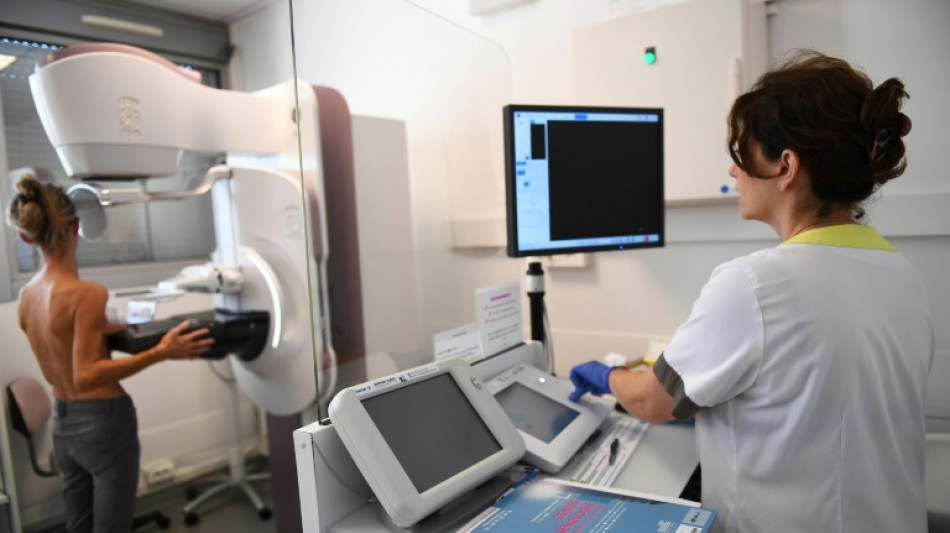
AI could halve time reading breast cancer scans, study suggests / Photo: © AFP/File

 Cable car offers small hope for Mongolia's gridlocked capital

 Man City scandal risks damage to Premier League's booming brand
 First-time Sepang F1 racers will master track 'from opening lap'
 Japan tightens rules for foreigners wanting permanent residency
 'Happiest moment': China's Mu first woman to win eSports Games gold
 EU talks deportations as five nations seek migrant centre in Africa

 Kenneth Branagh examines the scars of Iraq war in 'Atonement'

 Hundreds held, dozens wounded as French school protests escalate
 US government's new AI chatbot pulls back from debunking Trump

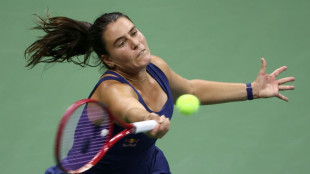 US tennis star Navarro reveals health battle, ends season
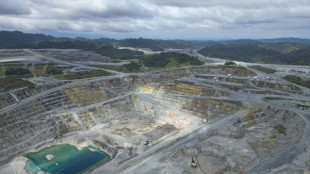
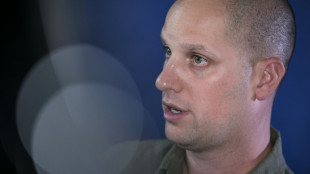 Panic, anger, tears: Evan Gershkovich's uneasy journey after Russian jail

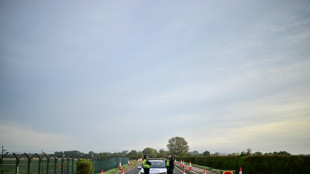 UK PM says 'strong indications' Iran involved in airbase incident
 Google restricts access to new AI model over safety concerns

 Watchdog clears former US Fed chief Powell in renovation probe
 Israel PM hails Indian pilot of rerouted flight for averting disaster
 Fury, Joshua kick off 'battle of Britain' in good spirits
 Ronaldo leaves Portugal training camp after coach says he is dropped
 Florence Pugh stars in 'East of Eden' adaption on Netflix

 Watchdog finds no criminal misconduct over US Fed renovations despite Trump probe

 In Manchester, City fans 'devastated' while rival fans call for relegation

 UK-France Channel migrant exchange deal scrapped: London

 Portugal boss denies 'incident' with Ronaldo
 Israel PM says one of the pilots of rerouted flight tried to crash plane

 Manchester City: Main points of damning judgement and possible sanctions
 Italy looking for 'identity' under Mancini says Scalvini
Artificial intelligence could help almost halve the workload of radiologists when it comes to searching routine scans for signs of breast cancer, a large Swedish study suggested on Wednesday.
The interim results of the trial were hailed as promising, but the authors cautioned that more research was needed before AI can be used to screen for breast cancer on a wider scale.
While increasingly convincing chatbots such as ChatGPT have driven speculation about the future potential applications of AI, one area in which the technology has already shown proficiency is in reading medical scans.
With many countries suffering from a shortage of radiologists, there are hopes that AI could make the time-consuming job of analysing routine scans quicker and more accurate.
This could have a particularly large impact for breast cancer. More than 2.3 million women were diagnosed with the cancer in 2020 alone, according to the World Health Organization, and it caused 685,000 deaths.
Regular screening is vital to identifying early signs of cancer. In Europe, women aged 50 to 69 are advised to get a mammogram every two years, with the resulting scan analysed by two radiologists.
The study in Sweden involved the scans of 80,000 women who had mammograms at four sites in southwest Sweden between April 2021 and July last year.
- 'Considerable importance' -
Their scans were randomly divided for analysis to either an AI-supported system or two human radiologists, who served as the control group.
The AI algorithm read the scans and predicted the risk of cancer out of 10. Its predictions were then checked by a radiologist.
The AI-supported system spotted 20 percent more cancers, the study said, which worked out to be an additional case for every thousand women screened.
When it came to false positives -- when a mammogram is first thought to look suspicious but is later cleared -- both the AI-supported system and the two humans spotted the same rate: 1.5 percent.
And the workload for radiologists was reduced by 44 percent for the AI group, because only one person was required to read the scans rather than the normal two.
"The greatest potential of AI right now is that it could allow radiologists to be less burdened by the excessive amount of reading," said Kristina Lang, a radiologist at Sweden's Lund University and lead author of the study.
But Lang said the "promising interim safety results" were "not enough on their own to confirm that AI is ready to be implemented in mammography screening," she said in a statement.
It will take two more years before the trial can say whether using AI leads to a reduction in what are called interval cancers, which are detected between routine screenings, the researchers cautioned.
Stephen Duffy, a professor of cancer screening at Queen Mary University of London who was not involved in the study, pointed out that the AI algorithm may have over-diagnosed certain forms of early breast cancer called ductal carcinoma in situ.
Nonetheless, he praised the "high-quality study", saying that reducing the burden on radiologists' time was "an issue of considerable importance in many breast screening programmes".
P.Anderson--BTB