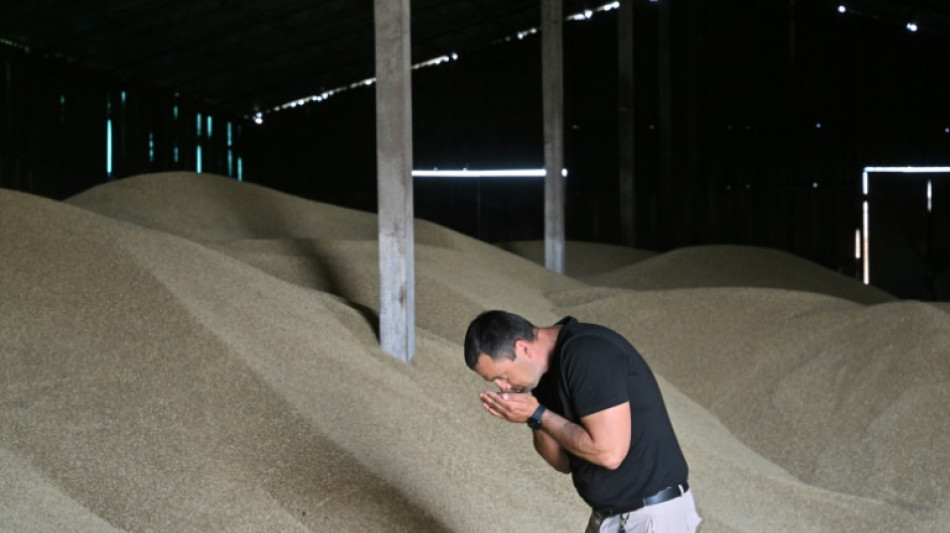
'No way out': Ukraine farmers lament collapse of grain deal / Photo: © AFP

 US government's new AI chatbot pulls back from debunking Trump

 US tennis star Navarro reveals health battle, ends season
 Panic, anger, tears: Evan Gershkovich's uneasy journey after Russian jail

 UK PM says 'strong indications' Iran involved in airbase incident

 Google restricts access to new AI model over safety concerns

 Watchdog clears former US Fed chief Powell in renovation probe

 Israel PM hails Indian pilot of rerouted flight for averting disaster
 Fury, Joshua kick off 'battle of Britain' in good spirits

 Ronaldo leaves Portugal training camp after coach says he is dropped

 Florence Pugh stars in 'East of Eden' adaption on Netflix

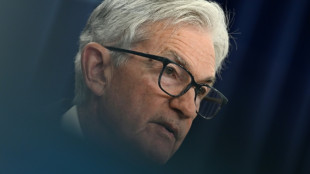 Watchdog finds no criminal misconduct over US Fed renovations despite Trump probe

 In Manchester, City fans 'devastated' while rival fans call for relegation

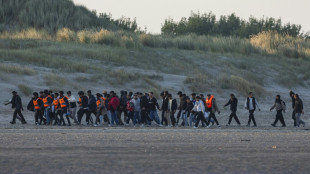 UK-France Channel migrant exchange deal scrapped: London

 Portugal boss denies 'incident' with Ronaldo

 Israel PM says one of the pilots of rerouted flight tried to crash plane

 Manchester City: Main points of damning judgement and possible sanctions

 Italy looking for 'identity' under Mancini says Scalvini
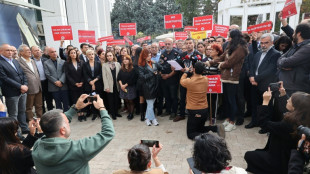
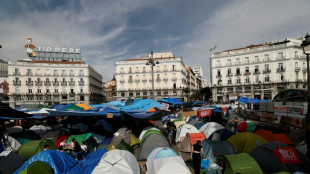 The voices of Spain's housing camp protesters
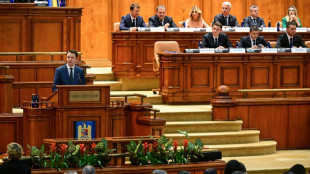 Romanian parliament rejects pro-EU PM candidate

 Court halts Tennessee's first execution of woman in 200 years

 Israelis march between once-closed West Bank settlements
 'Welcome back,' says Macron, as UK PM opens door to EU return
 Israel PM says pilot of rerouted flight tried to crash plane

 Demuro hopes to deliver Japan a 'magical' Arc victory

 'Devastated' AI scandal author Orelien returns to Quebec

Vitaliy Bylenko looked ruefully at the mountains of grain in his barn, contemplating the growing obstacles to shifting the stockpiles after Russia this week exited a deal allowing Black Sea exports.
Ukraine, European countries and the United States have lamented Moscow's decision to scrap the landmark accord brokered by the United Nations and Turkey last July.
But Bylenko said the deal signed in Istanbul had actually barely functioned for months.
"It has been working only on paper," Bylenko told AFP.
Ukraine grows far more wheat than it consumes and exports contribute to global food security, especially in African countries.
The termination of the deal has renewed fears of shortages or price hikes that could hit vulnerable countries hardest.
Ukraine officials accused Russia of obstructing the deal in recent months, and Bylenko said so few ships were arriving at Ukrainian ports to export grain he was already using alternate routes.
"Offers to buy grain from us in Odesa were scarce and we already took almost all our grain to small river ports," he said.
Instead, the wheat, maize and sunflowers he grows on his farm of 1,300 hectares and that employs some 35 people, was leaving via neighbouring Romania.
"I think that for the five months left (this year), this will not change substantially."
- Rock-bottom price -
But the Romania route is more costly and complex than the Black Sea route -- river ports are around 200 kilometres (125 miles) further from his farm than Odesa.
"Your profit margin is decreasing," the CEO of 11 years told AFP.
Due to lack of options, grain will now move through Romania, further lowering prices, Bylenko predicted.
Added to that, five neighbouring EU countries including Romania have blocked sales of grain over concerns of plummeting prices on their local markets, but allowed supplies to transit to other nations.
"The more produce there is, the lower the price," he said, noting he had 400 tonnes of wheat piled at his farm.
"If before the war, the price was around $270 per tonne, now those who are buying offer $120. We would like even $135."
To salvage the deal, Ukraine has proposed joint patrols with other Black Sea nations but Russia has repeatedly threatened to target ships nearing Ukrainian ports.
The situation may be painful, but last summer farmers were wondering how to sell any grain at all, Bylenko said.
The symbolic significance of grain in Ukraine is hard to miss.
- 'We're competitive' -
The office of another agribusiness' CEO, Lyudmyla Martinyuk, of Kivshovata Agro, is decorated with sheaves of wheat and a portrait of the national poet, Taras Shevchenko.
She said Ukraine boasts some 30 million hectares of fertile land to grow wheat and other crops.
"It's very important for us to have access to the markets of Europe, Asia, and Africa."
She told AFP the end of the grain deal was "very unpleasant" because it means Ukrainian producers would likely be forced to sell at a loss.
"We won't be able to sell at the prices offered by Europe -- high prices," she lamented.
"We need to be there," she added, "especially when Ukraine is penniless".
Moreover, the impact of the end of the grain deal on African countries is also a concern, Martinyuk stressed: "we cannot allow a famine in Africa".
She called for "active negotiations" to renew the deal.
- 'No way out' -
Her company grows winter wheat, maize, sunflowers and sorghum on 2,500 hectares, backed by Japanese investors.
US-made combine harvesters were working in the fields, harvesting winter wheat.
This grain will now need to be sold and the prices on the domestic market are too low, Martinyuk said.
While the Odesa ports are closed, her firm plans to export via Ukraine's river ports, like Bylenko.
"We have no way out," said Martinyuk.
She said she had heard some shipping companies could try to continue sailing from Odesa, but it was unclear if this would be possible given Russian attacks.
Yet Ukraine's abundance of grain and relatively low costs ultimately give Martinyuk optimism.
"We see that we are competitive both on the European and other markets because our produce is much cheaper," she said.
"For the food security of your countries, this is very significant."
F.Müller--BTB