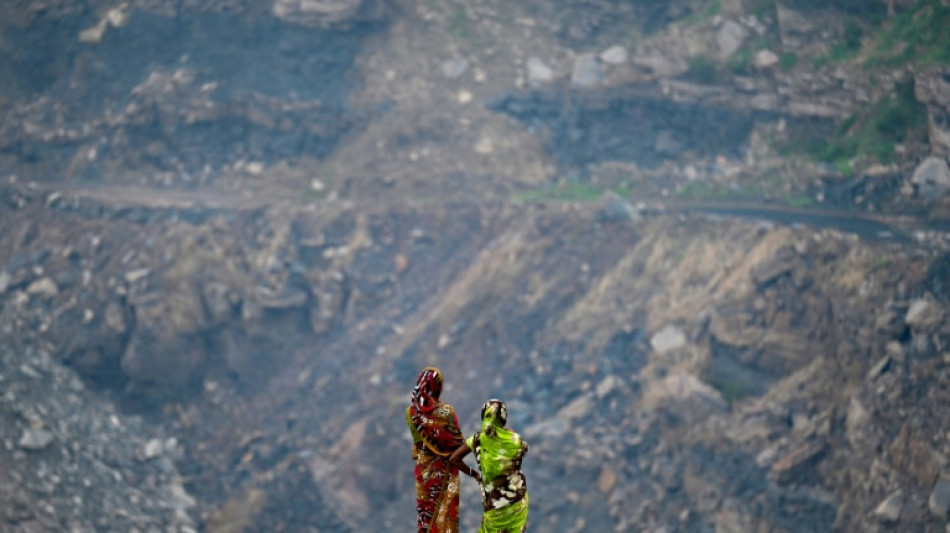
'Like hell': India's burning coalfields / Photo: © AFP

 Panic, anger, tears: Evan Gershkovich's uneasy journey after Russian jail

 UK PM says 'strong indications' Iran involved in airbase incident

 Google restricts access to new AI model over safety concerns

 Watchdog clears former US Fed chief Powell in renovation probe

 Israel PM hails Indian pilot of rerouted flight for averting disaster

 Fury, Joshua kick off 'battle of Britain' in good spirits

 Ronaldo leaves Portugal training camp after coach says he is dropped

 Florence Pugh stars in 'East of Eden' adaption on Netflix

 Watchdog finds no criminal misconduct over US Fed renovations despite Trump probe

 In Manchester, City fans 'devastated' while rival fans call for relegation

 UK-France Channel migrant exchange deal scrapped: London

 Portugal boss denies 'incident' with Ronaldo

 Israel PM says one of the pilots of rerouted flight tried to crash plane

 Manchester City: Main points of damning judgement and possible sanctions

 Italy looking for 'identity' under Mancini says Scalvini
 The voices of Spain's housing camp protesters
 Romanian parliament rejects pro-EU PM candidate

 Court halts Tennessee's first execution of woman in 200 years

 Israelis march between once-closed West Bank settlements

 'Welcome back,' says Macron, as UK PM opens door to EU return
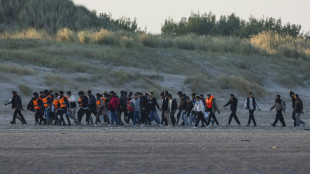
 Israel PM says pilot of rerouted flight tried to crash plane

 Demuro hopes to deliver Japan a 'magical' Arc victory

 'Devastated' AI scandal author Orelien returns to Quebec

 US reports firm Q2 economic growth, inflation steady

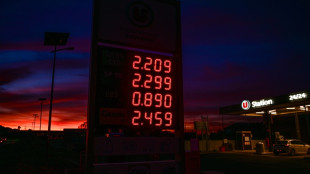 Energy costs spark inflation surge across Europe

Deadly fires have raged for a century in mines in India's Jharkhand state, where Savitri Mahto is one of 100,000 people risking their lives shovelling coal to supply insatiable demand.
"The land is charred because of the fires," said Mahto, 22, illegally scavenging amid the flames on the edge of a vast commercial opencast mine for the dirty fossil fuel. "We live in fear every day".
Underground fires, which scientists believe started in a mine accident in 1916, create sinkholes that swallow people and homes. Coal pickers and activists report hundreds of people have died over the decades.
"Accidents have happened before, and they keep on happening because the land is sinking," Mahto told AFP, as she tended a stack of burning rocks to produce coking coal, a more stable fuel sold for cooking and firing brick kilns.
"It is dangerous to live here," said Mahto, who dreams of being a nurse. "The houses can collapse anytime."
Coal consumption in India -- the world's most populous nation and fifth-biggest economy -- has doubled in the last decade, powering nearly 70 percent of the electricity grid.
Half of India's greenhouse gas emissions come from burning coal, and only China burns more.
The fires, raging in pockets across opencast mines spread over nearly 300 square kilometres (116 square miles), have burned millions of tonnes of CO2-belching coal, experts say.
Ghostly glowing fires and sulphurous clouds create an apocalyptic feel.
- 'Coal is the lifeline' -
"We have a responsibility towards the society as far as this environment is concerned," said Samiran Dutta, head of the commercial mine operator Bharat Coking Coal Ltd (BCCL), a subsidiary of state-owned Coal India.
Dutta, saying BCCL was not responsible for those entering the mines illegally, added that the company was "procuring various gadgets" including mist sprinklers hoping to dampen air pollution.
But efforts to extinguish the fires, including using liquid nitrogen and cutting trenches as firebreaks, have largely failed.
"The air is heavily polluted," Mahto said, tightening a scarf over her soot-blackened face, saying the constant exposure to poisonous gases burns her eyes and chokes her lungs.
The coal pickers work in brutal conditions, but India's appetite for the fuel is huge.
"Coal is the lifeline of Jharkhand," said A. K. Jha, a local trade union leader, claiming at current production that the mines could last for 200 years, with much of the coal used in the steel industry. "There will never be an end to coal."
Power demands are growing in India -- the world's third-largest greenhouse gas emitter behind China and the United States -- with a growing middle class buying energy-hungry air conditioners and refrigerators.
Barely one degree Celsius of warming to date has made extreme weather more destructive and deadly, and UN climate experts warn the world could breach 1.5C above the preindustrial benchmark within a decade.
India, with 1.4 billion people, points out its per capita emissions are below the global average -- and has pledged to reach net-zero carbon emissions by 2070.
- 'Always scared' -
State authorities began relocating people from the mines in 2008, but many say leaving means losing their livelihood.
Sushila Devi, whose 15-year-old daughter Chanda Kumari died when the land collapsed four years ago while picking coal, said she must stay.
"I am always scared that I might meet the same fate, but I am helpless," said Devi, who earns around six dollars from a day's hard labour. "If I don't work, what will I eat?"
Jha, the trade unionist, says that without other options, illegal coal picking will continue.
"The key question is of livelihood," Jha said. "If the government is unable (to provide jobs), then people will have to make do with what nature has given".
But vegetable seller Arjun Kumar, 32, whose home collapsed due to subsidence, said his "life will be like hell" if he is not relocated, because he will "be forced to live on the streets like a beggar".
For those who stay, Pinaki Roy, 55, founder of the Coalfield Children Classes charity, is offering young coal pickers lessons in English, computers and the arts.
Their last classroom was destroyed by mine blasting, and the replacement looks likely to collapse soon, with Roy pointing out huge cracks in its walls.
"They don't know anything apart from coal," Roy said, as a group of girls practised a dance routine. "We want to show them that there are a lot of other things in the world."
J.Horn--BTB