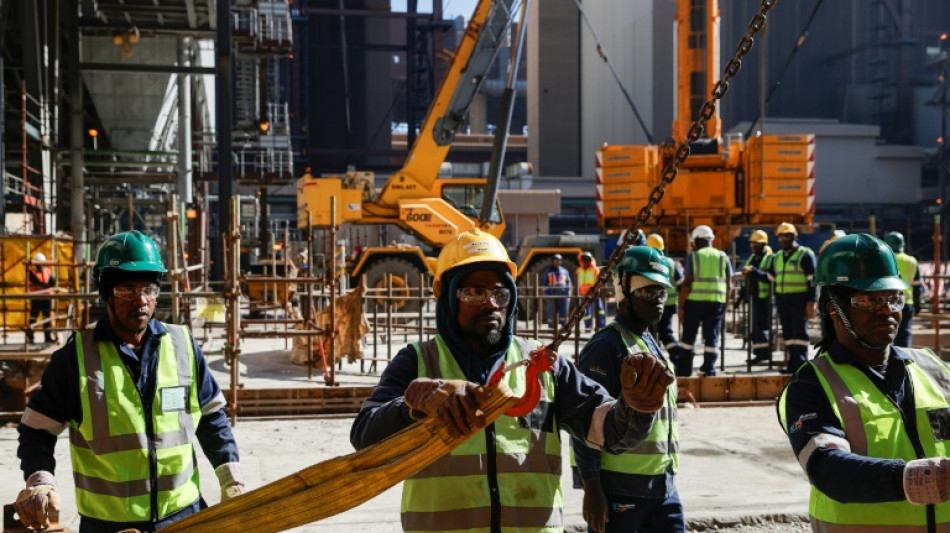
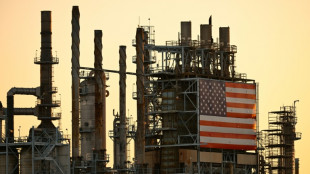
What's behind the sudden easing of S.Africa power cuts? / Photo: © AFP

 US pushes against overproduction with eye on China at G20 meeting
 Swiss FA withdraws support for FIFA chief Infantino
 Man City's meteoric rise clouded by financial scandal

 Polish activists open first abortion pill locker in Warsaw
 NHL Avalanche ink Bednar to four-year coaching deal
 Polish activists opens first abortion pill locker in Warsaw

 Turkey says news site closed for 'LGBTQ propaganda'
 Oil companies close in on Venezuela despite hurdles
 Turkey freezes ex-minister's assets as fund scandal grows

 Guardiola backs Man City after bombshell guilty verdicts

 G20 trade ministers open talks under strain of Trump tariffs

 France in talks with UK to end 2025 migrant accord: ministry
 Europe's surging inflation spreads gloom in stock markets

 Truth commission demands compensation for Sweden's Sami people

 Japan win marathon penalty shootout to set up South Korea gold-medal clash
 Djokovic grinds out opening-round win at China Open
 Northern Ireland police probe blockade of disputed parade

 UK PM Burnham reopens divisive debate on rejoining EU
 Man City future in doubt after guilty verdict
 'Do something,' begs Iranian woman after death sentence over protests
 China extends 52-year unbeaten record as Games organisers say sorry
 In Manchester, people say City scandal is 'shame for football'
 Stocks lacklustre as inflation data weighs on sentiment
 Israel-bound plane rerouted, pilots wounded in reported fight
 Truth commission on Sweden's Sami people seeks redress

South Africa's crippling blackouts have shrunk from up to 12 hours a day to just over two hours daily in recent weeks, after inflicting a massive hit on the economy.
The improvement has surprised many citizens who had become hardened to the rolling outages, imposed by state utility Eskom to safeguard the grid whenever demand outstrips supply.
AFP looks at the causes for the upturn and prospects for the future.
- Mild winter -
Despite forecasts last month of "an incredibly difficult" southern hemisphere winter by Electricity Minister Kgosientsho Ramokgopa, power supplies have dramatically improved.
The ruling African National Congress (ANC) secretary general Fikile Mbalula on Wednesday proudly declared that "interventions" at Eskom "are beginning to show definite signs of turnaround."
But energy experts say demand for electricity in the continent's most industrialised economy has been lower than expected due to above average temperatures this winter -- thanks to the El Nino weather phenomenon.
Increased prices have also forced businesses to consume less, said specialist Tshepo Kgadima.
"Even at the height of the winter, demand at peak consumption times is around 30,000 megawatts instead of the 37,000 forecast by the government," he told AFP.
Unable to produce enough power, Eskom has imposed power cuts for several years, and these worsened to record levels in recent months.
- 'Balance the situation' -
Since last month, Eskom has managed to ramp up generation to achieve an average output of 60 percent at its 14 mainly coal-fired power stations.
"Production is starting to keep pace with demand," Ramokgopa told a weekend press conference.
"That's why we're starting to see that during certain periods of the day... we don't have load shedding. We're starting to balance the situation."
However, some of the additional electricy comes from independent producers.
They feed solar- and wind-generated energy into the grid, which Eskom buys at five times more than the cost of production in its own power stations, Kgadima said.
To help make up the shortfall in supply, Eskom has also turned to emergency turbines that burn through 14 litres of fuel per second -- 50,400 litres per hour.
Almost $1.6 billion has been budgeted for diesel purchases this year alone.
- Maintenance on hold -
South Africa's recent power boost has also come from the postponement of planned maintenance.
Eskom typically slows down routine upkeep of its 14 power stations during the winter months to cope with a surge in demand.
This year, Eskom pressed as many generating units as possible into service, reducing maintenance to seven percent of the total capacity of the fleet, compared to an average of 13 percent in summer.
But, warned energy analyst Lungile Mashele, "there is a very significant risk" if Eskom fails to keep pace with its ageing plants' maintenance needs.
On Tuesday Eskom, while sticking to the two-and-half hour outages, resumed daytime power cuts due to an "increase in production unit failures."
- Political spin? -
Last month, Energy Minister Gwede Mantashe said power rationing would end by the time the country goes to nationwide elections next year.
In office for nearly three decades, the ANC-led government is facing growing discontent fuelled in part by the electricity crisis and a struggling economy.
In May the central bank forecast GDP will grow by just 0.3 percent this year, and the power cuts alone would cost the economy at least two percentage points of growth.
But the ANC is adamant that come elections in 2024, "there won't be loadshedding (planned power cuts). We would've resolved that", Mantashe told reporters.
- Graft and debt -
Corruption that hollowed out Eskom's coffers under Jacob Zuma's presidency, lack of plant maintenance and sabotage are blamed for South Africa's electricity crisis.
Eskom's former chief Andre de Ruyter in February compared graft at the utility to a cancer that had "grown throughout the entire body of the organisation."
Appointed at the end of 2019, De Ruyter was credited for helping to reduce Eskom's colossal debt, still equivalent to $23 billion, which the government is seeking to pay down.
C.Meier--BTB