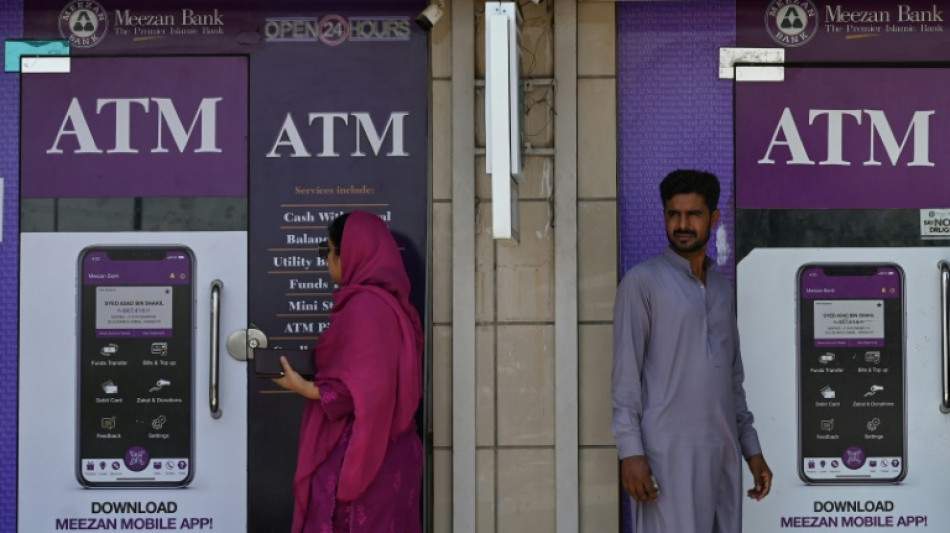
IMF and Pakistan reach $3 billion deal / Photo: © AFP

 Oil companies close in on Venezuela despite hurdles
 Turkey freezes ex-minister's assets as fund scandal grows

 Guardiola backs Man City after bombshell guilty verdicts

 G20 trade ministers open talks under strain of Trump tariffs

 France in talks with UK to end 2025 migrant accord: ministry

 Europe's surging inflation spreads gloom in stock markets

 Truth commission demands compensation for Sweden's Sami people

 Japan win marathon penalty shootout to set up South Korea gold-medal clash

 Djokovic grinds out opening-round win at China Open

 Northern Ireland police probe blockade of disputed parade

 UK PM Burnham reopens divisive debate on rejoining EU
 Man City future in doubt after guilty verdict
 'Do something,' begs Iranian woman after death sentence over protests

 China extends 52-year unbeaten record as Games organisers say sorry
 In Manchester, people say City scandal is 'shame for football'
 Stocks lacklustre as inflation data weighs on sentiment
 Israel-bound plane rerouted, pilots wounded in reported fight

 Truth commission on Sweden's Sami people seeks redress

 Energy costs spark inflation surges in France, Italy

 South Korea break China hearts to reach Asian Games football final

 Eala storms into Asian Games semi-finals to thrill adoring fans

 Turkey freezes ex-minister's assets as fund crisis grows

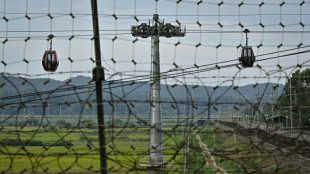 What we know about the North Korean POW dispute

 Most equities rise after oil price plunge, US data in focus

 Polar oceans transformed as warming melts ice habitats: research

Pakistan could get temporary relief for its ballooning foreign debt with a new deal worth $3 billion, the IMF has announced in Washington.
The economy has been stricken by a balance-of-payments crisis as it attempts to service crippling external debt, while months of political chaos have scared off foreign investment.
Inflation has rocketed, the rupee has reached a record low against the dollar, and the country is struggling to afford imports, causing a severe decline in industrial output.
"I am pleased to announce that the IMF team has reached a staff-level agreement with the Pakistani authorities on a nine-month standby arrangement in the amount of SDR 2,250 million (about $3 billion)," IMF official Nathan Porter said in a statement late Thursday.
The deal will need to be approved by the IMF's executive board and will be considered by mid-July, Porter said.
The figure represents 111 percent of Pakistan's IMF quota.
Pakistan's negotiations with the IMF for the last tranche of a $6.5 billion bailout package, agreed in 2019, stalled last November, with the government making last-minute changes to the national budget to try and meet the deal's requirements.
That package expires on Friday, and the new agreement builds on the IMF's efforts under the previous deal, Porter said.
Pakistan Prime Minister Shehbaz Sharif welcomed the deal but said it was not a silver bullet.
"This is not a moment of pride, but a moment to think over the reality. Do nations survive on loans? Let us pray that this is the last time that we have secured a loan from IMF and that we should not go to the IMF again," he told media after the deal was signed in Lahore.
Sharif described his meetings with IMF Managing Director Kristalina Georgieva in Paris last week as a "turning point" in a series of recent discussions with the world body.
- Economy in crisis -
Pakistan's Finance Minister Ishaq Dar celebrated by tweeting "AlhamdoLillah!", meaning "praise be to God".
He later told media "the (deal's) delay was caused mainly because of a gap in external financing assurances".
Michael Kugelman, director of the South Asia Institute at the Wilson Center, criticised Pakistan's slow progress on meeting IMF requirements for a deal.
"Islamabad waited until the very final hour to take the (politically risky) fiscal policy steps that the IMF had been hoping to see for months," he tweeted.
Years of financial mismanagement have pushed Pakistan's economy to the limit, exacerbated by the Covid pandemic, a global energy crisis since Russia's invasion of Ukraine, and record floods that submerged a third of the country in 2022.
The grim data gave the government little room to introduce vote-attracting budget measures ahead of an election due in October.
The IMF had told Pakistan it needed to secure more external financing, scrap a swathe of populist subsidies, and allow the rupee to float freely against the dollar, before unlocking more funds.
Mohammed Sohail, chief of Topline Securities, told AFP the IMF loan would restore some investor confidence.
"This new programme is far better than our expectations. There were a lot of uncertainties on what will happen after June 2023 as there will be new government coming to power," he said.
Pakistan needs billions of dollars in financing to service external debt, and foreign exchange reserves have dwindled to just $3.5 billion, roughly enough for three weeks of imports.
- History of bailouts -
The crisis prompted the government to temporarily impose a months-long broad import ban, stalling multiple industries.
Pakistan failed to meet any economic growth targets for the fiscal year 2022-23, with GDP growth at 0.3 percent.
Inflation reached a record 38 percent in May, amid more than a decade of declining real wages for working-class Pakistanis.
The IMF acknowledged the external shocks to the economic system, "as well as some policy missteps", in its deal.
Pakistan has brokered nearly two dozen arrangements with the IMF, most of which have gone uncompleted.
Thursday's deal struck an optimistic note, but also warned that Pakistan's crisis required consistent economic firefighting.
C.Kovalenko--BTB