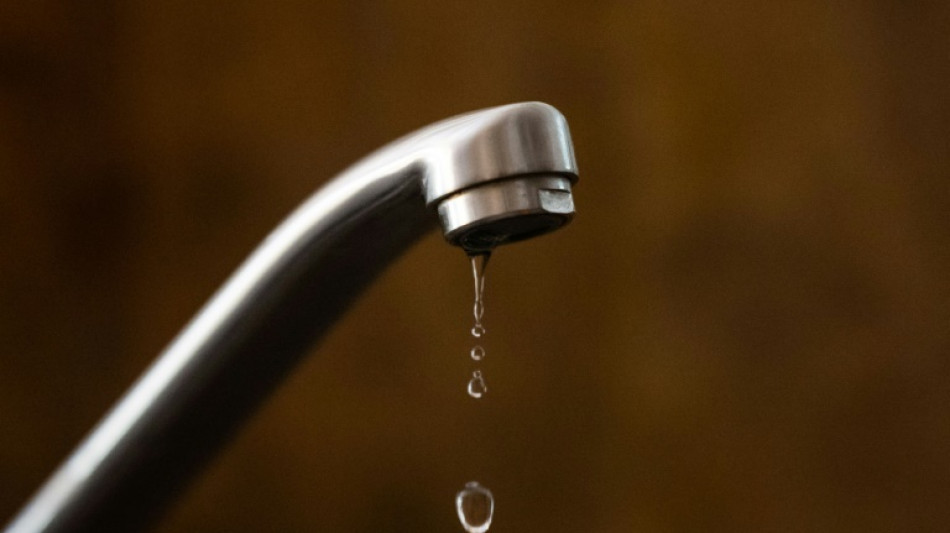
Govt mulls rescue of UK's biggest water supplier / Photo: © AFP/File

 Japan win marathon penalty shootout to set up South Korea gold-medal clash
 Djokovic grinds out opening-round win at China Open
 Northern Ireland police probe blockade of disputed parade

 UK PM Burnham reopens divisive debate on rejoining EU
 Man City future in doubt after guilty verdict

 'Do something,' begs Iranian woman after death sentence over protests

 China extends 52-year unbeaten record as Games organisers say sorry
 In Manchester, people say City scandal is 'shame for football'
 Stocks lacklustre as inflation data weighs on sentiment
 Israel-bound plane rerouted, pilots wounded in reported fight

 Truth commission on Sweden's Sami people seeks redress

 Energy costs spark inflation surges in France, Italy

 South Korea break China hearts to reach Asian Games football final

 Eala storms into Asian Games semi-finals to thrill adoring fans

 Turkey freezes ex-minister's assets as fund crisis grows
 What we know about the North Korean POW dispute

 Most equities rise after oil price plunge, US data in focus

 Polar oceans transformed as warming melts ice habitats: research

 Lost shark becomes viral star in South Korea

 Dangote to launch $16bn refinery in Kenya
 North Korean leader 'extremely obese': Seoul spy agency
 Yankees and pope-backed White Sox start MLB playoffs with wins

 Malaysia's ex-PM Mahathir in hospital for observation

 'No limits': Marathon world record holder Sawe chasing history
 Countdown begins to biggest-ever Rugby World Cup
The UK government on Wednesday expressed serious concern about the financial plight of the country's biggest privatised water company, but insisted the taps would keep flowing for millions of consumers.
Thames Water could become subject to a temporary renationalisation, media reports said, a day after the unexplained resignation of its chief executive Sarah Bentley.
The utility supplies 15 million homes and businesses in London and southern England, and is struggling with debts of nearly £14 billion ($18 billion) -- controversially amassed by private investors.
"I'm very concerned. Obviously this is a commercially sensitive situation and I know that my colleagues across government are looking at what we can do," Business Secretary Kemi Badenoch told Sky News.
"I was concerned to hear that the CEO had resigned abruptly," the minister added.
"But we need to make sure that Thames Water as an entity survives," she said, noting expensive infrastructure work faced by Thames and other water companies to stem rising outflows of raw sewage.
Thames Water said it was working with shareholders to secure extra funds on top of the £500 million it received in March.
Canadian pension fund Ontario Municipal is Thames Water's biggest shareholder with almost one-third of the equity.
Water regulator Ofwat said it was discussing with Thames Water "on the need for a robust and credible plan to turn the business around".
Customers "should rest assured" that their supplies will be protected, environment minister Rebecca Pow told parliament.
Britain privatised its water industry in 1989 when Margaret Thatcher was prime minister.
The water companies have accumulated combined debt of £54 billion since then, to fund investments, shareholder dividends and executive bonuses, according to an investigation last year by The Guardian newspaper.
But Prime Minister Rishi Sunak's spokesman insisted that the sector as a whole was "financially resilient".
- 'Tory failure' -
The opposition Labour party ruled out a hugely expensive renationalisation of the entire water sector, if it wins power in elections next year.
"But regardless of ownership status, the water industry requires a plan that delivers change and drives standards," Labour leader Keir Starmer's spokesman told reporters.
"It shouldn't be left to the public to clean up the mess or pay the price of Tory failure."
UK media said ministers were in talks about the possibility of temporarily bringing Thames back into public hands under a so-called special administration regime (SAR).
An SAR is used only in extreme circumstances, such as when a vital utility company is deemed too big to fail.
Its only previous use was in November 2021 following the collapse of energy provider Bulb.
The water firms have been under fire for years over releasing untreated wastewater into rivers and seas, blighting fragile ecosystems and leading to illnesses in people and the closure of beaches.
They have vowed to spend billions to upgrade their ageing pipes and treatment systems.
But campaigners have expressed outrage that rather than accepting lower profits, the companies have warned they could pass the cost on to hard-pressed consumers through higher bills.
The Times newspaper said water bills could surge 40 percent by 2030 to fund the works -- but Sunak's spokesman said the government was watching to ensure customers are not "disproportionately" hit.
J.Fankhauser--BTB