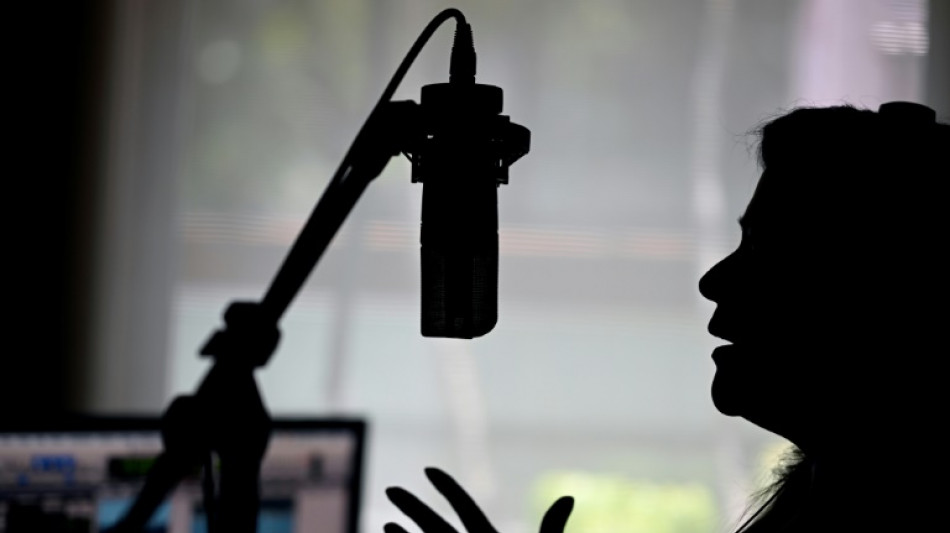
'Don't steal our voices': dubbing artists confront AI threat / Photo: © AFP

 In Manchester, people say City scandal is 'shame for football'

 Stocks lacklustre as inflation data weighs on sentiment
 Israel-bound plane rerouted, pilots wounded in reported fight

 Truth commission on Sweden's Sami people seeks redress
 Energy costs spark inflation surges in France, Italy

 South Korea break China hearts to reach Asian Games football final

 Eala storms into Asian Games semi-finals to thrill adoring fans
 Turkey freezes ex-minister's assets as fund crisis grows

 What we know about the North Korean POW dispute

 Most equities rise after oil price plunge, US data in focus
 Polar oceans transformed as warming melts ice habitats: research
 Lost shark becomes viral star in South Korea
 Dangote to launch $16bn refinery in Kenya

 North Korean leader 'extremely obese': Seoul spy agency
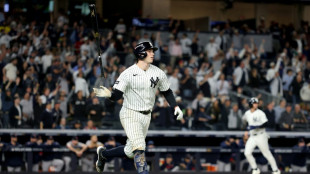 Yankees and pope-backed White Sox start MLB playoffs with wins

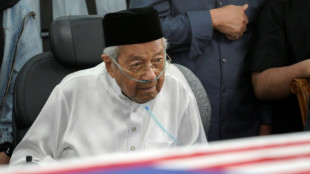 Malaysia's ex-PM Mahathir in hospital for observation

 'No limits': Marathon world record holder Sawe chasing history

 Countdown begins to biggest-ever Rugby World Cup

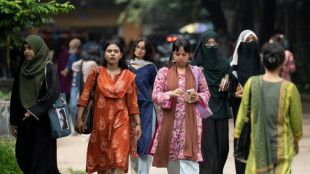 Bangladesh women lose ground after quota reform

 Vietnam admits 'differing opinions' on Hanoi development

 Stocks temper gains as oil pares heavy losses, US data in focus

 New Zealand denies breaching climate commitments to EU

 Albert becomes youngest US scorer in 4-2 win over Chile
 Pirate island's plunging population shows Greece's demographic decline
 With elections ahead, Latvia's Russian-speakers reject Moscow's help

Voice actors around the globe are mobilizing against the unregulated use of artificial intelligence (AI) to generate and clone human voices that they fear poses a threat to their livelihoods.
"We're fighting a very big monster," said Mario Filio, a Mexican artist who has done voiceovers for Hollywood star Will Smith, the Obi-Wan Kenobi character in Star Wars and the party-loving lemur King Julien in the animated movie "Madagascar."
Campaigning under the slogan "Don't steal our voices," more than 20 voice acting guilds, associations and unions from Europe, the United States and Latin America have created the United Voice Artists coalition.
It represents the faceless voiceover artists and narrators of commercials, movies, audiobooks and video games who fear that their voices will be replaced by machines, or even cloned by artificial intelligence without their consent.
"The undiscriminating and unregulated use of artificial intelligence is a risk that could lead to the extinction of an artistic heritage of creativity and wonder, an asset that machines cannot generate," according to the group, which says its members include the US National Association of Voice Actors (NAVA) and Latin America's Organization of United Voices.
"Our voices are our livelihood," NAVA vice president Carin Gilfry said in a statement last month.
"And if we don't have control over how those voices are used, we can't make a living," she added.
Voice artists were already competing with text-to-speech technology that turns written words into synthetic voice.
Now artificial intelligence has brought a new threat.
Thanks to machine learning, software can compare a voice sample with millions of existing ones, identifying patterns that generate a clone.
"It's fed by voices that we've been providing for years," said Dessiree Hernandez, president of the Mexican Association of Commercial Announcers.
"We're talking about the right to use your voice without your consent," she added.
- 'Adapt or disappear' -
Platforms offer human sounding text-to-speech services for a fraction of what professionals would charge.
One, revoicer.com, says that it does not intend to replace human voiceovers, but to offer a quicker and cheaper alternative.
Although they continued to be hired, voice actors suspect that companies are using their voices to build up their archives.
The artists are seeking tools to track their voices in the face of sophisticated piracy.
They want laws to prevent recordings of their voices being used to develop AI without their consent, and also support setting quotas for human voiceovers, said Colombian voice artist Daniel Soler de la Prada.
In the future, audiences could hear a famous actor's voice in several languages but with the intonation of a dubbing artist, Filio said.
While that could generate employment and benefits for the public, voice artists "need to charge what's fair," he added.
Mexican voice artist Maclovia Gonzalez said that she would only sign a contract with an AI company if it provided enough information about how the content would be used.
"I want to be part of this revolution, but not at any price," she said.
Art Dubbing, a company that has received several requests from clients to use synthetic voices, faces a dilemma: "adapt or disappear," said its Mexican founder, Anuar Lopez de la Pena.
Filio for his part said that he stopped recording for many clients for fear of hurting his colleagues' livelihoods.
But he is skeptical that artificial intelligence will replace voice actors completely because the machines have "no soul," he added.
I.Meyer--BTB