New generation of Moroccan filmmakers shines at Cannes / Photo: © AFP

 In Manchester, people say City scandal is 'shame for football'
 Stocks lacklustre as inflation data weighs on sentiment
 Israel-bound plane rerouted, pilots wounded in reported fight
 Truth commission on Sweden's Sami people seeks redress

 Energy costs spark inflation surges in France, Italy
 South Korea break China hearts to reach Asian Games football final
 Eala storms into Asian Games semi-finals to thrill adoring fans

 Turkey freezes ex-minister's assets as fund crisis grows

 What we know about the North Korean POW dispute

 Most equities rise after oil price plunge, US data in focus
 Polar oceans transformed as warming melts ice habitats: research
 Lost shark becomes viral star in South Korea
 Dangote to launch $16bn refinery in Kenya
 North Korean leader 'extremely obese': Seoul spy agency
 Yankees and pope-backed White Sox start MLB playoffs with wins
 Malaysia's ex-PM Mahathir in hospital for observation
 'No limits': Marathon world record holder Sawe chasing history
 Countdown begins to biggest-ever Rugby World Cup
 Bangladesh women lose ground after quota reform
 Vietnam admits 'differing opinions' on Hanoi development
 Stocks temper gains as oil pares heavy losses, US data in focus
 New Zealand denies breaching climate commitments to EU

 Albert becomes youngest US scorer in 4-2 win over Chile

 Pirate island's plunging population shows Greece's demographic decline
 With elections ahead, Latvia's Russian-speakers reject Moscow's help
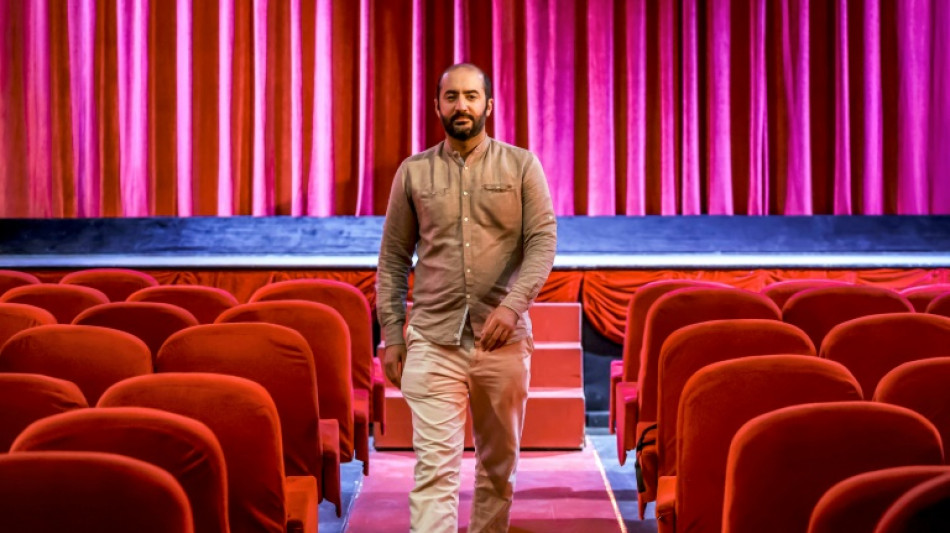
A new, young generation of Moroccan filmmakers last month stepped into the limelight to make its debut at France's Cannes Film Festival -- snatching three prestigious awards.
"The Moroccan films screened at Cannes represent some of the best in the history of cinema in Morocco," said film critic Bilal Marmid, who covered the two-week festival on the French Riviera.
Director Asmae El Moudir, 32, won the coveted prize for directing in the Un Certain Regard section for her film "Kadib Abyad" ("The Mother of All Lies").
The documentary explores her family's unspoken past during the nation's so-called Years of Lead, a period from the 1960s to the 1980s characterised by the repression of political dissidents under King Hassan II.
Lacking archival footage from the time, the filmmaker built a miniature set that recreated her childhood neighbourhood in Casablanca with figurines to narrate her family's story against the backdrop of the bloody suppression of the city's "bread riots" in June 1981.
"Making this film took me 10 years and allowed me to reconcile with this past, even if it was violent," Moudir, whose family members were featured in the film, told AFP.
- 'A childhood dream' -
"Being at Cannes is a childhood dream come true. Being selected is wonderful, but winning a prize is even more so," she said.
Director Kamal Lazraq, 38, also used Casablanca as the setting for his first feature film "Les Meutes" ("Hounds"), which won the jury prize in the Un Certain Regard section.
The film takes viewers on a hellish night in the city's suburbs as a father and son try to make a corpse disappear after a kidnapping goes wrong.
Lazraq describes it as a "feverish road movie traversing Casablanca" featuring two non-professional actors, Ayoub Elaid and Abdellatif Masstouri.
"I like to start on a blank page and build the film with my actors because they bring a lot from their life and experiences," Lazraq told AFP after returning from the festival. "I try to leave them a certain amount of freedom to create something authentic and intense."
After the screening, "we had the impression that the film had been understood as it should be ... It's great comic relief", added the director, noting that it had been a "long and difficult" shoot.
- 'Victory for youth' -
"The films are all very, very different... I hope it will encourage young people to embark on this adventure," he added.
His hope resonates with Zineb Wakrim, a 22-year-old director who was awarded third place in the student film award La Cinef for her short film "Ayyur" ("Moon" in Amazigh, Morocco's Berber language).
She paints a portrait of two teenagers with a rare genetic disease whose sufferers, known as "moon children", are hyper-sensitive to sunlight.
Showing her film at Cannes was "a great victory for youth", said the graduate of The Superior School of Visual Arts of Marrakech (ESAF).
Moroccan cinema gained steam in the 1970s and '80s, with the emergence of powerful filmmakers such as Mustapha Derkaoui ("About Some Meaningless Events", 1974), Ahmed Bouanani ("Mirage", 1980) and Ahmed Maanouni ("Oh the Days!", 1978).
Over the past two decades, other directors -- such as Faouzi Bensaidi ("A Thousand Months", 2003), Nabil Ayouch ("Horses of God", 2012) or recently Maryam Touzani ("The Blue Caftan", 2022) -- have distinguished themselves on an individual basis.
Seeking to support and promote its national cinema, Morocco has spent 60 million dirhams (about 5.5 million euros) annually on productions since 2012.
Asmaa El Alaoui, director and head of the ISCA film school in Rabat, said the country's latest success at Cannes was a huge encouragement to students.
"They know now that it's possible, that with work, patience and passion, they can make it," she said.
D.Schneider--BTB