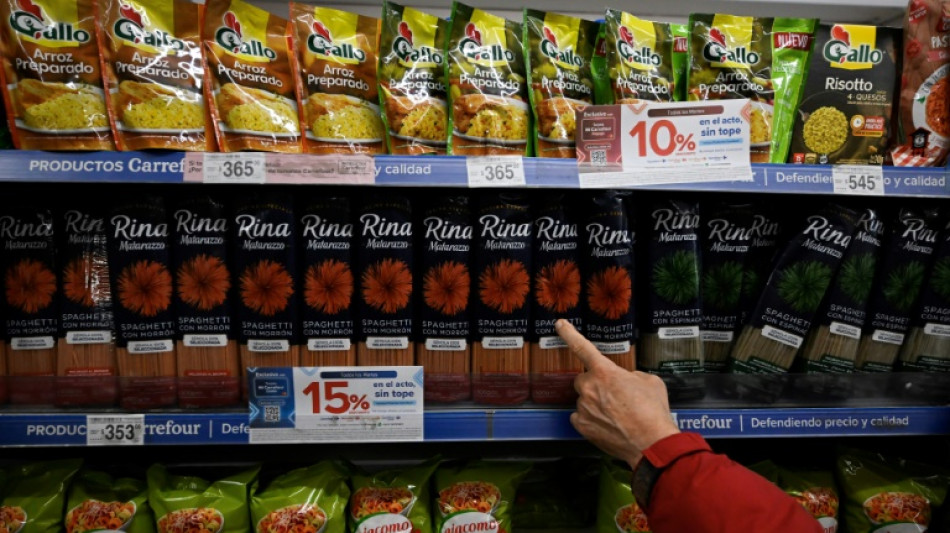
Spend now, worry later: no point saving in inflation-stricken Argentina / Photo: © AFP

 South Korea break China hearts to reach Asian Games football final

 Eala storms into Asian Games semi-finals to thrill adoring fans

 Turkey freezes ex-minister's assets as fund crisis grows
 What we know about the North Korean POW dispute

 Most equities rise after oil price plunge, US data in focus

 Polar oceans transformed as warming melts ice habitats: research

 Lost shark becomes viral star in South Korea

 Dangote to launch $16bn refinery in Kenya

 North Korean leader 'extremely obese': Seoul spy agency

 Yankees and pope-backed White Sox start MLB playoffs with wins

 Malaysia's ex-PM Mahathir in hospital for observation

 'No limits': Marathon world record holder Sawe chasing history

 Countdown begins to biggest-ever Rugby World Cup

 Bangladesh women lose ground after quota reform

 Vietnam admits 'differing opinions' on Hanoi development

 Stocks temper gains as oil pares heavy losses, US data in focus

 New Zealand denies breaching climate commitments to EU

 Albert becomes youngest US scorer in 4-2 win over Chile

 Pirate island's plunging population shows Greece's demographic decline
 With elections ahead, Latvia's Russian-speakers reject Moscow's help

 Brazil football clubs face massive sponsorship blow from betting ban

 ChatGPT maker wants to be the App Store for AI as safety concerns grow

 Women fight fires and sexism in Indonesian Borneo

 Forsling's OT blast lifts Florida over Carolina in NHL opener

 Hurricane Polo sweeps over Mexico's Pacific coast, heads inland

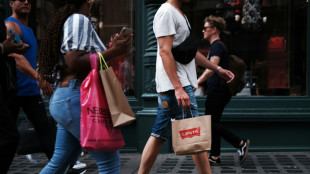
Despite a biting economic crisis, restaurants in Buenos Aires are full and queues for theater and concert tickets long.
With inflation at 114 percent year-on-year and around eight percent month-on-month, Argentines figure they may as well spend their salaries before they lose more value.
"We are very tired of economic problems," 25-year-old chef Santiago Basavilbaso told AFP as he shopped for fresh produce for his restaurant.
"People are probably used to many years of living without stability. When the end of the month comes... people just want to enjoy themselves."
For many, the situation means rushing to the shops as soon as possible after pay day to buy groceries before prices increase.
Many have had to switch to cheaper brands. Some have learnt to make do without certain products. For those with a bit of money left over, no point saving.
"I have had to change my tastes, modify my purchases and perhaps switch to other cheaper brands. But I am not going to stop enjoying (life). We try to adapt ourselves to the economy of the country," said Basavilbaso.
Argentina has one of the highest inflation rates in the world.
It has been a chronic ailment, but the South American country is now battling its highest inflation in three decades.
"Today, with inflation of 110 to 120 percent per year, the most difficult thing is to know if what you are buying is cheap or expensive," said economist Martin Kalos of EPyCA Consultants.
"We have lost any price reference."
- Pizza instead of vacation -
Economic analyst Salvador Di Stefano of the consultancy Estudio SDS said buying a house or car is beyond the reach of most, with interest rates on loans of up to 150 percent per year. On savings, interest is lower than inflation.
"So what do you do? You spend it," said Di Stefano.
"The one who cannot take a vacation goes to a concert, the one who cannot afford a concert goes to eat a pizza and have a beer."
Prices are rising so fast that paying with a credit card can result in big savings -- if you pay off your purchase before the interest becomes due.
"Sometimes... I take the merchandise and pay 35, 40 days later. And I play with that: today’s price I pay it later," said 63-year-old Adrian Alvarez, a meditation instructor who uses this method in lean months.
"You have to live within your budget. Oil, salt, bread or coffee increase in price almost weekly," he said.
In the supermarket where Alvarez does his shopping, there are deals galore: take two of the same product and pay only 30 percent for the second, or use the card of a specific bank to qualify for a discount.
Clothing and appliance stores have similar plans, and some offer payments over 12 months.
- Buy in bulk -
"Inflation encourages people to spend faster because saving is difficult," said Kalos.
"Wages are spent faster and faster. Money spends less time in the hands of those who earn it because it loses value."
Ricardo Nasio, president of the Proconsumer association, said comparing prices has never been as important.
"It is very good... to buy food that lasts, not perishable food... so that when the price increases, it can be consumed at the old price," he said.
"Another (idea) is for families to club together" to buy cheap products in bulk, and store it among them, said Nasio.
T.Bondarenko--BTB