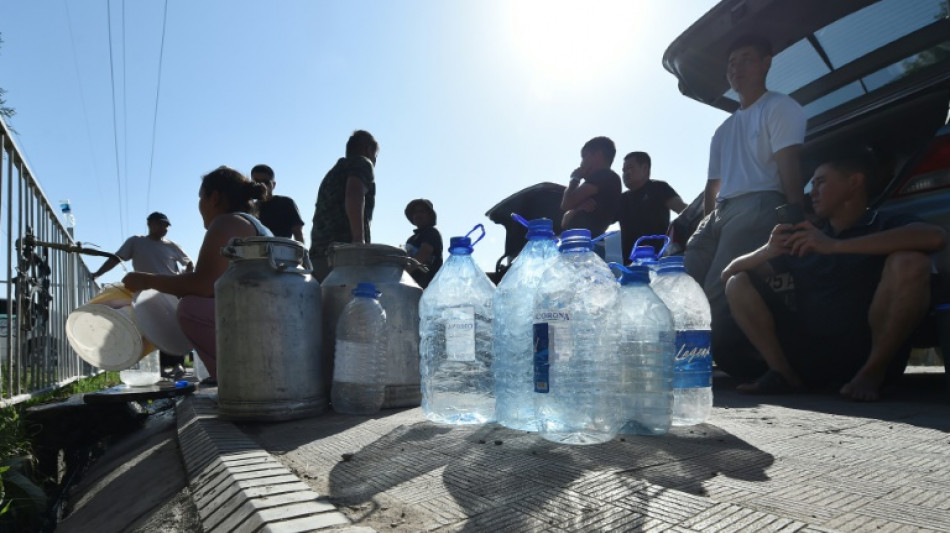
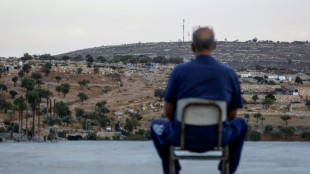
Drought hits Bishkek, where taps are running dry / Photo: © AFP

 Most equities rise after oil price plunge, US data in focus

 Polar oceans transformed as warming melts ice habitats: research

 Lost shark becomes viral star in South Korea
 Dangote to launch $16bn refinery in Kenya
 North Korean leader 'extremely obese': Seoul spy agency

 Yankees and pope-backed White Sox start MLB playoffs with wins
 Malaysia's ex-PM Mahathir in hospital for observation
 'No limits': Marathon world record holder Sawe chasing history

 Countdown begins to biggest-ever Rugby World Cup
 Bangladesh women lose ground after quota reform
 Vietnam admits 'differing opinions' on Hanoi development
 Stocks temper gains as oil pares heavy losses, US data in focus

 New Zealand denies breaching climate commitments to EU

 Albert becomes youngest US scorer in 4-2 win over Chile

 Pirate island's plunging population shows Greece's demographic decline
 With elections ahead, Latvia's Russian-speakers reject Moscow's help
 Brazil football clubs face massive sponsorship blow from betting ban
 ChatGPT maker wants to be the App Store for AI as safety concerns grow

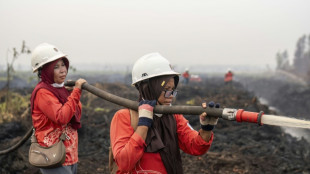 Women fight fires and sexism in Indonesian Borneo

 Forsling's OT blast lifts Florida over Carolina in NHL opener

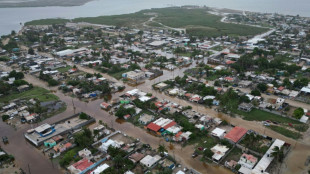 Hurricane Polo sweeps over Mexico's Pacific coast, heads inland
 Grynspan pulls ahead in race to lead UN: diplomat

 Trump touts AI boss pledge to self-regulate

 Oil down, but stocks lower as bond yields rise

 England break down stubborn Czechs to claim first Nations League win

For the past month, Bishkek resident Kanychai Bakirova has lived with her family of 11, including young children, in a home with only a trickle of water running from the tap.
At the laundrette where she works, she is unable to serve customers who come in with piles of dirty clothes.
"I'm a laundress but I can only run three washing machines," 59-year-old Bakirova told AFP, waiting her turn to collect water at a distribution point as others took the opportunity to wash their faces.
In the south of the Kyrgyz capital, where the water shortage is acute, such scenes are increasingly common.
Drought -- once restricted to the country's villages -- is now drying city-dwellers' taps.
With Soviet-era water infrastructure and few resources, the Bishkek authorities have struggled to keep the water running.
In the southern districts of the city, residents have come to rely on plastic bottles of water distributed by the city as temperatures near 40 degrees Celsius (104 degrees Fahrenheit).
"I haven't had running water for more than three weeks," said Imach Omorov, 61.
"I was able to get 150 litres (33 gallons). Hopefully that's enough for the next three weeks."
At the start of summer, the authorities introduced restrictions to manage water supply.
In some districts of Bishkek, water was cut off at night.
Swimming pools and car washes were closed. Night-time watering was banned.
But residents have struggled to cope.
When Omorov's neighbour died, "it was complicated to wash the body", he said.
- A chronic problem -
Like other city-dwellers, Omorov took part in a protest against the water shortage this week, where demonstrators blocked one of the main avenues south of the capital.
His frustrations are shared across Central Asia, where water shortages are a chronic problem.
According to the World Bank, almost a third of the region's approximately 75 million inhabitants do not have access to water.
In Kyrgyzstan, where one million now lack access to water, consumption levels are rising.
"Daily water consumption per person was around 170 litres.
"But it has tripled -- almost quadrupled -- with the rise in temperatures since May," said Kadyrbek Otorov, chief engineer at the organisation in charge of water distribution in Bishkek.
One cause of the drought this year is the steep drop in the water table.
That, in turn, is caused by the melting of glaciers due to climate change.
"The level of groundwater, which provides water to 40-45 percent of the city, especially the south, has dropped by 15 to 20 metres (50-65 feet) compared to last year," said Otorov.
Bishkek has not seen such water scarcity "for eight to 10 years".
The country's water infrastructure dates back to the Soviet era.
While the authorities have allocated funds to update the water infrastructure, it has suffered from under-investment.
For now, scientist Otorov warns "there isn't an infinite supply of drinking water". Water must be used with "great care".
M.Ouellet--BTB