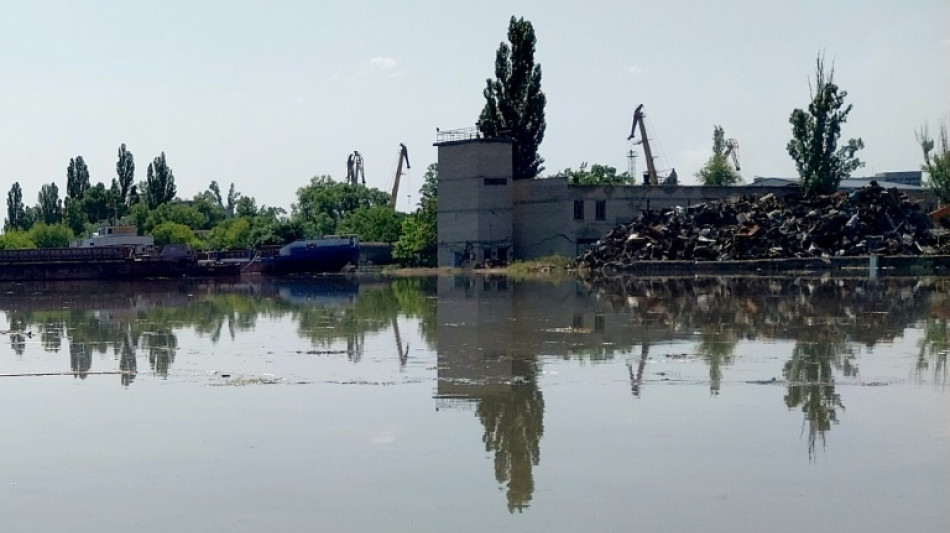
Ukraine nuke plant safety at stake after dam damage / Photo: © AFP

 Nagoya mayor says sorry for Asian Games 'inconveniences'

 G20 trade officials meet under shadow of tariffs, overcapacity

 India's fat dog vote goes viral

 Asian Games crowds in spotlight as 998 see hosts in 50,000 stadium

 The eight stadiums for the 2027 Rugby World Cup

 Thieves swipe drugs under nose of Fiji police, swap with flour

 South Korea demands North apologise for DMZ mine blasts
 In Nepal's flood zone, teachers mourn students who never returned

 US Supreme Court lifts limits on third-country deportations

 Antonelli eager to 're-establish order' as F1 returns to Malaysia

 Paw-fect candidate: Australia finds new koala rescue dog
 One third of world population exposed to harmful air pollution: monitor

 North Korea denies South's claim it was apparently behind DMZ mine blasts

 West Bank's violent settlers part of a new generation fuelled by ideology

 US-led coalition ends mission in Iraq
 Pope-backed White Sox join Braves with MLB playoff wins

 NBA close to picking new $12-13bn Vegas team owners: report
 LA28 Olympics torch relay to visit all 50 states

 Spain brush aside Croatia in Nations League, England down Czechs

 Trump hails 'morally binding' AI self-regulation pledge

 Yamal inspires Spain to Croatia romp on World Cup homecoming

 UN to hold fourth informal poll of secretary-general candidates

 Who are the Emiratis behind crisis-hit Manchester City?

 Singer Angelique Kidjo urges Africans to 'create together'

 Alleged Rihanna mansion shooter mentally fit for trial, says judge
While there is "no immediate nuclear safety risk," the UN nuclear watchdog is exploring options to get water to keep cooling Europe's biggest atomic plant after a dam in southern Ukraine was damaged on Tuesday.
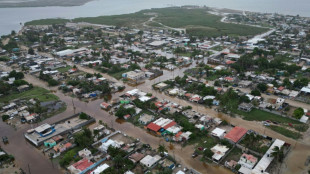
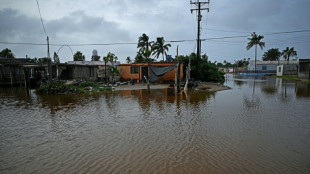
Moscow and Kyiv have blamed each other for the damage at the Kakhovka hydroelectric dam, which has led to thousands of people being evacuated because of flooding.
The Kakhovka dam sits on the Dnipro river, which feeds a reservoir providing cooling water for the Russian-occupied Zaporizhzhia nuclear power station, some 150 kilometres (90 miles) away.
- 'No immediate risk' -
The International Atomic Energy Agency (IAEA) -- which has a team of experts at the plant -- said it was "closely monitoring the situation" at the plant but saw "no immediate nuclear safety risk".
Karine Herviou, the deputy head of France's IRSN nuclear safety regulator, also told AFP there was "no immediate risk to the safety of the plant".
"There is no risk of flooding of the plant since the dam is downstream, not upstream," she added.
The plant's Russian-installed director, Yuri Chernichuk, insisted there was no security threat to the plant.
But Ukraine -- which in 1986 suffered the devastating Chernobyl nuclear disaster -- sounded the alarm.
Ukrainian presidential aide Mykhaylo Podolyak said the world "once again finds itself on the brink of a nuclear disaster".
- Depleting reservoir -
Damage to the dam was leading to a reduction in the height of the reservoir of about five centimetres (two inches) per hour, IAEA head Rafael Grossi said in a statement to his agency's 35-member board of governors.
Water in the reservoir was at around 16.4 metres early Tuesday, and if it drops below 12.7 metres, then it can no longer be pumped to the plant, Grossi warned, adding this could happen in "a few days".
Plant staff were making "all efforts to pump as much water into its cooling channels and related systems as possible", while supplies for "non-essential consumers of water" at the plant were being stopped, he added.
Besides that, IAEA is looking to confirm whether a large cooling pond next to the site would be able to provide water for cooling "for some months", he said, adding that this pond "by design is kept above the height of the reservoir".
"It is therefore vital that this cooling pond remains intact. Nothing must be done to potentially undermine its integrity. I call on all sides to ensure nothing is done to undermine that," said Grossi, adding he will visit the plant next week.
Herviou said the damaged dam was "worsening" the situation at the plant, but "in any case, we have time, probably a few weeks" to look for solutions.
One option could be to bring truck water to the site "even if this is not necessarily easy in times of war".
- Shut-down reactors -
The plant's reactors have already been shut down, but they still need cooling water to ensure there is no nuclear disaster.
"Absence of cooling water in the essential cooling water systems for an extended period of time would cause fuel melt and inoperability of the emergency diesel generators," Grossi warned.
"The impact is therefore lower," she added.
Grossi has repeatedly called for the protection of the plant as shelling has taken place near it and also several times disrupted its crucial power supply.
burs-jza/pvh
J.Fankhauser--BTB