In Ecuador biosphere, battle lines form over mining plans / Photo: © AFP

 Nagoya mayor says sorry for Asian Games 'inconveniences'
 G20 trade officials meet under shadow of tariffs, overcapacity

 India's fat dog vote goes viral
 Asian Games crowds in spotlight as 998 see hosts in 50,000 stadium

 The eight stadiums for the 2027 Rugby World Cup

 Thieves swipe drugs under nose of Fiji police, swap with flour
 South Korea demands North apologise for DMZ mine blasts
 In Nepal's flood zone, teachers mourn students who never returned
 US Supreme Court lifts limits on third-country deportations
 Antonelli eager to 're-establish order' as F1 returns to Malaysia

 Paw-fect candidate: Australia finds new koala rescue dog
 One third of world population exposed to harmful air pollution: monitor
 North Korea denies South's claim it was apparently behind DMZ mine blasts

 West Bank's violent settlers part of a new generation fuelled by ideology
 US-led coalition ends mission in Iraq
 Pope-backed White Sox join Braves with MLB playoff wins

 NBA close to picking new $12-13bn Vegas team owners: report
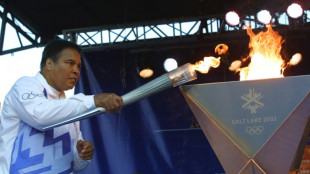 LA28 Olympics torch relay to visit all 50 states
 Spain brush aside Croatia in Nations League, England down Czechs
 Trump hails 'morally binding' AI self-regulation pledge
 Yamal inspires Spain to Croatia romp on World Cup homecoming

 UN to hold fourth informal poll of secretary-general candidates
 Who are the Emiratis behind crisis-hit Manchester City?
 Singer Angelique Kidjo urges Africans to 'create together'

 Alleged Rihanna mansion shooter mentally fit for trial, says judge
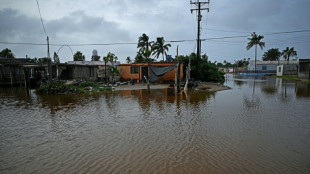
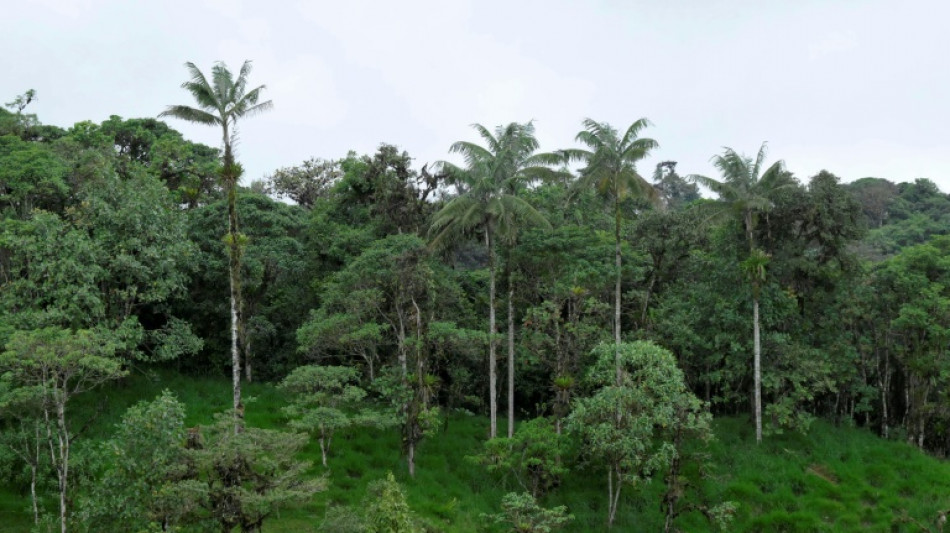
The Choco Andino Biosphere Reserve near Ecuador's capital Quito is a UN-designated biodiversity hotspot -- and the center of an increasingly heated debate over mining.
Mining companies want to exploit sites within the sprawling reserve, home to species like the spectacled bear. At least 12 mining concessions are in exploratory stages, although no mine has yet opened.
People who live within the reserve and environmentalists are pushing for a referendum to halt all mining.
Last year, the Constitutional Court gave a green light to hold a referendum in the Quito Metropolitan District (DMQ) on whether they want to prohibit all mining -- including small-scale "wildcat" projects. The date for the referendum remains up in the air.
Mining "has such great impact, and extractive activity is not compatible" with the almost 20,000 inhabitants of six towns in the reserve and inside the DMQ boundaries, Inty Arcos, a biologist and coordinator of the Choco Andino community, tells AFP.
He lives in one of the private reserves that are within the biosphere and that are dedicated especially to bird watching.
Other residents are farmers, ranchers and producers of organic unrefined cane sugar.
"It is just incongruous that you (could) go to see ... hummingbirds and Andean cock-of-the-rocks while somebody next to you is blowing up dynamite, and moving large trucks and tractors around," Arcos tells a group of journalists tromping through the bushes.
The Choco Andino Biosphere Reserve -- at 1,100 square miles bigger than metropolitan Paris -- extends from humid lowland forests to Andean mountain forests.
It hosts 270 mammal species, hundreds of endemic plant species, and 600 bird species, including the iconic cock-of-the-rock, whose striking red-and-black plumage makes it emblematic of the region.
Despite its UN designation as a priceless natural jewel, the biosphere does not enjoy status as a broadly protected area under domestic law, instead comprising a patchwork of protected forests, private nature reserves and areas of sustainable development.
There is plenty of disagreement among locals about the biosphere, environmentalists acknowledge.
According to the Chamber of Mining, when one of the concessions in the area was suspended, it left some 60 families without work.
- Unprotected -
In the Choco Andino, just 90 minutes from downtown Quito, hummingbirds hover so close that visitors can hear the thrum of their wings.
Given its jaw-dropping biological diversity, UNESCO enshrined Choco Andino as a biosphere reserve in 2018, a distinction it shares with the Galapagos Islands.
For years, "Quito without Mining" activists fought against development and rallied more than 200,000 signatures for a popular referendum.
Yet Ecuadoran law only bans mining or mineral-extraction activities within the national system of protected areas -- not those receiving global distinctions.
"The Constitution clearly establishes that the subsoil resources belong to the central state... which has to manage the resources," Maria Eulalia Silva, executive president of the Chamber of Mining, tells AFP.
She stresses that even a local referendum cannot decide how those resources will be handled when they belong to the nation as a whole.
Ecuador began to promote mining in 2019 as an alternative to the faltering oil industry, long a pillar of the economy.
Silva says that while Ecuador's Constitutional Court has the last word, "we just cannot be so blind, be so arrogant, as to fritter away the kind of opportunity" mining offers.
At the same time, with its enormous trees -- some with leaves the size of an adult -- the Choco Andino forest is important in the fight against climate change, its defenders say.
"They are extremely important forests because they retain carbon and fix it in their growth," says Arcos.
The trees also help clean up nearby Quito, a metropolis with three million inhabitants.
"The last clean rivers that remain are those of the Choco Andino and they help to dissolve the pollution that is dumped in (elsewhwere)," Arcos says.
After a decade of effort, another grassroots group, the "Yasunidos" collective, got the Constitutional Court to approve a different referendum -- one on leaving crude oil underground in an important block within the Amazon basin area's Yasuni National Park.
That referendum will be held on August 20, coinciding with nationwide elections after the dissolution of Congress last month.
The "Quito without Mining" group hopes that its referendum may also get the go-ahead to be held on that date.
E.Schubert--BTB