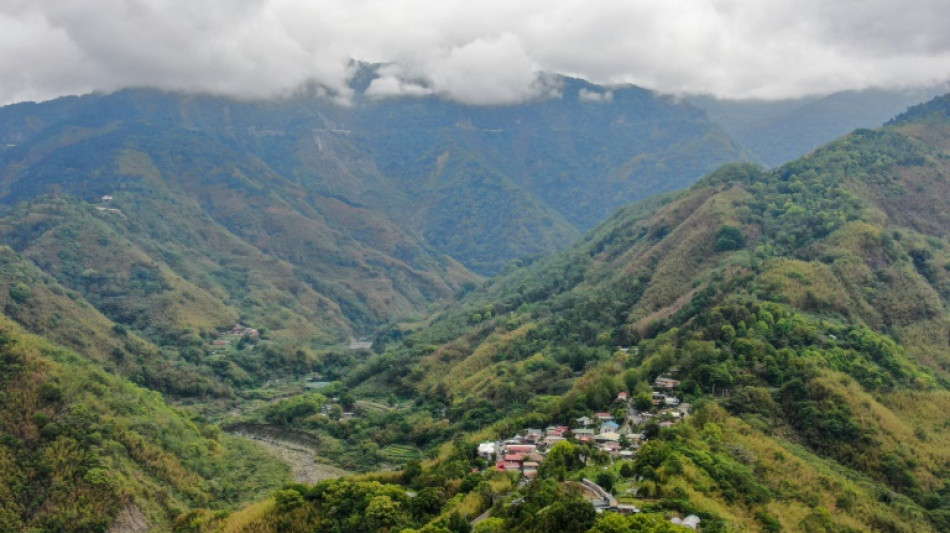
Taiwan tribe despairs as drought shrinks bamboo crop / Photo: © AFP

 'No limits': Marathon world record holder Sawe chasing history

 Countdown begins to biggest-ever Rugby World Cup
 Bangladesh women lose ground after quota reform
 Vietnam admits 'differing opinions' on Hanoi development

 Stocks temper gains as oil pares heavy losses, US data in focus
 New Zealand denies breaching climate commitments to EU

 Albert becomes youngest US scorer in 4-2 win over Chile
 Pirate island's plunging population shows Greece's demographic decline
 With elections ahead, Latvia's Russian-speakers reject Moscow's help
 Brazil football clubs face massive sponsorship blow from betting ban
 ChatGPT maker wants to be the App Store for AI as safety concerns grow

 Women fight fires and sexism in Indonesian Borneo

 Forsling's OT blast lifts Florida over Carolina in NHL opener

 Hurricane Polo sweeps over Mexico's Pacific coast, heads inland

 Grynspan pulls ahead in race to lead UN: diplomat

 Trump touts AI boss pledge to self-regulate

 Oil down, but stocks lower as bond yields rise

 England break down stubborn Czechs to claim first Nations League win

 UN Security Council extends Haiti anti-gang force by 6 months

 Manchester City guilty of Premier League charges: What comes next?

 Man City chief Soriano slams Premier League 'conspiracy theory'

 Hurricane Polo sweeps over Mexico's Pacific coast

 Man City must be relegated after guilty verdict says club's former chairman

 German far-right aims to lead Saxony-Anhalt govt in December

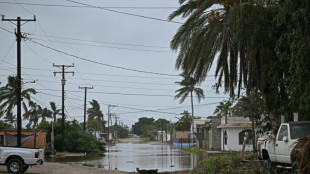 Little damage as Hurricane Polo sweeps over Mexico's Pacific coast

Hacking at a bamboo plant with a machete, Avayi Vayayana peels back the shoot's stiff bark as he scans southern Taiwan's mountains, anxious for more of the money-making crop his Indigenous tribe increasingly struggles to find.
Generations of the Tsou tribe have lived off Alishan township's bamboo forests, which Vayayana says were planted by his forefathers and typically harvested in April and May.
But "the weather in the last few years has really been out of whack", the 62-year-old tribal chief tells AFP.
"The rainfall has been delayed and the bamboo shoots' growth is noticeably affected."
In the Indigenous village T'fuya, the dark-brown cones of the island's native stone bamboo -- or phyllostachys lithophila -- have become harder to spot.
"The little young shoots will not sprout if there's no rain. After a while, they will die inside the ground," Vayayana says.
The February-to-April rains are crucial to the growth of bamboo shoots, but since late last year, there have not been any significant downpours.
The Tsou tribe, which has a population of 7,000 in Alishan, has seen their bamboo shoot harvest steadily decline.
On a misty May morning, a welcome drizzle finally blankets the bamboo forest Vayayana is working in, but he tells AFP it is too late.
This year, his haul is one-third of 2022's harvest.
Worse, Vayayana and his family must now also contend with crop-raiding monkeys, he explains after an airgun shot rings out in the distance: his cousin trying to scare away the marauders.
"Because many surrounding bamboo forests have died, now where there are bamboo shoots, all the monkeys will go," he says.
- 'Frontline victims' -
Southern Taiwan is experiencing its worst drought in decades.
Water levels in the Tsengwen reservoir serving the southern Tainan and Chiayi regions plummeted below 10 percent this year, the third such drop since 2018, leaving reservoir beds cracked and exposed.
The Tsengwen serves as a primary water source for a massive foundry making the island's precious semiconductors -- soaring in demand globally -- and also supplements the region's rice-growing plains.
But for the third year in a row, the government is providing subsidies to farmers not to plant their crops -- a sign of the severe water needs.
An hour's drive from the reservoir, Alishan too is experiencing drastic weather changes.
From January to April, rainfall declined to 226.5 millimetres (8.9 inches), a more than 50 percent drop compared to the same period last year, according to Taiwan's Central Weather Station.
For the Tsou -- whose lifestyle is entwined with nature -- the impact is "comprehensive", says Greenpeace Taiwan's Lena Chang.
"They are the frontline victims of climate change," Chang tells AFP.
Data compiled by Greenpeace Taiwan shows the drop-off in rain to be persistent. In the past three decades, Alishan has lost an average of 2.6mm of rainfall per year in February and 1.2mm in March -- a vital period for bamboo shoot growth.
At T'fuya's crop collection point, villagers offload sacks of bamboo shoots from trucks, weighing them before sending them to factories.
"This year, the rain came too late and many bamboo trees are sick. The harvest is very bad," Voyu Baniana, 24, tells AFP.
"In my family's plantation, we have none. I can only work for other people this year."
- New cash crop -
Those who returned to their villages after a period of working in cities are finding it harder to live off of crops they grew up cultivating.
Voyo Yulunana, 43, still remembers the long days he spent as a child harvesting bamboo shoots, the sale of which bolstered the community's living standards.
"Buying a car or building a house, we counted on the bamboo," he says.
Since Yulunana returned from a brief stint in the city working in construction, he has noticed "the rains don't come when they should".
Luckily, his grandfather made a switch to growing coffee beans, which Yulunana and other younger Tsou have shifted toward in the past decade.
"Coffee is slowly replacing bamboo shoots as the cash crop" in Alishan, says Yulunana.
But even it is not immune to climate change -- a late spring rain affects the plant's flowering season, and the erratic weather last year nearly devastated his family's 400-shrub crop, he said.
"At this point, I can get by with just growing coffee," Yulunana said. "Who knows what new crops will appear after coffee?"
N.Fournier--BTB