
For small-time investors, bankrolling a young athlete can pay off / Photo: © GETTY IMAGES NORTH AMERICA/AFP/File

 'No limits': Marathon world record holder Sawe chasing history

 Countdown begins to biggest-ever Rugby World Cup

 Bangladesh women lose ground after quota reform

 Vietnam admits 'differing opinions' on Hanoi development

 Stocks temper gains as oil pares heavy losses, US data in focus

 New Zealand denies breaching climate commitments to EU

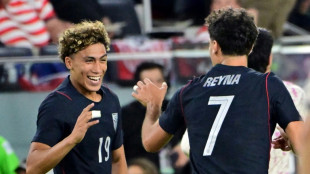 Albert becomes youngest US scorer in 4-2 win over Chile

 Pirate island's plunging population shows Greece's demographic decline

 With elections ahead, Latvia's Russian-speakers reject Moscow's help

 Brazil football clubs face massive sponsorship blow from betting ban

 ChatGPT maker wants to be the App Store for AI as safety concerns grow

 Women fight fires and sexism in Indonesian Borneo

 Forsling's OT blast lifts Florida over Carolina in NHL opener

 Hurricane Polo sweeps over Mexico's Pacific coast, heads inland

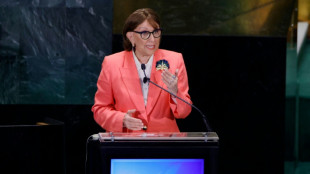 Grynspan pulls ahead in race to lead UN: diplomat

 Trump touts AI boss pledge to self-regulate

 Oil down, but stocks lower as bond yields rise

 England break down stubborn Czechs to claim first Nations League win

 UN Security Council extends Haiti anti-gang force by 6 months
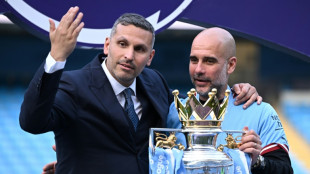
 Manchester City guilty of Premier League charges: What comes next?

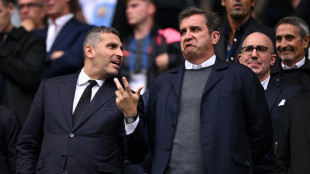 Man City chief Soriano slams Premier League 'conspiracy theory'

 Hurricane Polo sweeps over Mexico's Pacific coast

 Man City must be relegated after guilty verdict says club's former chairman

 German far-right aims to lead Saxony-Anhalt govt in December

 Little damage as Hurricane Polo sweeps over Mexico's Pacific coast

In February 2021, Dominican baseball superstar Fernando Tatis Jr signed a monster deal with the San Diego Padres -- $340 million over 14 years.
But up to $30 million of that total, according to US media estimates, will eventually go to Big League Advantage (BLA), which financed Tatis in the early stages of his career. The company and its investors stand to make at least 10 times their initial investment.
BLA is one of several start-ups offering individuals an opportunity to bankroll young athletes in exchange for a portion of their future earnings -- a new and perfectly legal market that has some sports agents wringing their hands.
Investing in young athletes is nothing new. In the early 2000s, hundreds of promising footballers ceded their rights to investment funds before the sport's world governing body FIFA banned the practice in 2015.
But now, these opportunities are increasingly available to the average investor, and not just a handful of rich elites with high-powered financial advisors -- thanks to new regulations that took effect in 2016.
"We started Finlete because we wanted to bridge the gap between athletes and their fans," explains Rob Connolly, the cofounder of the California-based platform, which has the backing of media-telecom giant Comcast.
Finlete is awaiting operations approval from the US Securities and Exchange Commission, in what would be a first for an investment firm open to all, no matter their wealth or earnings.
"Our goal is to have the share price at around $25," affording the investor a share of a blue-chip athlete's future income, says Connolly, noting he has several thousand people already on a wait list to buy in.
Shareholders would then be able to buy and sell on the platform.
- 'Predatory practice' -
Until now, this nascent investment industry has been largely linked to Major League Baseball, as its minor league system creates a market of thousands of young players who could eventually make it big.
But Swiss company Fantium has launched with a focus on tennis, and Commonwealth, which initially specialized in shares of racehorses, is expanding its listings to include up-and-coming golfers.
Those players receive $225,000 upfront to cover a three-year span, in exchange for 30 percent of their earnings over the same period -- a percentage that dwindles to 10 percent in year six, when the contract expires.
The money is placed in a joint account controlled by the player and Commonwealth, "so that we have full visibility into what the money is being spent on," explains Commonwealth cofounder and CEO Brian Doxtator.
At Commonwealth, Finlete and most of their competitors, the athlete is not required to reimburse any of the initial investment if they do not make it to the professional ranks.
For the time being, for athlete investments, Commonwealth only accepts accredited investors, who fulfill a minimum wealth and income threshold.
But eventually, Doxtator says, "we'll be able to sell shares in athletes for 100 bucks" as it does for racehorses. He also hopes to be able to offer resale of shares through the site.
One executive from a sports agency who asked not to be named, however, voiced skepticism about the benefits of such investments for the athletes.
"It's become really a predatory practice," the executive told AFP.
"It can be incredibly dangerous, because you can be giving away a significant financial upside long-term for sort of early short-term gains."
The executive said he hoped to see more government regulation of the sector, with "more guardrails and safeguards."
"But it's still so early," he said. "Only time will tell -- I don't think people fully understand the whole practice at large."
The SEC declined comment on the subject when contacted by AFP, as did the MLB Players Association.
Doxtator says he hopes to "completely eradicate predatory deals," citing the example of an athlete being given $50,000, and then owing 50 percent of his earnings to investors for 10 years.
"It's just crazy," he said.
Registering Commonwealth with the SEC will force transparency, especially on the financial parameters of the deals signed by the players, Doxtator says.
Connolly says he understands why some are hesitant to buy into his investment model, but adds that some athletes do not have the "support system" needed to make it to the big leagues without some extra help.
"A lot of these athletes have to quit their dream of being a professional athlete before they reach their full potential because of financial hardship," Connolly says.
"We believe we're getting more (of them) the ability to achieve their dreams."
E.Schubert--BTB