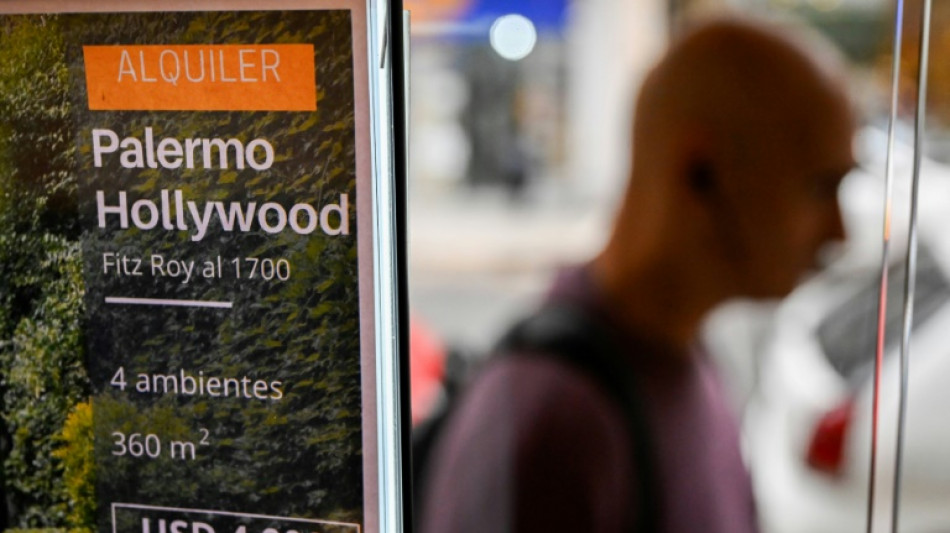
In distorted Buenos Aires rental market, it's dollar vs. peso / Photo: © AFP

 'No limits': Marathon world record holder Sawe chasing history

 Countdown begins to biggest-ever Rugby World Cup

 Bangladesh women lose ground after quota reform

 Vietnam admits 'differing opinions' on Hanoi development

 Stocks temper gains as oil pares heavy losses, US data in focus

 New Zealand denies breaching climate commitments to EU

 Albert becomes youngest US scorer in 4-2 win over Chile

 Pirate island's plunging population shows Greece's demographic decline
 With elections ahead, Latvia's Russian-speakers reject Moscow's help

 Brazil football clubs face massive sponsorship blow from betting ban

 ChatGPT maker wants to be the App Store for AI as safety concerns grow

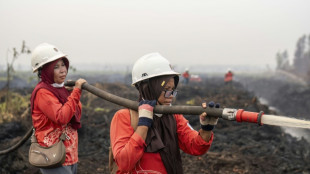 Women fight fires and sexism in Indonesian Borneo

 Forsling's OT blast lifts Florida over Carolina in NHL opener

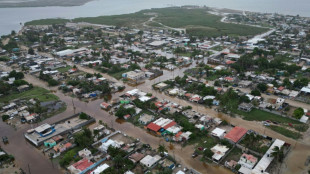 Hurricane Polo sweeps over Mexico's Pacific coast, heads inland

 Grynspan pulls ahead in race to lead UN: diplomat

 Trump touts AI boss pledge to self-regulate

 Oil down, but stocks lower as bond yields rise

 England break down stubborn Czechs to claim first Nations League win

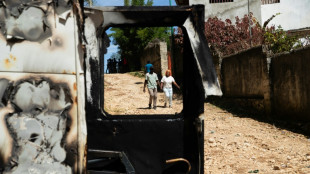 UN Security Council extends Haiti anti-gang force by 6 months

 Manchester City guilty of Premier League charges: What comes next?

 Man City chief Soriano slams Premier League 'conspiracy theory'

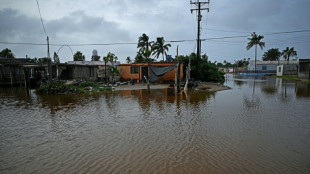 Hurricane Polo sweeps over Mexico's Pacific coast

 Man City must be relegated after guilty verdict says club's former chairman

 German far-right aims to lead Saxony-Anhalt govt in December
 Little damage as Hurricane Polo sweeps over Mexico's Pacific coast

Dollar-wielding foreigners living it up in Buenos Aires while locals scrape by; Argentina's sky-high inflation and weakening currency has yielded a schizophrenic rental market -- a bargain for some, a curse for others.
Ordinarily, a middle-class couple like anthropologist Martina Campos Lopez, 33 and her computer technician husband Bruno Suarez, 43, would top rental agents' lists of eligible tenants.
But they earn in pesos -- a currency trading at 488 to the dollar on the black market, where most people do their trading.
More than a year ago, the couple had to give up their apartment in anticipation of a price hike. They have been unable to find another, and were forced to move in with Lopez's mother. With their toddler.
"The most difficult is this feeling of being like a child again, without independence," Lopez said as she showed AFP around the small house.
"Our life is on pause. A temporary measure has become permanent. It is discouraging," she said.
A room the couple uses as a bedroom is packed to the brim with household items from a former life: a coffee maker, microwave, a fan, a fridge. Boxes are stacked high in the bathroom.
People such as Lopez are falling ever further behind as Argentina contends with inflation topping 100 percent year-on-year, and a fast-devaluing peso.
Previously, Lopez and her husband spent half their income on rent. But today, "even with 70 percent, we cannot find anything."
Property owners are not interested in receiving rent in pesos, never knowing what the rate will be in just a week, never mind a year.
Property agent Fernanda Ledesma says her company has no peso-based property rentals on the books.
"And when a new property comes in, it is snatched up in just hours. People are desperate, they don't even ask to see (the property)" in person, she told AFP.
- 'A time bomb' –
A law passed in 2020 with the aim of protecting tenants, may have inadvertently made matters worse.
Adopted at a time inflation was 36 percent, it limited rent increases to one per year and determined a minimum period of three years per contract.
Alejandro Bennazar, president of the Argentine Real Estate Chamber, said leases that expire at the end of the first three-year period, in mid-2023, "will jump 100 percent" based on a formula in the law that takes into account wage adjustments and inflation.
This would cut off many more potential tenants.
"It is a time bomb," said Bennazar.
In such circumstances, many owners are opting to leave their properties standing empty.
One of them is German Matienzo, who blames the price freeze.
"The fact that over the course of a year you cannot make adjustments when you have inflation of around 130 percent... this means the monthly income is depreciating abysmally from one month to the next."
Others rent informally to acquaintances, often with exorbitant conditions attached.
Yet more owners simply sell, causing in an oversupply of housing stock and a drop in prices -- usually set in dollars, leaving them out of reach of most.
"This is the worst housing crisis in 30 years," said Gabriel Mraida, president of the Buenos Aires municipality's Institute of Housing.
The institute estimates there are about 130,000 empty properties in the city.
According to income tax data "there are some 70,000 registered rental housing units in the city, but... about 500,000 households are tenants, just to give you an idea" of the scale of informal rental, he told AFP.
- In London, 'a shoebox' –
Those with dollars, however, have no problems finding a roof.
Jamie Larson, a 29-year-old digital nomad from New Zealand rents a furnished apartment with a panoramic view in the popular tourist neighborhood of Palermo.
In London, he said, "paying the price that I'm paying here, I'd be living in a shoe box. But here I can actually live in my own place, have my own space."
But he is not without a certain sense of guilt.
"I think it's absolutely insane when you look at the salaries that a lot of people are earning here, and now there is this expectation of paying in dollars... It's turning into a situation where locals can't even afford to live in their own city, which I just think is absolutely ridiculous."
In a bid to lighten the burden, the city has started making available zero-interest moving loans for people who manage to find somewhere to rent.
"There are no magic solutions, we have to stabilize the economy, and meanwhile stimulate supply and provide relief," said Mraida.
G.Schulte--BTB