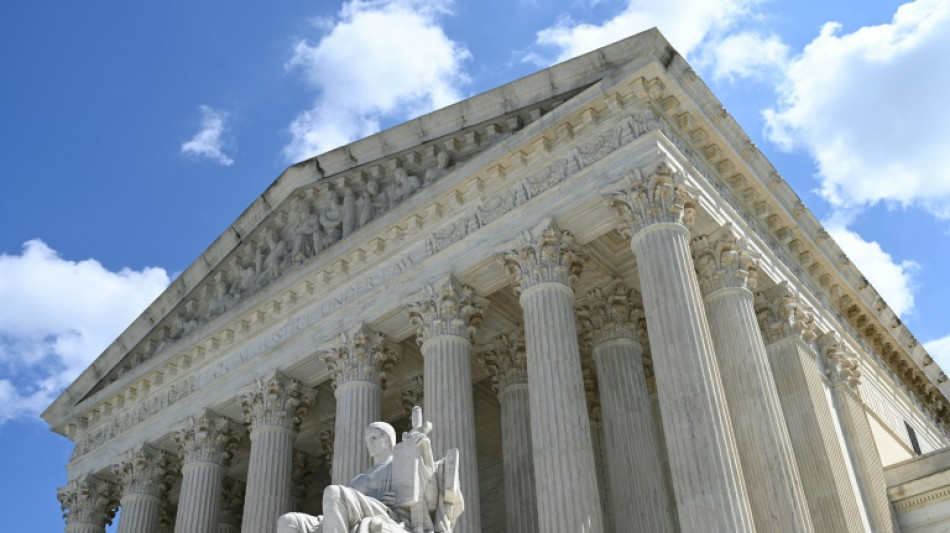
US top court back Big Tech in terror cases / Photo: © AFP

 Spain brush aside Croatia in Nations League, England down Czechs
 Trump hails 'morally binding' AI self-regulation pledge
 Yamal inspires Spain to Croatia romp on World Cup homecoming

 UN to hold fourth informal poll of secretary-general candidates

 Who are the Emiratis behind crisis-hit Manchester City?
 Singer Angelique Kidjo urges Africans to 'create together'

 Alleged Rihanna mansion shooter mentally fit for trial, says judge
 Mystery over UK airbase scare as police find petrol not explosives

 OpenAI unveils low-cost AI model, a day after shelving Astra upgrade
 Premier League confirms Man City guilty of serious financial breaches

 Brazil's Lula turns to Bad Bunny tune to criticise Trump ahead of polls
 Nigerian dancer eyes world record after seven-day marathon
 Swiss regulator concludes Julius Baer bank probe

 Brazil's patron saint pulled into latest election scrap

 Football overload leaves players near 'breaking point', warns Tebas

 Paris Eiffel Tower says chief to step down after uproar over removing women staff
 Amaze Holdings (NYSE: AMZE) Executes Binding LOI to Acquire BullionFX | Alchemy, a Decentralized Gold-Backed Financial Ecosystem for Valued at US$155 Million
 Clashes between French teens, police as school blockades intensify

 Stocks move sideways despite oil moving lower

 African leaders to gather in Egypt for business summit

 UK decides against charging foreign visitors for museums

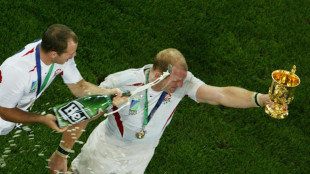 Dallaglio to sell England World Cup winners' medal
 Brazil come from behind to beat Australia 4-2 in friendly

 Ruthless An retains Asian Games badminton crown as Kunlavut triumphs

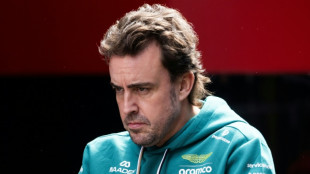 Alonso to stay with F1 team Aston Martin in 2027

The US Supreme Court handed a victory to Twitter, Facebook and Google on Thursday, saying the social media giants could not be held liable by victims of terrorist attacks for postings that endorsed the Islamic State group.
Crucially, the cases that targeted Google-owned YouTube and Twitter were seen as potential challenges to decades-old legal protections for tech companies. And the justices declined to wade into the debate.
In their decision, the justices indicated that the cases were not fit to address the law, because the platforms did not in any case "aid and abet" IS terror attacks by hosting postings supportive of the extremist group.
A law known as Section 230 gives internet platforms blanket immunity from the fallout of content that comes from a third party, even if it is pushed out as a recommendation by the website.
Section 230, which became law in 1996, is credited with allowing the no-holds-barred expansion of the internet but has increasingly been seen as helping cause the harmful effects of social media on society.
Without it, websites would potentially be open to lawsuits for content posted by users, making the free-wheeling discussions seen on social media subject to much closer moderation.
A bitterly divided US congress has failed to update the rules, and many US states are passing their own laws to make platforms such as Facebook, Instagram and Tiktok more responsible for content.
The justices of the Supreme Court largely evaded the question. They said that the allegations against YouTube and Twitter did not amount to a liable infraction and therefore the debate over section 230 was not pertinent.
"We therefore decline to address the application of Section 230 (in a case) that appears to state little, if any, plausible claim for relief," they said.
The justices however gave no indication on how they could potentially address the immunity issue in the future, nor were their stances on the matter made clear at hearings in February.
- 'Fight another day' -
"With this decision, free speech online lives to fight another day," said Patrick Toomey, deputy director of ACLU, which advocates for free speech.
The first of the two cases involved a US victim of the 2015 Paris attacks, claimed by the IS group.
The other case was brought by the family of a victim of a 2017 attack by the group on an Istanbul nightclub.
The family alleged that Twitter's failure to take down and stop recommending IS tweets constituted aiding an act of terror.
Google and Facebook's owner Meta did not immediately reply to a request for comment, but an association representing US tech companies said the decision was good news.
"The Court correctly recognized the narrow posture of these cases and declined to rewrite a key tenet of US Internet law, preserving free expression online and a thriving digital economy,” said Matt Schruers, head of the Computer & Communications Industry Association.
The Supreme Court declines to hear the vast majority of the cases that come its way, and experts had predicted that by opting to decide on this one, there could be a willingness to modify the increasingly contested landmark law.
But in the hearings, the justices largely expressed doubts that the case would be fit to begin a debate about reworking Section 230.
H.Seidel--BTB