S.Africa's blackouts force solar-powered town to life in the dark / Photo: © AFP

 Chemical weapons watchdog reinstates Syria

 Cocoa lynchpin sees chocolate lovers make hesitant return

 French yachtswoman set to break new barriers in Route du Rhum
 Markets steady tracking US-Iran flare-up
 Italy expels two Russian diplomats accused of spying: minister
 German exports rise despite Iran war headwinds
 Thousands attend funeral for Afghan cricketer Shapoor Zadran

 Crude pares steep gains as traders take stock after US-Iran flare-up

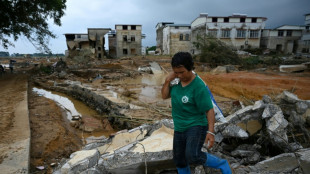 Cleanup underway as death toll from China floods hits 39

 Italy recall Allan, Lynagh for All Blacks Nations Championship Test
 Rookie fly-half Meredith thrown in for Wallabies debut against France

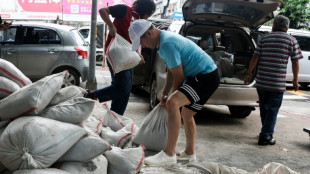 Taiwan warns of 'destructive' winds as typhoon nears

 Farrell rings changes for Ireland's Japan clash
 Magyar's blitz against Orban's Hungary 'mafia' gathers pace

 Labour leadership contest takes Burnham closer to UK PM's office
 New Zealand may join Australia-Fiji defence pact: PM Luxon

 Fly-half Meredith to make Australia debut against France
 US, Iran trade new strikes in fight over Hormuz strait

 Modi eyes 'historic' chance to secure Australian uranium

 US crackdown on top AI fuels open-source surge

 EU moves closer to kicking kids off social media
 Protecting the protectors: racing to save Philippine mangroves
 Expanded World Cup; same old story as Europe dominates quarter-finals

 Morocco's Saibari out of France World Cup quarter-final

 Trump orders new strikes on Iran over attacks on shipping in Hormuz
A South African town has been left fuming after a legal battle with a state-owned power utility forced its solar plant to dump desperately needed electricity in a country suffering a record energy crisis.
Frankfort, a farming community of around 5,800 people located 140 kilometres (90 miles) south of Johannesburg, started using locally produced energy in February to lessen the impact of crippling nationwide power cuts that can last up to 12 hours a day.
But that didn't go down well with beleaguered monopoly Eskom, resulting in a court case, which the firm won on a technicality last month -- compelling locals to sit in the dark during outages like everybody else.
"They can't produce any electricity and we are not allowed to use the electricity that we produce. It doesn't make sense," Hans Pretorius, a local cereal farmer, told AFP.
The case reflects some of the frustrations at the country's energy crunch, with critics saying it is emblematic of the problems faced by private businesses grappling for solutions.
"If they are not going to allow us to use the solar... or to use our own electricity, we don't have any choice, we will have to take the law into our own hands," warned Pretorius, who grows cereals and relies on electricity to power the irrigation system.
"It's a matter of survival."
- Solar farm -
Africa's most industrialised country has been battered by record blackouts over the past year due to shortfalls in generation at Eskom's coal-powered plants.
Euphemestically called load-shedding, the outages can last half a day, but could worsen in coming southern hemisphere winter and cost the country over $1 billion a month in lost production, according to the government.
Gary Mbundire, a farm manager, said he lost 5,000 chickens which suffocated because of lack of ventilation in January.
Similarly, Thando Keswa was forced to close his takeaway business in Frankfort's township of Namahadi as the cost of running a generator had become too expensive.
"When you are using the gas for... hours, you are not going to make any profit," he said.
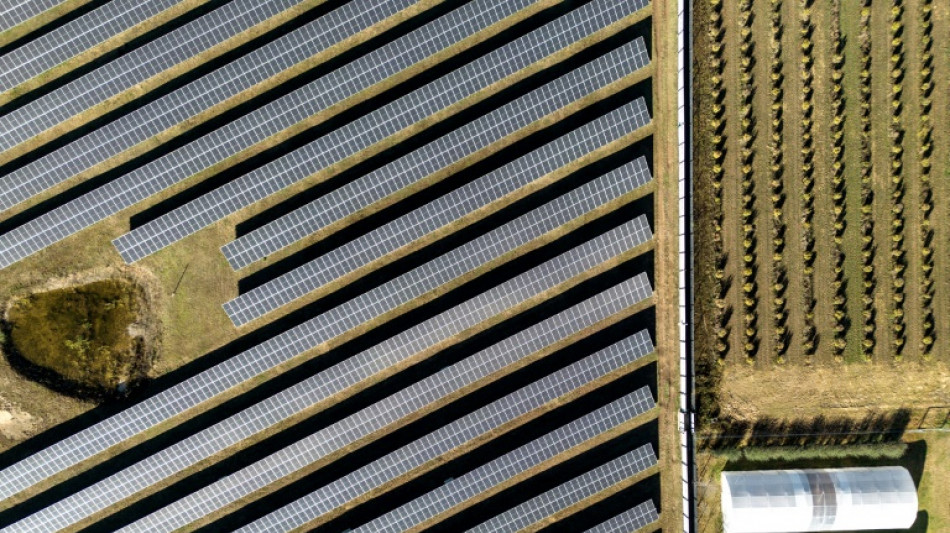
That situation prompted local businesses and individuals to invest about 100 million rand ($5.2 million) to build a solar farm, which was completed in December.
The plant, with a total capacity of 4.26 megawatts, is operated by Rural Free State (RFS), a subsidiary of the private firm managing network distribution for the local municipality.
The extra power allowed the distributor to start implementing its own, reduced, blackout schedule.
- 'Is that fair? -
But Eskom barred the plant from doing this -- a move that prompted RFS to go to court.
In the ensuing case, Eskom argued that RFS had not been granted authorisation to carry out its own blackout programme.
The monopoly explained that Frankfort still needed to draw power from Eskom's grid.
The town's solar panels were not enough to cover its needs, and its system did not have batteries in which to store excess power and draw on it at time of need, it said.
If the town were allowed to dispense with Eskom's blackout schedule, others could follow suit, causing anarchic fluctuations in supply and demand that could cause the national grid collapse, the company contended.
"If the floodgates are thus opened, Eskom's ability to ensure the safety of the grid... will be severely compromised," it said in its affidavit.
Eskom had its way because the court dismissed the case on a legal technicality, as the local municipality had failed to join the suit.
As a result, RFS has had to switch off some of the photovoltaic panels in order to keep in line with the scheduled outages. And in consequence, badly needed electricity is going to waste.
South Africa's leading opposition party, the Democratic Alliance, has accused Eskom of acting "like a village bully" in the case, preferring to protect its monopoly to embracing additional generation capacity.
An online petition launched by Frankfort residents this week calling on the government to help unlock the stalemate has gathered more than 1,400 signatures.
"Why with all the efforts that we are doing here, we have to suffer the same as people that are not doing anything. Is that fair?" asked RFS's general manager Gugu Mokoena.
W.Lapointe--BTB