Micron reveals $3.6 bn Japan chip plan after PM meets execs / Photo: © AFP/File

 Spain brush aside Croatia in Nations League, England down Czechs
 Trump hails 'morally binding' AI self-regulation pledge
 Yamal inspires Spain to Croatia romp on World Cup homecoming

 UN to hold fourth informal poll of secretary-general candidates

 Who are the Emiratis behind crisis-hit Manchester City?

 Singer Angelique Kidjo urges Africans to 'create together'

 Alleged Rihanna mansion shooter mentally fit for trial, says judge

 Mystery over UK airbase scare as police find petrol not explosives

 OpenAI unveils low-cost AI model, a day after shelving Astra upgrade

 Premier League confirms Man City guilty of serious financial breaches

 Brazil's Lula turns to Bad Bunny tune to criticise Trump ahead of polls

 Nigerian dancer eyes world record after seven-day marathon

 Swiss regulator concludes Julius Baer bank probe

 Brazil's patron saint pulled into latest election scrap

 Football overload leaves players near 'breaking point', warns Tebas

 Paris Eiffel Tower says chief to step down after uproar over removing women staff

 Amaze Holdings (NYSE: AMZE) Executes Binding LOI to Acquire BullionFX | Alchemy, a Decentralized Gold-Backed Financial Ecosystem for Valued at US$155 Million
 Clashes between French teens, police as school blockades intensify

 Stocks move sideways despite oil moving lower

 African leaders to gather in Egypt for business summit

 UK decides against charging foreign visitors for museums

 Dallaglio to sell England World Cup winners' medal

 Brazil come from behind to beat Australia 4-2 in friendly

 Ruthless An retains Asian Games badminton crown as Kunlavut triumphs

 Alonso to stay with F1 team Aston Martin in 2027

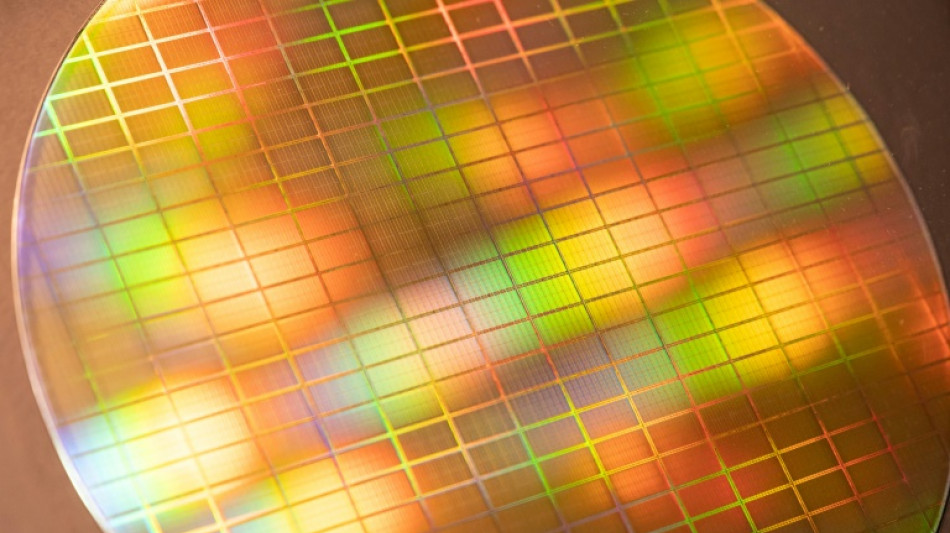
Micron said Thursday it will invest $3.6 billion to produce next-generation semiconductors in Japan, after Prime Minister Fumio Kishida held talks with some of the world's biggest chipmakers.
Kishida is trying to boost the domestic chip industry, after the weaknesses in global semiconductor supply chains were exposed by developments including the pandemic and the ongoing US-China tussle over advanced tech.
Attendees at the Kishida meeting on Thursday included senior executives from Taiwan's TSMC, South Korean giant Samsung, and US titans Intel, Micron and IBM.
"Micron expects to invest up to 500 billion yen ($3.6 billion) in 1-gamma process technology over the next few years, with close support from the Japanese government," the firm said in a statement, referring to the production of advanced DRAM memory chips.
The investment would "enable the next wave of end-to-end technology innovation such as rapidly emerging generative artificial intelligence (AI) applications".
Micron added that it would be the first firm to bring extreme ultraviolet (EUV) chip-making to Japan.
It described the tech as the "most sophisticated semiconductor manufacturing process in the world".
There was no immediate confirmation of what assistance Japan might offer, though Bloomberg News earlier reported Kishida was set to hand Micron $1.5 billion in incentives.
Japan has already agreed to pour half a billion dollars into a new project to develop and make next-gen chips domestically.
That deal involves eight major companies, including Sony, SoftBank and Toyota, who are partnering in a new firm called Rapidus that hopes to begin mass production by 2027.
TSMC and Sony have also inked their own partnership for a $7 billion plant in Japan.
Last month, Europe too announced plans to ramp up local chip production, with the goal of doubling its current global market share to 20 percent by 2030.
- 'Economic coercion' -
Chips are the lifeblood of the modern global economy, powering everything from cars to smartphones, and they are forecast to become a $1 trillion industry globally by 2030.
Much of the world's semiconductor manufacturing is based in Taiwan.
Fears have grown about the impact of any Chinese military action to seize the self-ruled island, which it claims as its territory.
The chip industry moves by Japan and Europe come as the United States and China lock horns over access to advanced semiconductors.
Washington has in recent years sought to prevent advanced US chip tech from being exported to China, citing national security concerns.
Japan and the Netherlands recently announced their own export restrictions on chip items, without naming China.
Still, Beijing reacted angrily, and has called for a World Trade Organization review of the measures.
Last month, Chinese authorities also announced an investigation into Micron, which they said was intended to "safeguard national security".
Kishida's meeting with chip firms came a day before he hosts G7 leaders for a summit in the city of Hiroshima.
G7 leaders are expected to call for "de-risking" of crucial supply chains, and to warn of the risks of "economic coercion" by China.
P.Anderson--BTB