Water woes shake up Spain's election campaign / Photo: © AFP

 Spain brush aside Croatia in Nations League, England down Czechs
 Trump hails 'morally binding' AI self-regulation pledge

 Yamal inspires Spain to Croatia romp on World Cup homecoming

 UN to hold fourth informal poll of secretary-general candidates
 Who are the Emiratis behind crisis-hit Manchester City?

 Singer Angelique Kidjo urges Africans to 'create together'

 Alleged Rihanna mansion shooter mentally fit for trial, says judge
 Mystery over UK airbase scare as police find petrol not explosives

 OpenAI unveils low-cost AI model, a day after shelving Astra upgrade
 Premier League confirms Man City guilty of serious financial breaches
 Brazil's Lula turns to Bad Bunny tune to criticise Trump ahead of polls
 Nigerian dancer eyes world record after seven-day marathon

 Swiss regulator concludes Julius Baer bank probe
 Brazil's patron saint pulled into latest election scrap

 Football overload leaves players near 'breaking point', warns Tebas
 Paris Eiffel Tower says chief to step down after uproar over removing women staff

 Amaze Holdings (NYSE: AMZE) Executes Binding LOI to Acquire BullionFX | Alchemy, a Decentralized Gold-Backed Financial Ecosystem for Valued at US$155 Million
 Clashes between French teens, police as school blockades intensify
 Stocks move sideways despite oil moving lower
 African leaders to gather in Egypt for business summit
 UK decides against charging foreign visitors for museums

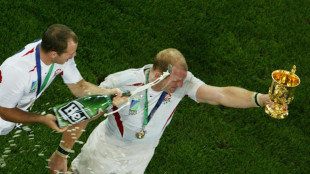 Dallaglio to sell England World Cup winners' medal

 Brazil come from behind to beat Australia 4-2 in friendly

 Ruthless An retains Asian Games badminton crown as Kunlavut triumphs

 Alonso to stay with F1 team Aston Martin in 2027
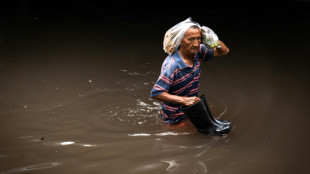
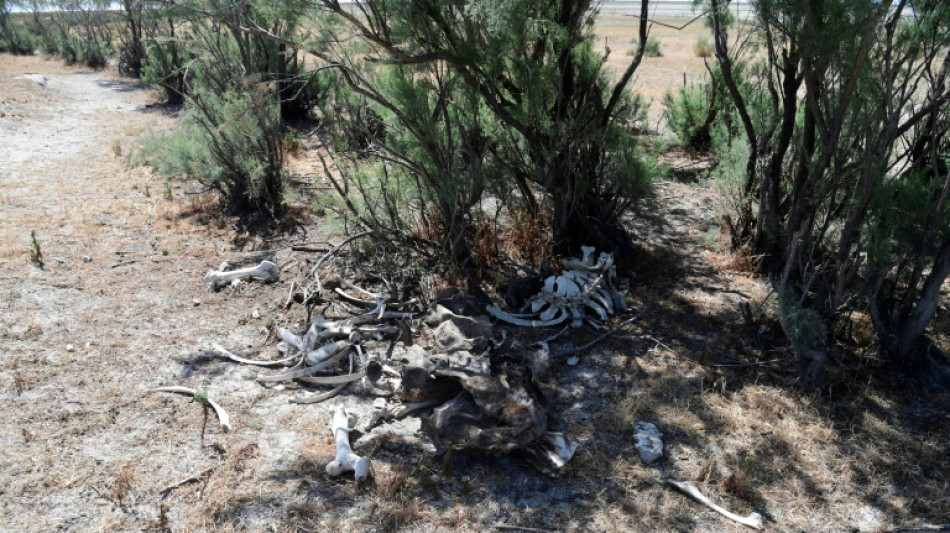
Concern over the future of Spain's Donana natural park, which is threatened by overfarming, has made water management a key issue ahead of local elections at the end of May.
Spain's water resources are becoming exhausted while its irrigation needs keep rising, "an unsustainable situation", said Felipe Fuentelsaz of WWF Spain.
The Donana National Park in the southern Andalusia region, home to one of Europe's largest wetlands, is in a "critical state", he added.
"For the past two years, it has barely rained. But farmers continue to draw enormous quantities of water from the groundwater table."
With its mix of dunes, forests and lagoons, the park once hosted huge colonies of migrating birds. Now it is mostly dry, and storks and flamingos are a rare sight.
A recent study by the Spanish National Research Council (CSIC) found 59 percent of the park's largest lagoons have dried up.
And the situation could get worse.
The conservative Popular Party (PP) which governs the region introduced a draft law backed by far-right party Vox that would legalise illegal berry farms near the park.
The WWF estimates some 1,500 hectares (3,700 acres) of farmland which are currently irrigated using water from illegal wells would be legalised by the move.
Defenders of the proposal argue it will help farmers who missed out during a previous regularisation of farms in the area in 2014 under a Socialist government.
The plan will "put an end to an injustice", said Manuel Andres Gonzalez, a lawmaker with the PP from the southern province of Huelva where the park is located.
He argues "hundreds" of farmers were unfairly left out of the previous regularisation.
- 'Selling a dream' -
These arguments are rejected by the left-wing mayor of the town of Almonte located inside the park, Rocio del Mar Castellano, who called the proposed plan "dangerous".
"There is no more water. How can they propose increasing the amount of irrigated land? The PP is selling a dream to win votes," she added.
The debate has made headlines in the run-up to the regional and local elections on May 28, and a year-end general election.
Both Socialist Prime Minister Pedro Sanchez and the national leader of the PP, Alberto Nunez Feijoo, have visited Donana in recent weeks.
"Donana will not be touched," said Sanchez last month, accusing the right of "climate denial".
Feijoo responded by saying Donana "does not belong to Sanchez".
He accuses the premier of fuelling a controversy over the plan to distract attention from his government's failure to adequately manage water resources.
If the right wins the next general election, Feijoo has said: "We will get water to places that don't have any."
Pablo Simon, a politics professor at the Carlos III University in Madrid, said Sanchez's focus on the climate issue allows him "to reposition himself on an axis that suits him -- a left-right axis in which he has more to gain than to lose".
- 'Playing with fire' -
The debate has thrown the spotlight on how drought-prone Spain uses its fresh water.
The country is the European Union’s biggest producer of fruit and vegetables and 80 percent of its fresh water is used by farmers.
"We can't continue to be Europe's vegetable garden. It's irresponsible," said Julia Martinez, an expert with the New Water Culture Foundation, a non-profit organisation aimed at promoting more sustainable water management.
The group calls for a "drastic change in policy", with a sharp reduction in the amount of irrigated land in Spain.
Sanchez's government announced last week it planned to spend 1.4 billion euros ($1.5 billion) to build new infrastructure such as desalination plants to boost freshwater supplies.
Huelva province accounts for 90 percent of Spain's strawberry output.
Castellano, the mayor of Almonte, said that while strawberry farming was important, "we can't play with fire".
"If the water disappears, we won't have any more strawberries at all," she added.
F.Müller--BTB