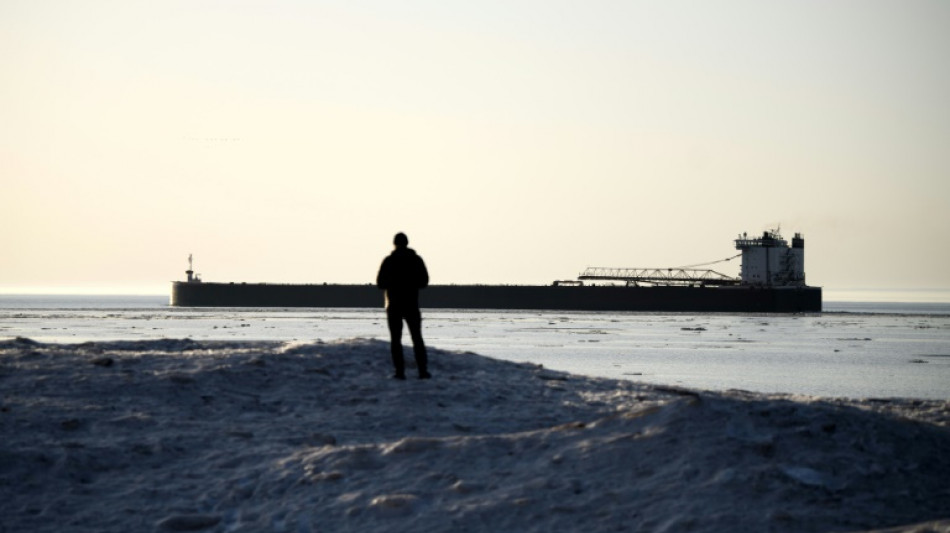
Frigid US city becomes haven in climate change era / Photo: © AFP

 Spain brush aside Croatia in Nations League, England down Czechs

 Trump hails 'morally binding' AI self-regulation pledge

 Yamal inspires Spain to Croatia romp on World Cup homecoming

 UN to hold fourth informal poll of secretary-general candidates

 Who are the Emiratis behind crisis-hit Manchester City?

 Singer Angelique Kidjo urges Africans to 'create together'

 Alleged Rihanna mansion shooter mentally fit for trial, says judge
 Mystery over UK airbase scare as police find petrol not explosives

 OpenAI unveils low-cost AI model, a day after shelving Astra upgrade
 Premier League confirms Man City guilty of serious financial breaches
 Brazil's Lula turns to Bad Bunny tune to criticise Trump ahead of polls

 Nigerian dancer eyes world record after seven-day marathon

 Swiss regulator concludes Julius Baer bank probe
 Brazil's patron saint pulled into latest election scrap

 Football overload leaves players near 'breaking point', warns Tebas

 Paris Eiffel Tower says chief to step down after uproar over removing women staff

 Amaze Holdings (NYSE: AMZE) Executes Binding LOI to Acquire BullionFX | Alchemy, a Decentralized Gold-Backed Financial Ecosystem for Valued at US$155 Million

 Clashes between French teens, police as school blockades intensify
 Stocks move sideways despite oil moving lower
 African leaders to gather in Egypt for business summit

 UK decides against charging foreign visitors for museums

 Dallaglio to sell England World Cup winners' medal

 Brazil come from behind to beat Australia 4-2 in friendly

 Ruthless An retains Asian Games badminton crown as Kunlavut triumphs

 Alonso to stay with F1 team Aston Martin in 2027
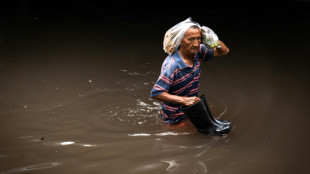
Standing on the frigid coast of Lake Superior, thawing ice glistening in the northern Minnesota sun, Christina Welch recalls what made her trade the temperate vineyards of northern California for the notoriously chilly city of Duluth.
In 2017, a wildfire got dangerously close to her neighborhood in Sonoma County. Then, two years later, while she was on a visit to Duluth on the advice of a colleague, another fire forced her parents to evacuate their home.
That "was the straw that broke the camel's back," Welch, 40, told AFP.
Duluth, in the far northern reaches of the United States, is known for bitterly cold and snowy winters, fueled by powerful winds blowing off Lake Superior.
But despite its tough environment, this Midwestern city of 86,000 is starting to make a name for itself as a refuge of sorts -- for those fleeing the effects of climate change.
Wildfires, which scientists say have been made more frequent and powerful by climate change, also persuaded John Jenkins to ditch California's beaches for Duluth's icy shores.
"The air smells cleaner. The water is some of the best water in the world. It's just very clean, it's pristine, it's beautiful," 38-year-old Jenkins said, speaking to AFP from the restaurant he bought and renovated.
Even on winter days that drop below -20 degrees Fahrenheit (-29 degrees Celsius) Welch and Jenkins don't regret their decisions.
And Jenkins' family has only grown. Since moving here with his wife, he has had two kids, and several family members have come to join them.
Around the world, climate change has already displaced thousands involuntarily. But Jenkins and Welch could be considered "climate migrants" as well.
They're part of a small but potentially growing group of people for whom climate change -- along with traditional factors like quality of life, job opportunities and housing prices -- are influencing where they settle down.
- 'The new oil' -
Jesse Keenan, an associate professor of sustainable real estate at Tulane University, is responsible for much of the buzz surrounding Duluth these days.
A specialist in urbanism and climate adaptation, a few years ago Keenan started examining where climate-minded Americans might want to live.
He identified multiple cities, including Buffalo, in northern New York state, and Detroit, Michigan.
But Duluth, a historically industrial town with plenty of high-quality and cheap housing in stock, has benefited "from many years of investment from the state of Minnesota in trying to promote a sustainable economy," he said.
The shores of Lake Superior offer another advantage.
"Fresh water is the new oil," Keenan said.
So far, plenty of residents seem open to having more neighbors -- if the newcomers can handle it, that is.
"I think it's wonderful," said Lezlie Oachs, a 65-year-old retiree. "But they would have to get used to the fact that it's cold almost all the time."
- 'Climate optimists' -
Local authorities have struck a noticeably different tone on the city's growing popularity.
"I thought it was terrifying" when Duluth's name started circulating, Mayor Emily Larson said at a recent conference. "I still do."
"It feels like we're still putting our oxygen masks on. We're not ready to kind of help the passenger next to us, and yet, climate is calling us to do that. And so it's a lot."
In addition, Larson said, it would feel "predatory" to run a "marketing strategy" based on climate shocks in California or elsewhere by saying "I'm really sorry... but you can come here because it's cooler by the lake."
Keenan argues this is the wrong way to look at things.
"People are going to come one way or the other, no matter what you do," he said.
Larson's office declined to speak to AFP.
The challenge facing Duluth "is quite a simple one," Keenan said.
Either the city can "promote sustainable urban development," with the investments in housing and transport that requires, or growth -- wanted or not -- will come in the traditional way, with car-dependent sprawl and poorer residents being priced out in a form of "climate gentrification."
Duluth is a place for "climate optimists," people who "believe that we can do this, that we can decarbonize the world."
"It's a beautiful part of the country. And it has a very sensitive ecological domain," Keenan said.
A booming Duluth, "if it's not done well, it could make things worse."
H.Seidel--BTB