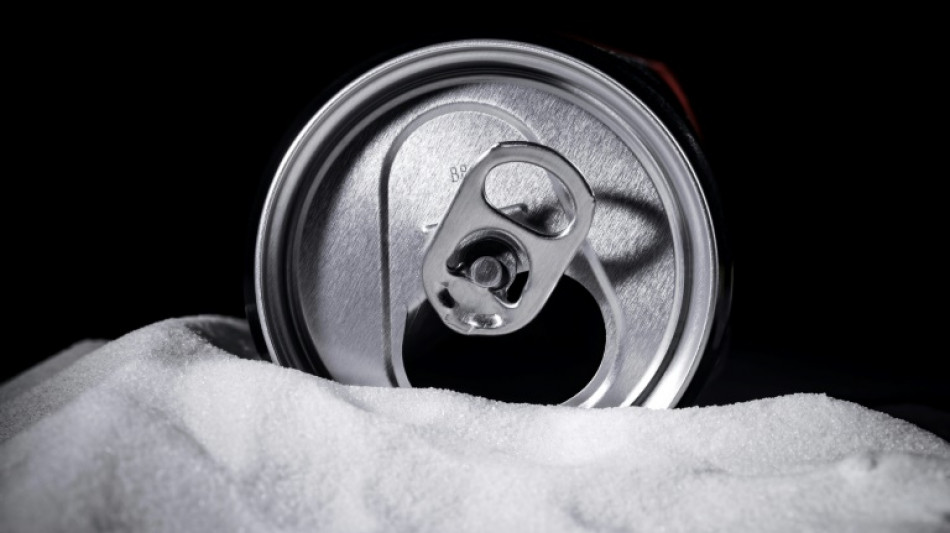
WHO warns against using artificial sweeteners / Photo: © AFP/File

 UN to hold fourth informal poll of secretary-general candidates

 Who are the Emiratis behind crisis-hit Manchester City?

 Singer Angelique Kidjo urges Africans to 'create together'

 Alleged Rihanna mansion shooter mentally fit for trial, says judge

 Mystery over UK airbase scare as police find petrol not explosives

 OpenAI unveils low-cost AI model, a day after shelving Astra upgrade

 Premier League confirms Man City guilty of serious financial breaches

 Brazil's Lula turns to Bad Bunny tune to criticise Trump ahead of polls

 Nigerian dancer eyes world record after seven-day marathon

 Swiss regulator concludes Julius Baer bank probe

 Brazil's patron saint pulled into latest election scrap

 Football overload leaves players near 'breaking point', warns Tebas

 Paris Eiffel Tower says chief to step down after uproar over removing women staff

 Amaze Holdings (NYSE: AMZE) Executes Binding LOI to Acquire BullionFX | Alchemy, a Decentralized Gold-Backed Financial Ecosystem for Valued at US$155 Million

 Clashes between French teens, police as school blockades intensify

 Stocks move sideways despite oil moving lower

 African leaders to gather in Egypt for business summit

 UK decides against charging foreign visitors for museums

 Dallaglio to sell England World Cup winners' medal

 Brazil come from behind to beat Australia 4-2 in friendly

 Ruthless An retains Asian Games badminton crown as Kunlavut triumphs

 Alonso to stay with F1 team Aston Martin in 2027

 China badminton 'still strong' despite Asian Games slump

 'Exceptional' Turner painting shown in Rome before sale

 European stocks climb as oil dips

Artificial sweeteners, used to replace sugar in a vast range of products, do not help in losing weight and can have serious health effects, according to the World Health Organization.
The United Nations' health agency released new guidelines on Monday advising against using so-called non-sugar sweeteners or NSS.
A systematic review of available evidence "suggests that use of NSS does not confer any long-term benefit in reducing body fat in adults or children", the WHO said.
In addition, results from the review "suggest that there may be potential undesirable effects from long-term use of NSS, such as an increased risk of type 2 diabetes, cardiovascular diseases and mortality in adults".
Sweeteners are consumed by millions of people every day in products like diet soda or to sweeten coffee, partly as a way to avoid weight gain from sugar. But how healthy these substitutes are has long been a matter of controversy.
The WHO's director for nutrition and food safety, Francesco Branca, stressed that replacing ordinary sugar with artificial sweeteners "does not help with weight control in the long term".
"People need to consider other ways to reduce free sugars intake, such as consuming food with naturally occurring sugars, like fruit or unsweetened food and beverages," he said.
"NSS are not essential dietary factors and have no nutritional value. People should reduce the sweetness of the diet altogether, starting early in life, to improve their health."
The WHO said its new recommendation applied to everyone except individuals with pre-existing diabetes.
It includes all synthetic and naturally occurring or modified sweeteners not classified as sugars found in manufactured foods and beverages or sold on their own to be added to products by consumers.
- Likely to 'cause confusion' -
Among the most widely used sweeteners are acesulfame K, aspartame, advantame, cyclamates, neotame, saccharin, sucralose, stevia and stevia derivatives, it said.
Meanwhile, the UN health agency emphasised that its guidelines were considered conditional since it remained difficult to draw firm conclusions due to the diversity of participants and complexity of NSS-use seen in the studies it had examined.
Some nutrition experts pointed out limitations in the WHO report, which was largely based on observational studies that cannot directly establish a causal link between sweeteners and weight or disease.
Nita Forouhi, a nutrition and epidemiology specialist at Cambridge University in the UK, emphasised that "using sweeteners can be part of interventions to manage weight in the short term".
"The key takeaway is that for longer-term weight management and for chronic health conditions such as the development of future type 2 diabetes and cardiovascular disease, the use of NSS is not advisable," she told the Science Media Centre.
Tom Sanders, professor emeritus of nutrition and dietetics at King's College London, said the review did not consider the impact of replacing sugary drinks with artificially sweetened drinks.
Sanders said he thought the advice would "likely cause a lot of confusion in the public health arena", particularly in the UK, where a tax on sugar has led to drink manufacturers replacing sugar with artificial sweeteners.
He added that the quality of evidence for any link between sweeteners and disease was rated as "low".
N.Fournier--BTB