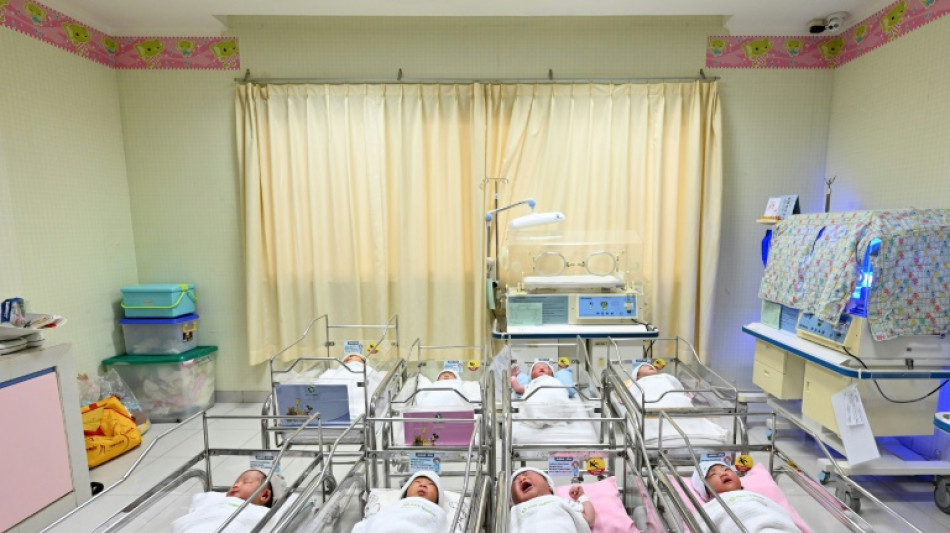
Positive trial results for RSV infant treatment: Sanofi / Photo: © AFP

 UN to hold fourth informal poll of secretary-general candidates
 Who are the Emiratis behind crisis-hit Manchester City?
 Singer Angelique Kidjo urges Africans to 'create together'
 Alleged Rihanna mansion shooter mentally fit for trial, says judge
 Mystery over UK airbase scare as police find petrol not explosives

 OpenAI unveils low-cost AI model, a day after shelving Astra upgrade
 Premier League confirms Man City guilty of serious financial breaches
 Brazil's Lula turns to Bad Bunny tune to criticise Trump ahead of polls
 Nigerian dancer eyes world record after seven-day marathon
 Swiss regulator concludes Julius Baer bank probe

 Brazil's patron saint pulled into latest election scrap

 Football overload leaves players near 'breaking point', warns Tebas
 Paris Eiffel Tower says chief to step down after uproar over removing women staff
 Amaze Holdings (NYSE: AMZE) Executes Binding LOI to Acquire BullionFX | Alchemy, a Decentralized Gold-Backed Financial Ecosystem for Valued at US$155 Million
 Clashes between French teens, police as school blockades intensify

 Stocks move sideways despite oil moving lower

 African leaders to gather in Egypt for business summit
 UK decides against charging foreign visitors for museums
 Dallaglio to sell England World Cup winners' medal
 Brazil come from behind to beat Australia 4-2 in friendly
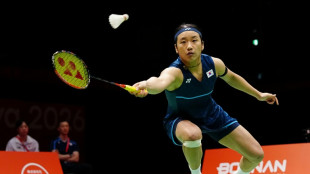 Ruthless An retains Asian Games badminton crown as Kunlavut triumphs

 Alonso to stay with F1 team Aston Martin in 2027
 China badminton 'still strong' despite Asian Games slump
 'Exceptional' Turner painting shown in Rome before sale
 European stocks climb as oil dips
French pharmaceutical giant Sanofi announced trial results on Friday that showed its preventative treatment for respiratory syncytial virus (RSV) reduced the rate of babies being hospitalised by more than 80 percent.
The virus infects around nine out of 10 children by the age of two and is the most common cause of bronchiolitis, a respiratory infection that is normally mild but in some cases can make infants seriously ill.
Sanofi and British-Swedish firm AstraZeneca, which jointly developed the drug nirsevimab, marketed as Beyfortus, say it is the first treatment to prevent severe illness from RSV in infants.
The phase three trial used real-world data from the 2022-2023 RSV season and involved more than 8,000 infants under 12 months across France, Germany and the UK, Sanofi said in a statement.
The results showed an 83 percent reduction in hospitalisations for infants with RSV-related illnesses who received a single dose of nirsevimab, compared to a control group who did not receive the treatment.
The results suggest that "the overall burden on healthcare systems could be reduced significantly if all infants receive nirsevimab," Sanofi said.
Global medical costs worldwide were estimated to be 4.8 billion euros ($5.2 billion) in 2017, it added.
While not a vaccine, nirsevimab is a monoclonal antibody treatment that has a similar aim: to give protection against RSV with a single injection.
More attention has been paid to RSV since a combination of the virus, Covid-19 and influenza dubbed a "tripledemic" put pressure on hospitals in several countries during the Northern Hemisphere's last winter.
Peter Openshaw, a specialist in lung immunology at Imperial College London, pointed out that the trial data was collected when RSV was rebounding after a dip in cases during Covid lockdowns.
The data "adds to the evidence that use of long-acting monoclonal antibody may prevent moderate to severe RSV disease after a convenient single dose," he said, adding that further studies were needed for older children.
"The cost of nirsevimab will be a critical determinant of how widespread its use can be," Openshaw said.
The drug has already been approved in the European Union, the UK and Canada, and an application in the United States is under review.
Several major pharmaceutical firms have developed vaccines for RSV in adults, and are currently racing to get them approved.
Last week, the US became the first country to approve an RSV vaccine, giving the greenlight to GSK's Arexvy for adults aged 60 or older.
O.Krause--BTB