'I want it banned': reality TV targeted in Serbia after shootings
/ Photo: © AFP

 Man City must be relegated after guilty verdict says club's former chairman

 German far-right aims to lead Saxony-Anhalt govt in December
 Little damage as Hurricane Polo sweeps over Mexico's Pacific coast
 Manchester City guilty of breaking financial rules - Premier League
 FIFA boss Infantino blasted as would-be 'emperor' by UEFA's Ceferin
 Stocks move lower despite oil prices dropping
 AI driving up innovation investment: UN

 UN Security Council extends Haiti mission by 6 months
 Man Utd do not deserve medals if Man City stripped of titles: Rooney

 Vana Completes Expanded Staking as Part of the Vega Upgrade, Publishes Expanded VANA Token Economics
 Spain to cap gas price hikes, extend fuel discounts
 'We just need rain': Germany's Rhine river hits new low
 Yemen health system at 'breaking point': WHO
 Ireland undecided on second Israel match: coach
 France's Le Pen defiant after top ally hit by antisemitism claims
 Tom Cruise trades stunts for satire as toxic tycoon 'Digger'
 MEXC Unveils "WE SEE YOU" Brand Visual Refresh, Putting People Behind Every Trade in Focus
 Thai capital cleans up after deadly floods
 NATO, EU allies rally to Estonia after 'sabotage' blamed on Russia
 Families demand justice for Cameroon's 'nightmare' wave of murdered women
 Tebas says Man City should face 'most severe' sanctions if guilty of rule breaches
 Pochettino calls Man City success 'a period of deception'
 Settler attack on West Bank village injures Israeli forces, drawing rare rebuke
 Mystery over UK airbase scare after reports no explosives found
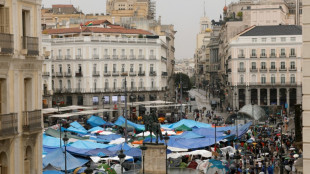 Spanish govt races to adopt housing law under protest pressure
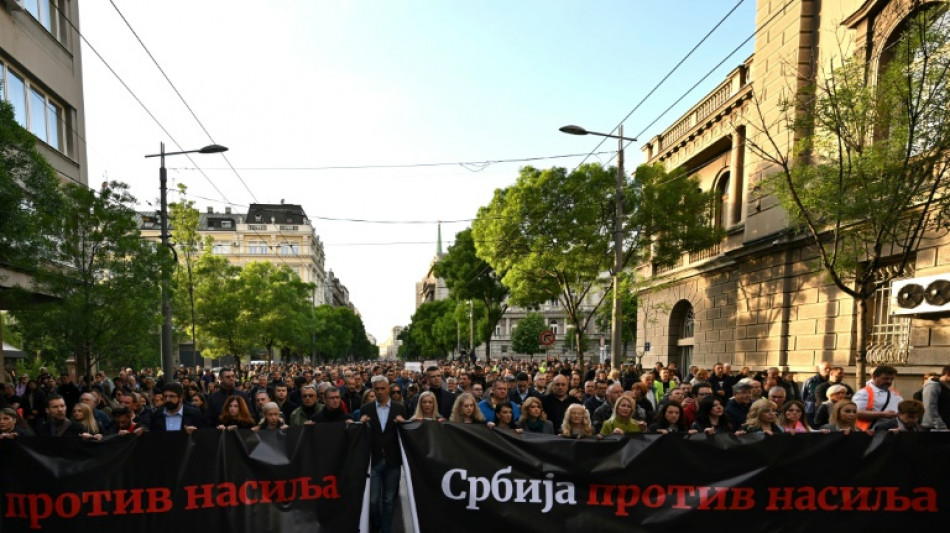
Serbian TV is a diet of women being beaten and threats issued at gunpoint. But this is not fiction. It is reality shows where, among others, infamous mobsters and war criminals are the stars.
The shows have been widely popular for years but have recently found themselves in the crosshairs of an enraged public following two mass shootings that protestors say were in part rooted in a culture of violence fanned by the media.
Drunken arguments, gossip and the occasional fights have long been a staple of reality TV across the globe.
But in Serbia, the programmes have taken the genre to even greater lows.
Underworld figures, war criminals and the mentally unstable are regularly cast in series known for gratuitous levels of violence.
In 2021, around a dozen cast members watched impassively while a convicted felon strangled a woman unconscious on the show Zadruga -- one of the most popular reality series in the Balkan country.
"All my daughter's friends know who (the cast) are and to them, they are just TV stars. Not criminals or wife beaters, just stars" said Dejan Injac, a 44-year-old resident of Belgrade who joined the mass protests this week calling for the shows to be pulled from the air.
"I want it banned, simple as that. Those people can't be role models."
Injac is not alone.
Tens of thousands have taken to the streets in recent days calling for an outright ban on violent programming, following back-to-back shootings last week in which 17 people died -- including eight pupils at an elementary school in Belgrade.
- Criminal culture -
The burgeoning movement of outrage is led by a public seemingly fed up with pervasive levels of violence in Serbia, in politics and on TV.
Mobsters, war criminals and football hooligans are regularly celebrated and given a platform on pro-government media outlets.
Reality shows in particular have been popular for the past two decades in Serbia, but in recent years have taken on a much more violent tone in series featured heavily on pro-government broadcasters.
While some of the worst have run their course, the ultra-prominent Zadruga still airs frequently on Pink TV, one of the biggest channels in the country. And gratuitous brutality remains pervasive elsewhere on Serbia's small screens.
Criminal culture has long been a mainstay in Serbia.
Organised crime groups took control of vast swaths of the economy during the bloody breakup of Yugoslavia in the 1990s, when crippling Western sanctions led ordinary people to turn to the black market for basic provisions.
Mobsters and paramilitary figures grew rich during the war years while the rest of the country struggled, cementing a strong link between wealth and organised crime in the eyes of the public.
Critics say the mobs still have huge influence.
The advent of reality TV later brought members of the criminal underworld directly into people's homes, with their seedy lifestyles marketed as entertainment.
By one estimate, up to 60 percent of the programming on two of the country's most popular channels consisted of violent reality shows in recent years.
"You have a direct promotion of violence, crime and misogyny, which poured onto social media and later into society as a whole," said Savo Manojlovic, a Belgrade lawyer who advocates an end to the shows.
"They handpicked participants with psychological issues and criminal pasts, knowing exactly what they would do in that setting," he told AFP.
- 'Indoctrination' -
Broadcasters, however, appear to have started hedging following the recent shootings and subsequent protests.
Pink TV said it would keep Zadruga off air -- temporarily -- "out of our deepest sympathy and respect" for the victims of the mass shootings.
Serbian President Aleksandar Vucic has remained defiant in the face of the protests, calling the demonstrations a "political" stunt aimed at discrediting his right-wing populist government.
"We are ready to talk about reality shows... But they want my head. They never wanted anything other than that," said Vucic during an interview aired this week.
The president -- who opponents accuse of maintaining ties with criminal figures in Serbia -- has long been known for his confrontational style.
He and his party regularly demean political opponents and foreign rivals as "scum", "thieves" and "paedophiles", while parliamentary sessions are dominated by crude insults.
"Violence has become a dominant form of communication in Serbia -- not only in reality TV. We are exposed to constant political messages that opponents must be destroyed," Miklos Biro, a retired psychology professor, told AFP.
Belgrade University professor Jelena Djordjevic said the reality shows that feature on pro-government networks dovetail neatly with the current political climate, where aggression is largely rewarded.
The shows regularly air alongside political programming, including frequent interviews with Vucic, members of his party and other allies.
"I think that they knowingly and strategically target the uneducated, lonely and the miserable voters that enjoy such programmes and tie them to the TV they are watching," Djordjevic told AFP.
"This is a brutal way of indoctrination carried out by those in power."
S.Keller--BTB