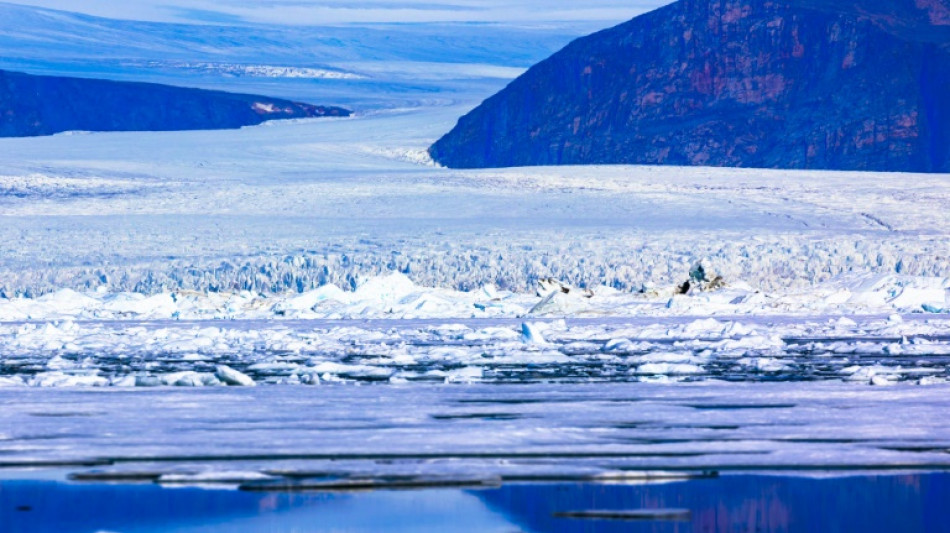
A delicate succession in the Arctic Council after Russia sidelined / Photo: © AFP

 Man City must be relegated after guilty verdict says club's former chairman

 German far-right aims to lead Saxony-Anhalt govt in December
 Little damage as Hurricane Polo sweeps over Mexico's Pacific coast
 Manchester City guilty of breaking financial rules - Premier League

 FIFA boss Infantino blasted as would-be 'emperor' by UEFA's Ceferin

 Stocks move lower despite oil prices dropping
 AI driving up innovation investment: UN

 UN Security Council extends Haiti mission by 6 months
 Man Utd do not deserve medals if Man City stripped of titles: Rooney

 Vana Completes Expanded Staking as Part of the Vega Upgrade, Publishes Expanded VANA Token Economics
 Spain to cap gas price hikes, extend fuel discounts

 'We just need rain': Germany's Rhine river hits new low

 Yemen health system at 'breaking point': WHO

 Ireland undecided on second Israel match: coach
 France's Le Pen defiant after top ally hit by antisemitism claims
 Tom Cruise trades stunts for satire as toxic tycoon 'Digger'
 MEXC Unveils "WE SEE YOU" Brand Visual Refresh, Putting People Behind Every Trade in Focus
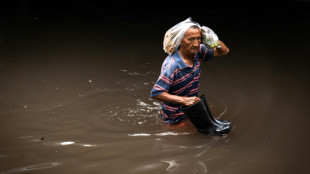 Thai capital cleans up after deadly floods
 NATO, EU allies rally to Estonia after 'sabotage' blamed on Russia
 Families demand justice for Cameroon's 'nightmare' wave of murdered women

 Tebas says Man City should face 'most severe' sanctions if guilty of rule breaches
 Pochettino calls Man City success 'a period of deception'
 Settler attack on West Bank village injures Israeli forces, drawing rare rebuke
 Mystery over UK airbase scare after reports no explosives found
 Spanish govt races to adopt housing law under protest pressure
The Arctic Council, a model for cooperation between former Cold War foes, on Thursday sees a delicate handover of chairmanship, with the sidelining of Russia, its largest member.
After two years of Russia at the helm, Norway is taking over the reins of the intergovernmental forum, which was considered exemplary until the invasion of Ukraine led seven of the eight members -- the United States, Canada and the five Nordic countries -- to suspend their meetings with Moscow.
"None of the member states have come out in favour of excluding Russia from the Arctic Council," Norwegian foreign minister Anniken Huitfeldt told AFP on Wednesday.
"(But) because of the war of aggression launched by Russia, it will be a totally different chairmanship than what was envisaged," she said.
For the actual handover, she, like her Western colleagues, declined an invitation from her Russian counterpart, Sergei Lavrov, to visit Siberia.
In contrast to earlier transfers, the formal handover will therefore take place online at a senior official level.
Experts believe sidelining Russia weakens the body, where the nations have been able to address issues of common interest -- from environmental protection to sustainable development and the situation of indigenous populations in the Arctic region, which is warming four times faster than the planet as a whole.
Since its creation in 1996, the council has become the main forum for cooperation in the region.
The Arctic's importance has increased with the accelerated retreat of the ice sheet. This opens up maritime routes and economic opportunities in oil, gas, minerals and fishing but it threatens the fragile ecosystem, vulnerable indigenous populations and the Earth's climate.
Apart from some tensions during Donald Trump's tenure in the White House, relations within the forum have generally been smooth, in part thanks to thorny issues such as security not being with its remit.
- Two Arctics? -
After suspending cooperation with Moscow in early March 2022, the seven other member nations (the A7) agreed to continue work that does not involve Russia's participation.
However, this only represents nearly a third of the council's 130-odd projects.
"Can regional governance be truly meaningful and effective at a circumpolar level if an Arctic state as large as Russia were not at the table?" said Dwayne Ryan Menezes of the think tank Polar Research and Policy Initiative.
"Or will the Arctic split into rival spheres of influence, potentially also with competing forums for regional cooperation and governance – one involving the A7 and the other led by Russia and involving non-Arctic actors such as China?" he continued.
Isolated from the West, Moscow is increasingly focusing on ties to other powers -- primarily China but also emerging nations such as Brazil, India, Mexico and South Africa.
In April, Moscow and Beijing signed a memorandum of cooperation for their coastguards in the Arctic.
Rasmus Gjedsso Bertelsen, a professor of Nordic studies at the Norwegian University of Tromso, said he was "critical of this Western policy of boycotting, which does not change anything on the battlefield in Ukraine but reduces our insight into the way Russians think".
An Arctic Council cut in half "is of course much less valuable", the Danish academic told AFP.
"It is very easy for the West to work together because we have a lot of common interests. But we should not neglect the Russian half, which is the most interesting and important with the Northeast Sea Passage and all its natural resources," he argued.
In presenting the objectives of the Norwegian chairmanship in late March, Huitfeldt conceded that it was "far from certain" that the Arctic Council could be preserved.
A month and a half later, by her own admission, it remains to be seen how the body's work will continue.
M.Odermatt--BTB