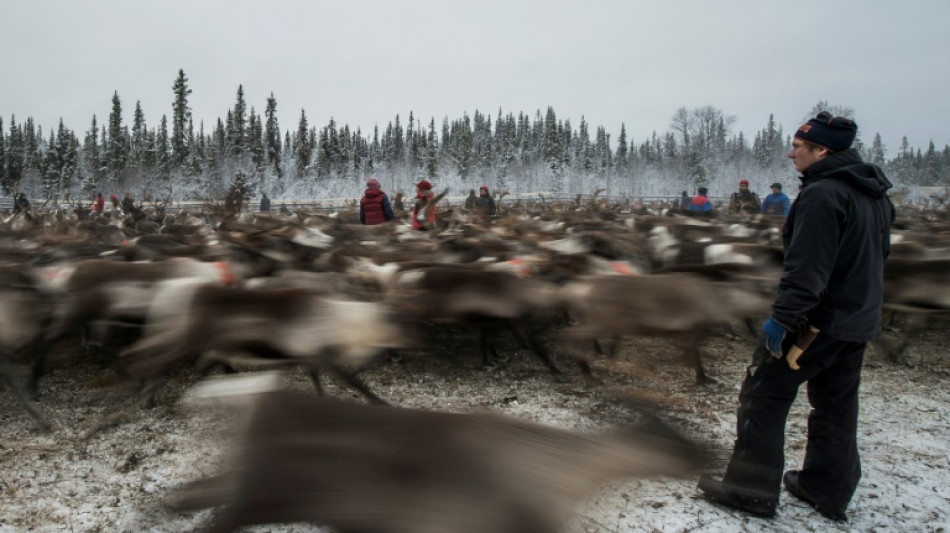
Sweden's 'Truth Commission' delves into painful Sami past / Photo: © AFP/File

 Man City must be relegated after guilty verdict says club's former chairman

 German far-right aims to lead Saxony-Anhalt govt in December

 Little damage as Hurricane Polo sweeps over Mexico's Pacific coast

 Manchester City guilty of breaking financial rules - Premier League

 FIFA boss Infantino blasted as would-be 'emperor' by UEFA's Ceferin

 Stocks move lower despite oil prices dropping
 AI driving up innovation investment: UN

 UN Security Council extends Haiti mission by 6 months
 Man Utd do not deserve medals if Man City stripped of titles: Rooney

 Vana Completes Expanded Staking as Part of the Vega Upgrade, Publishes Expanded VANA Token Economics
 Spain to cap gas price hikes, extend fuel discounts
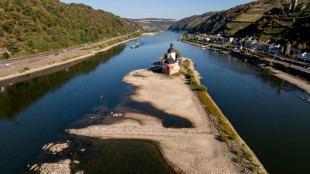 'We just need rain': Germany's Rhine river hits new low
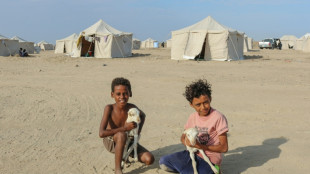 Yemen health system at 'breaking point': WHO
 Ireland undecided on second Israel match: coach

 France's Le Pen defiant after top ally hit by antisemitism claims

 Tom Cruise trades stunts for satire as toxic tycoon 'Digger'

 MEXC Unveils "WE SEE YOU" Brand Visual Refresh, Putting People Behind Every Trade in Focus

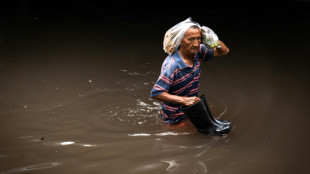 Thai capital cleans up after deadly floods

 NATO, EU allies rally to Estonia after 'sabotage' blamed on Russia
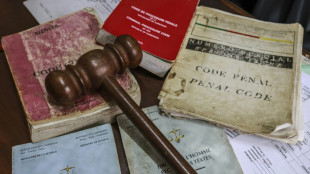 Families demand justice for Cameroon's 'nightmare' wave of murdered women
 Tebas says Man City should face 'most severe' sanctions if guilty of rule breaches
 Pochettino calls Man City success 'a period of deception'

 Settler attack on West Bank village injures Israeli forces, drawing rare rebuke

 Mystery over UK airbase scare after reports no explosives found
 Spanish govt races to adopt housing law under protest pressure

After centuries of persecution, Sweden's indigenous Sami people are beginning to provide testimony about the injustices they experienced in a recently launched "Truth Commission" probing the country's discriminatory policies and their consequences.
Experts have since February been gathering the often-painful accounts from Samis, formerly known by the pejorative term Laplanders or Lapps.
There are an estimated 100,000 Sami people across the vast Arctic wilderness of northern Finland, Norway, Sweden and Russia's Kola peninsula.
They have lived by hunting, fishing and herding reindeer for thousands of years, and been subjected to colonisation for centuries.
Like all children of Sami reindeer herders since 1913, Nils-Henrik Sikku, a Sami writer now aged 72, was taken away from his family at the age of seven and forcibly placed in a state-run boarding school.
At these "nomad schools", founded as part of a policy aimed officially at preserving the Sami, the education was basic and, paradoxically, taught in Swedish rather than the Sami language.
The children were punished if they spoke their mother tongue.
"If you did something wrong you were punished, you could be hit, you could be locked up, they could take your clothes and you would be sitting outside until the next morning," Sikku recalled in an interview with AFP.
The severe conditions led him and a few friends to escape on a freezing winter night.
"We ran... I don't know how we managed to do it," he said. "But we were more afraid to go back than to continue."
The last Sami boarding schools were closed in 1962, but this did not bring an end to the Sami's long and painful history.
The persecution of the Sami, Europe's only indigenous people, goes back to the 17th century, when the state began colonising and exploiting their resource-rich lands.
They were first brutally forced to Christianise and abandon their shamanism, before assimilation efforts intensified in the 19th and 20th centuries as the far north's economic importance grew.
- Racial biology -
The policies were motivated by the emergence of theories about a "pure Swedish race", leading to the creation in 1922 of the world's first State Institute for Racial Biology in Uppsala.
Its director travelled regularly to Lapland to collect skulls and measure and photograph Sami -- often children and the elderly, forced to strip naked -- in a bid to prove they were an "inferior race".
Sikku believes he, like his father before him, was subjected to the pseudo-scientific examinations.
"We don't know what they did with us. But we stood naked in front of the so-called doctors," he said.
The Sami were treated differently if they were reindeer herders, considered "authentic" Sami.
"Because the Sami were seen as an 'inferior race', (the authorities) thought they were going to disappear so they wanted to preserve the reindeer herders, to salvage them," explained Sami researcher Kaisa Huuva.
Children of reindeer herders were sent to the state boarding schools, while other Sami lost their land rights.
"A lot of these wrongdoings that were committed a long time ago are still reflected in the families, their living conditions or how they perceive their relations with Swedish society," Kerstin Calissendorff, head of the Truth Commission, told AFP.
- 'Stealing land' -
While neighbouring Norway and Finland are scheduled to present the conclusions of their own truth commissions later this year, Sweden is due to publish its report in 2025.
It is expected to pave the way for a reconciliation process.
But Sikku won't be participating.
"I have no confidence" in the process, he said.
"They have stolen our land, forbidden our religion and stolen our childhoods."
The past, as painful as it was, must not overshadow the problems the Sami still face, Huuva warned.
Even today, "it's all about the stealing of the land", she said.
Today's reindeer herders, considered the last guardians of Sami culture, now see their traditional way of life threatened by climate change and conflicts with industry.
A recent study revealed that the suicide rate among young male reindeer herders was significantly higher than in the general population.
"They want to pass on their culture... and they overstretch their capacity" carrying out the challenging work, study author Petter Stoor, a psychologist at Umea University, told AFP.
Swedish mining giant LKAB in January announced the discovery of Europe's biggest deposit of rare earth minerals, much needed for the green transition.
The deposit is located near Kiruna, on Sami land belonging to Huuva's family.
She's worried.
"If our land is gone, we are gone with it. We will melt like snow in the sun."
N.Fournier--BTB