
Discovering HIV started 'race against time': Barre-Sinoussi / Photo: © AFP/File

 Man City must be relegated after guilty verdict says club's former chairman

 German far-right aims to lead Saxony-Anhalt govt in December
 Little damage as Hurricane Polo sweeps over Mexico's Pacific coast

 Manchester City guilty of breaking financial rules - Premier League

 FIFA boss Infantino blasted as would-be 'emperor' by UEFA's Ceferin

 Stocks move lower despite oil prices dropping
 AI driving up innovation investment: UN

 UN Security Council extends Haiti mission by 6 months
 Man Utd do not deserve medals if Man City stripped of titles: Rooney

 Vana Completes Expanded Staking as Part of the Vega Upgrade, Publishes Expanded VANA Token Economics

 Spain to cap gas price hikes, extend fuel discounts

 'We just need rain': Germany's Rhine river hits new low

 Yemen health system at 'breaking point': WHO
 Ireland undecided on second Israel match: coach
 France's Le Pen defiant after top ally hit by antisemitism claims

 Tom Cruise trades stunts for satire as toxic tycoon 'Digger'

 MEXC Unveils "WE SEE YOU" Brand Visual Refresh, Putting People Behind Every Trade in Focus
 Thai capital cleans up after deadly floods

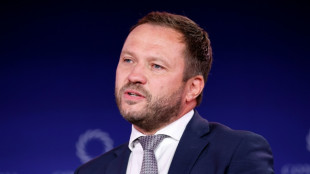 NATO, EU allies rally to Estonia after 'sabotage' blamed on Russia
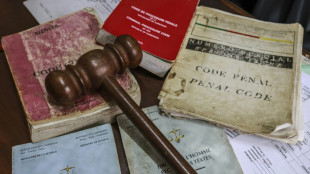 Families demand justice for Cameroon's 'nightmare' wave of murdered women

 Tebas says Man City should face 'most severe' sanctions if guilty of rule breaches
 Pochettino calls Man City success 'a period of deception'

 Settler attack on West Bank village injures Israeli forces, drawing rare rebuke
 Mystery over UK airbase scare after reports no explosives found
 Spanish govt races to adopt housing law under protest pressure

When Nobel laureate Francoise Barre-Sinoussi helped identify a mysterious virus that would become known as HIV 40 years ago, she says it kicked off a "race against time" to counter the looming AIDS crisis.
In an interview with AFP, the 75-year-old virologist described how she and colleagues at the Pasteur Institute in Paris discovered HIV in 1983, which led to her jointly winning the Nobel Prize for Medicine.
"It all started in 1982," when doctors started sharing stories about the first French AIDS patients, France's Barre-Sinoussi said.
"They were convinced that a retrovirus could be responsible for this new disease."
For more than a decade Barre-Sinoussi had been working on retroviruses, which on infection convert from the genetic material RNA into DNA, allowing them to easily integrate host cells.
In January 1983, the team's strategy was to take a lymph node biopsy from a sick patient, then culture the cells in the lab looking for "very specific enzymatic activity", she said.
Her French doctor colleagues thought that AIDS must be caused by HTLV-1, the only retrovirus known to directly cause cancer in humans.
"But our team did not believe in this hypothesis because this virus causes a proliferation of lymphocytes," Barre-Sinoussi said.
AIDS patients had lower rates of this important immune cell.
"Something didn't add up," she said.
"In May 1983, we isolated the virus and demonstrated that it was a retrovirus that was different from HTLV-1. But we were not yet certain that it caused AIDS."
That was confirmed the following year by US scientist Robert Gallo.
This caused a transatlantic rift over who discovered HIV, with the United States and France eventually agreeing that both Gallo and the Pasteur team led by Luc Montagnier should get joint credit.
- 'Enormous' challenge ahead -
Finally, researchers around the world had a target to aim for in their efforts to combat AIDS, which was rapidly spreading and devastating communities.
"From then on, the task was enormous because we were faced with an unknown virus," Barre-Sinoussi said.
"We had to learn everything about it, find out what proteins it contained, its genetic material, what type of cells it infected, the consequences of this infection."
A crucial first step was to develop tests as quickly as possible, both to diagnose patients and to demonstrate that HIV only infected AIDS patients.
"Only then could strategies be considered to try to block it," she said.
"It was a race against time because we realised that the virus was transmitted by blood, sex and from mother to child."
The endeavour required the swift mobilisation of immunologists, molecular biologists and doctors, she said.
Not to mention patients, even though scientists knew "we would not have time to find a treatment that could save them", she said.
"We found ourselves faced with people who came to the Pasteur Institute to ask us questions about the virus," she said.
"It was very difficult."
- Nobel 'recognised a community' -
In 2008, Barre-Sinoussi and her former mentor, Luc Montagnier, jointly received the Nobel medicine prize for the discovery of HIV.
"I was in Cambodia when I heard the news. It was a huge surprise. I did not expect it all," Barre-Sinoussi said.
"People living with HIV in the country came up to me with smiles and bouquets of flowers.
"I understood that this prize recognised a community that had been working together from the beginning."
"All levels of society have been affected by HIV/AIDS, which has always been a battle on multiple fronts -- scientific of course, but also political, societal (and) against pharmaceutical companies," she said.
When she started her career, "I was a researcher who never left the laboratory", she said.
But after helping discover HIV, things changed. "I suddenly found myself faced with things that I never imagined possible, such as the general public's lack of tolerance towards certain people," she said.
"Patients were stigmatised, abandoned by their families, their friends, sometimes by health professionals. Some lost their homes, their jobs."
Barre-Sinoussi said that she had also "learned a lot about inequalities, which unfortunately may have become even worse today".
Throughout her long career, Barre-Sinoussi worked continuously towards finding a cure for HIV, serving as the president of the International AIDS Society a decade ago. She retired in 2017.
I.Meyer--BTB